
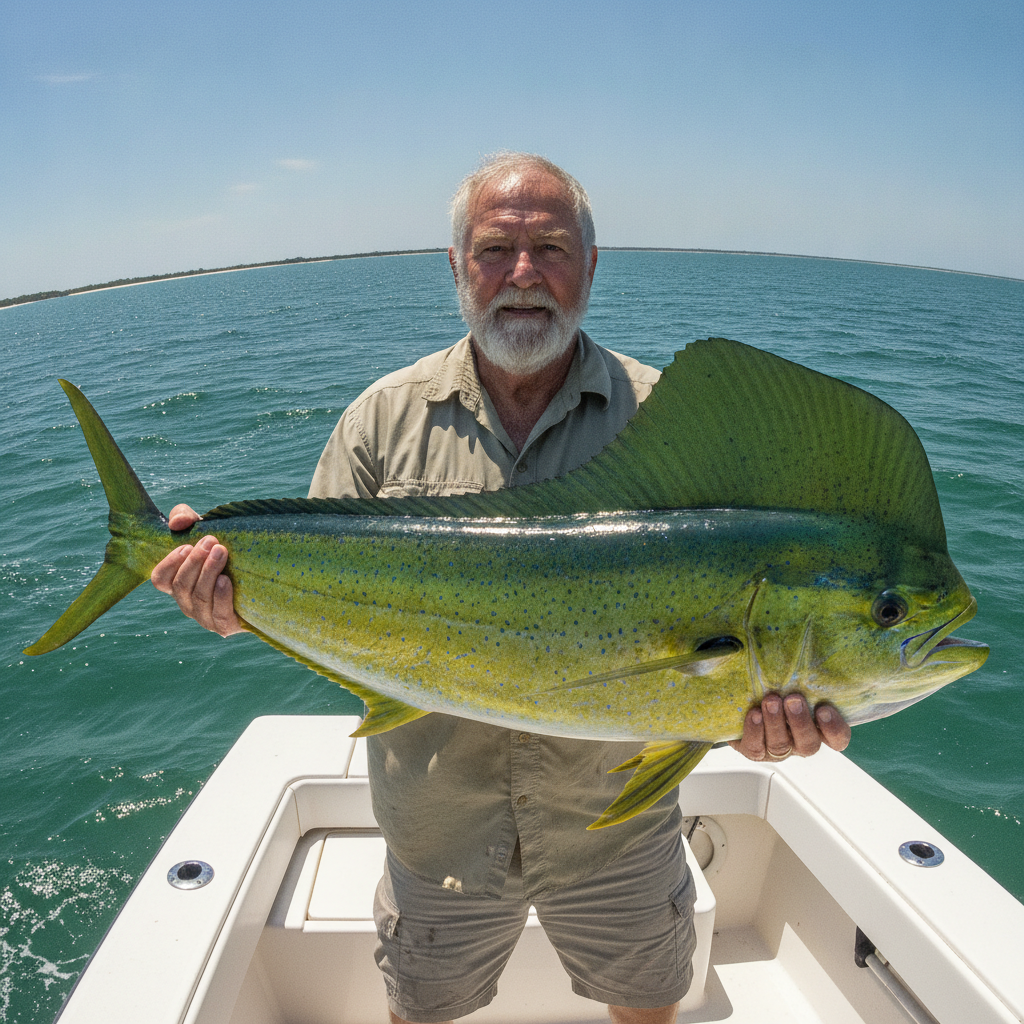
Palm Beach County has had a stretch of light wind and calm seas that has made the offshore run comfortable and productive. The Gulf Stream edge is sitting close, surface temperatures are in the upper 80s, and the fishing has divided cleanly into an early-morning offshore program and an after-dark reef and inlet program with a dead zone in between.
What’s Hitting
Mahi are the offshore target, scattered along weedlines and rips out past 300 feet with the better fish holding to substantial debris. Blackfin tuna are on the deeper ledges at daylight, and kingfish are working the 90- to 150-foot line. Sailfish are around in small numbers but not concentrated. The real consistency is on the reef at night — mutton snapper, mangrove snapper, and yellowtail are all feeding well on the 70- to 120-foot edges once it gets dark. Inshore, tarpon are rolling in the Palm Beach and Jupiter inlets on the moving tide, snook are working the bridge shadow lines under a closed season, and the Intracoastal dock lines are holding snapper and jacks.
Where to Find Them
Run east and look for a defined color change with bird activity or a weed edge with structure to it. The ledges off Palm Beach and Jupiter in 90 to 150 feet are holding kings and blackfin. For night reef work, anchor on the 80- to 110-foot edge and build a chum slick. Inshore, the Palm Beach Inlet and the Jupiter Inlet mouth are the tarpon and snook water, best on the outgoing after dark. Loxahatchee River dock lights hold snook and snapper.
Tides & Conditions
Offshore surface temps are 86 to 88 degrees. Seas have been one to two feet in the mornings, building in the afternoon. Inlet tides run hard, and the evening outgoing lines up well with the after-dark bite. Storms build over the interior and drift east most afternoons. Winds are light and variable early, turning onshore by midday. This is a get-out-early or go-out-late week.
Tackle & Tactics
Keep a pitch rod ready with a small ballyhoo or a bucktail when running weedlines — most mahi shots are reaction opportunities, not trolling hookups. Blackfin want a vertical jig or a small live bait on the ledge at daylight. Night reef fishing calls for a knocker rig with a long fluorocarbon leader: 30-pound for muttons, 20 for mangroves, lighter still for yellowtail, with fresh cut bait. Inlet tarpon eat a live mullet or a big soft plastic on 80-pound leader fished on the outgoing. Snook at the bridges take a flair hawk swung through the shadow line.
Local Intel This Week
Phil Foster Park at Blue Heron, the Burt Reynolds Park ramp in Jupiter, and Harvey E. Oyer Park in Boynton are the main launches, and all fill early on weekends. Shore anglers are catching snapper and snook from the Blue Heron Bridge catwalks and the Juno Beach Pier. Fish are concentrating on reef edges and inlet current seams rather than open water. Snook is closed on the Atlantic coast right now and reef species carry federal seasons — check current FWC and NOAA Fisheries regulations and seasons before keeping any fish.
This Week’s Tip
Night reef fishing lives and dies on the chum slick. Start it before you drop a single bait and keep it absolutely steady — a slick that stops for five minutes scatters the fish you spent an hour gathering. Frozen chum in a bag over the side plus a handful of cut sardine every couple of minutes is all it takes.
Planning a trip to Palm Beach?
This report tells you what happened. ReelAI tells you what to do about it — a briefing for your date, your target species and how you're fishing, built from our reports plus live NOAA and USGS data.
Powered by ReelAI — fishing.digital's intelligence layer. Answers are generated from fishing.digital reports and public NOAA, NWS and USGS data, and may be incomplete or out of date. Regulations and marine safety information are summaries only; always confirm with the responsible authority before you fish.