
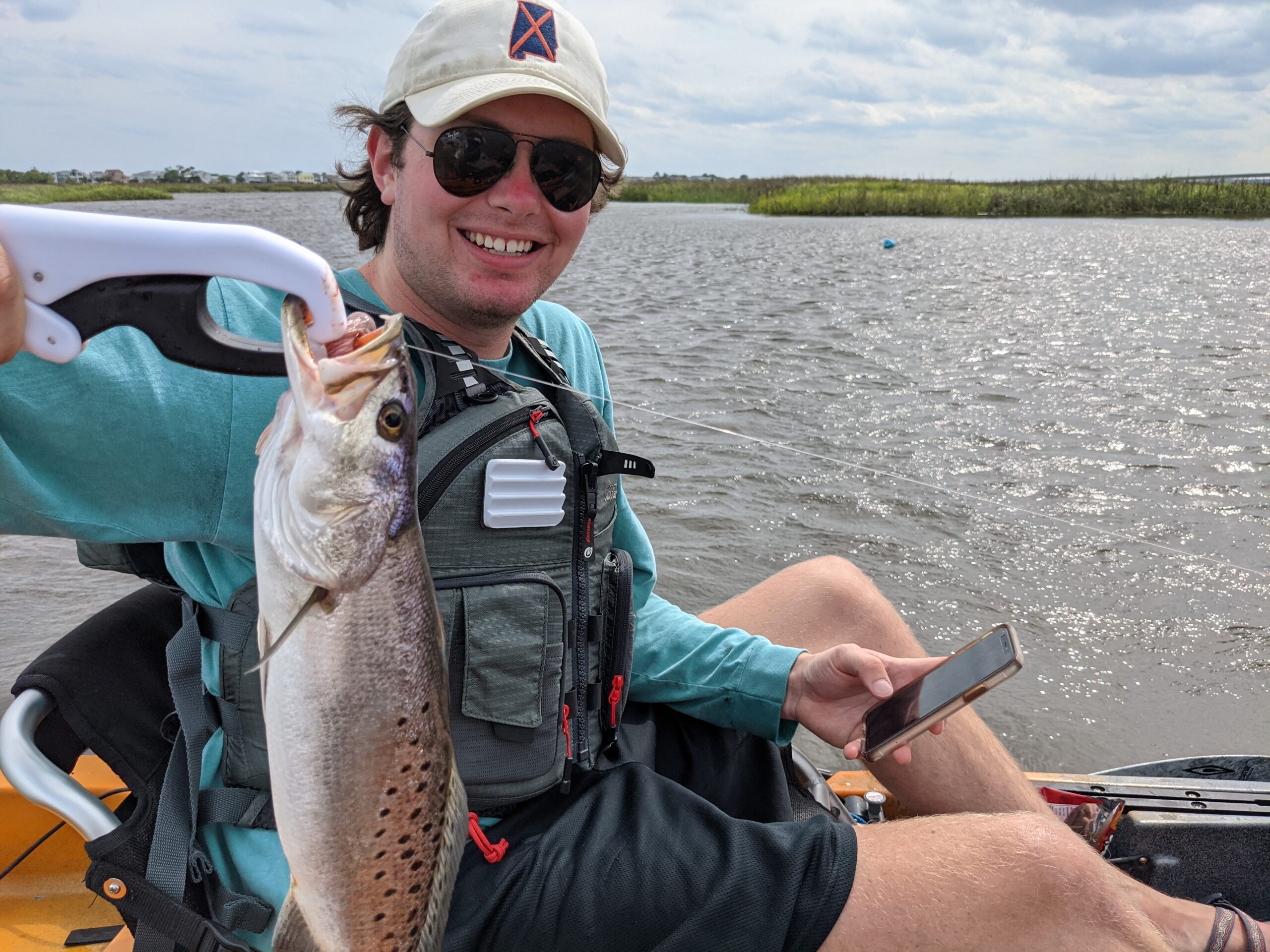
The lagoon is running hot and slow, which is exactly what August looks like here. Water temperatures in the shallows are pushing 90 by mid-morning, dissolved oxygen drops with them, and the fish respond by feeding hard for about two hours at daylight and then going largely dormant until the sun drops. Anglers who are on the water before sunrise are catching. Everyone else is sweating.
What’s Hitting
Seatrout are the most dependable fish in the system, eating well on the deeper grass edges and around potholes in the first hours of light. Redfish are around in good numbers but have pulled off the shallow flats into potholes, channel edges, and the shade under docks and mangroves. Snook are working the bridge shadow lines and the causeway structure at night, closed to harvest on the Atlantic coast — release only. Black drum are holding around bridge pilings and dock structure. Ladyfish, jacks, and small tarpon are keeping light-tackle anglers entertained, and the occasional big tarpon is rolling in the deeper channels at dawn.
Where to Find Them
Work the 3- to 5-foot grass edges and the potholes scattered through them for trout at first light. Redfish are in the sand holes and along the spoil island drop-offs — the deeper edges, not the shallow tops. The causeway bridges at Melbourne, Eau Gallie, and Wabasso hold snook, drum, and snapper on the moving tide, especially after dark. Deeper channel edges through the north lagoon and the Banana River are worth working when the sun gets high.
Tides & Conditions
Lagoon tides are wind-driven more than lunar, so pay attention to the forecast direction. Water temperatures are 88 to 91 in the shallows and slightly cooler in the deeper channels. Light southeast wind in the mornings has kept the water clean; afternoon storms build over the mainland and roll east most days. Water clarity is variable — the north lagoon has been cleaner than the Banana River. Handle and release fish quickly at these temperatures.
Tackle & Tactics
Topwater in the first thirty minutes of light is worth the early alarm — a walking bait over a grass edge will draw big trout and the occasional red. After that, switch to a soft plastic on a light jighead or a popping cork with a shrimp imitation and work the potholes methodically. Redfish holding in shade want a quiet presentation: a weedless plastic or a live shrimp pitched under the structure rather than cast at it. Bridge snook at night take a small paddletail swum through the shadow line on 30-pound fluorocarbon.
Local Intel This Week
The Wabasso Causeway ramp, Kelly Park in Merritt Island, and the Melbourne Causeway ramp are the standard launches. Shore anglers are catching from the causeway catwalks after dark. Fish are concentrating in potholes, channel edges, and shade — not on the open shallow flats where they were in spring. Redfish, trout, and snook all carry slot limits and seasonal closures on the Atlantic coast — check current FWC regulations and seasons before keeping any fish.
This Week’s Tip
In water this warm, fish the shade line rather than the structure itself. A dock, a mangrove overhang, or a bridge throws a hard-edged shadow onto the bottom, and redfish and snook sit just inside that edge. Cast so your bait lands in the sun and swims into the shade — the strike almost always comes right at the transition.
Planning a trip to Indian River Lagoon?
This report tells you what happened. ReelAI tells you what to do about it — a briefing for your date, your target species and how you're fishing, built from our reports plus live NOAA and USGS data.
Powered by ReelAI — fishing.digital's intelligence layer. Answers are generated from fishing.digital reports and public NOAA, NWS and USGS data, and may be incomplete or out of date. Regulations and marine safety information are summaries only; always confirm with the responsible authority before you fish.