
What’s hot in the Keys this week is a settled weather pattern — light east wind most mornings, a two-foot sea, and glass conditions before nine. Water temperature is at its annual peak in the low to mid 80s on the flats and high 80s in the shallow backcountry, which pushes most of the fishing to first light and the last hour of the afternoon. The reef and the wrecks are carrying the middle of the day.
What’s Hitting
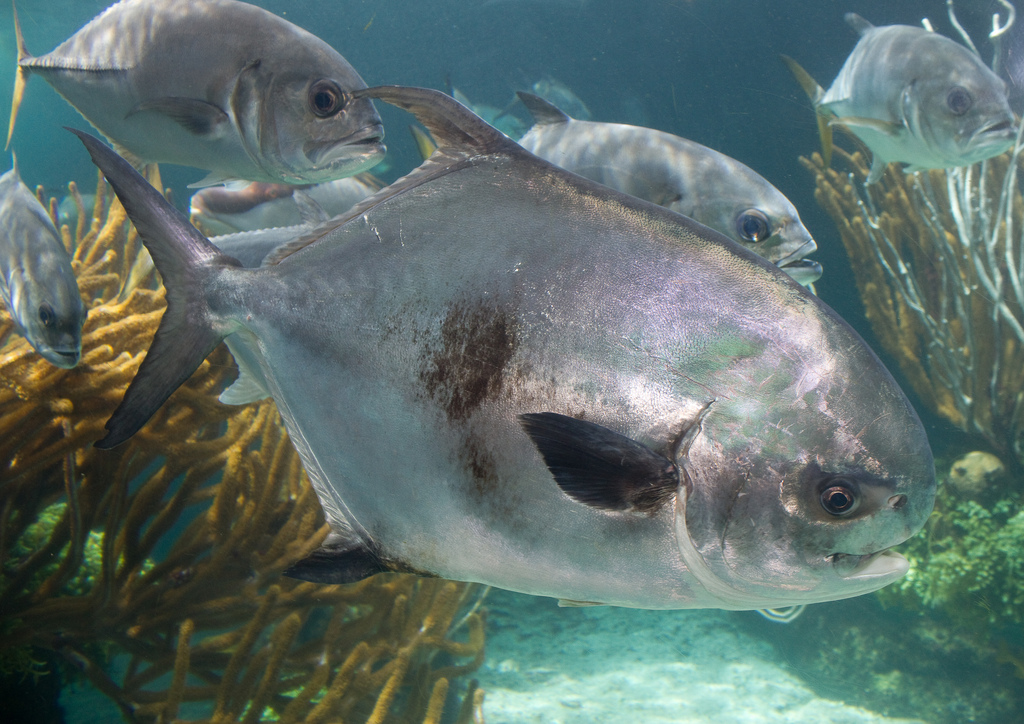
Permit on the deep wrecks off Marathon and Islamorada are the headline. Mutton snapper are strong on the patch reef edges and the deeper drop, best around the moon tides at dawn. Yellowtail have been steady in 60 to 90 feet with a consistent chum slick. Mangrove snapper are thick on the bridges and the harbor structure after dark. Offshore, blackfin tuna are showing on the humps early, with scattered mahi on the weedlines and the occasional sailfish for boats making the run.
Where to Find Them
The wrecks in 90 to 160 feet between Marathon and Key West are holding the best permit numbers. For muttons, work the outside edge of the patch reefs off Alligator, Tennessee and Sombrero in 50 to 80 feet. Yellowtail are best on the reef line in 60 to 90 feet. Backcountry flats and basins north of Islamorada hold bonefish early, but the fish are spooky in hot, slick water — look for muds rather than tails once the sun is up. The Bahia Honda and Seven Mile Bridge channels hold tarpon on the night tides.
Tides & Conditions
Tides are moderate this week off the building moon, with the strongest flow on the late-morning outgo. Air temps in the low 90s with a heat index well above that — carry more water than you think you need. Afternoon thunderstorms are hit-or-miss and mostly build over the mainland, but they can drift over the Upper Keys after three. Seas two feet or less through midweek, building slightly toward the weekend.
Tackle & Tactics
Permit on the wrecks: a 5000-size spinner, 30-pound braid, 40-pound fluorocarbon and a live crab is still the whole program — anchor up-current and let the crab drift back naturally with no weight if the current allows. Muttons want long 20- to 30-pound fluorocarbon leaders and a whole ballyhoo or a live pinfish fished on the bottom at dawn. Yellowtail: a steady chum slick, 15-pound leader, small hook, and never let the bait sink faster than the chum. For bridge mangroves, fish the up-current side with a small live shrimp on 15-pound fluoro.
Local Intel This Week
Public access is easy: the Founders Park ramp in Islamorada, the Harry Harris Park ramp in Tavernier, the 33rd Street ramp in Marathon and the Murray Marine ramp in Key West all handle trailers well. Fish are concentrating hard on structure — wrecks, patch edges, bridge pilings — rather than spreading over open bottom in this heat. Note that several species have season and permit-zone rules that change through the summer; check current FWC and federal South Atlantic regulations before keeping any fish.
This Week’s Tip
On a wreck permit anchor-up, your first drift is worth ten of the ones that follow. Get the anchor set on the first try, let the boat settle, and only then start the chum. Crashing around resetting an anchor over a wreck moves the school off the up-current corner and it can take an hour for them to come back.
Planning a trip to Florida Keys?
This report tells you what happened. ReelAI tells you what to do about it — a briefing for your date, your target species and how you're fishing, built from our reports plus live NOAA and USGS data.
Powered by ReelAI — fishing.digital's intelligence layer. Answers are generated from fishing.digital reports and public NOAA, NWS and USGS data, and may be incomplete or out of date. Regulations and marine safety information are summaries only; always confirm with the responsible authority before you fish.