
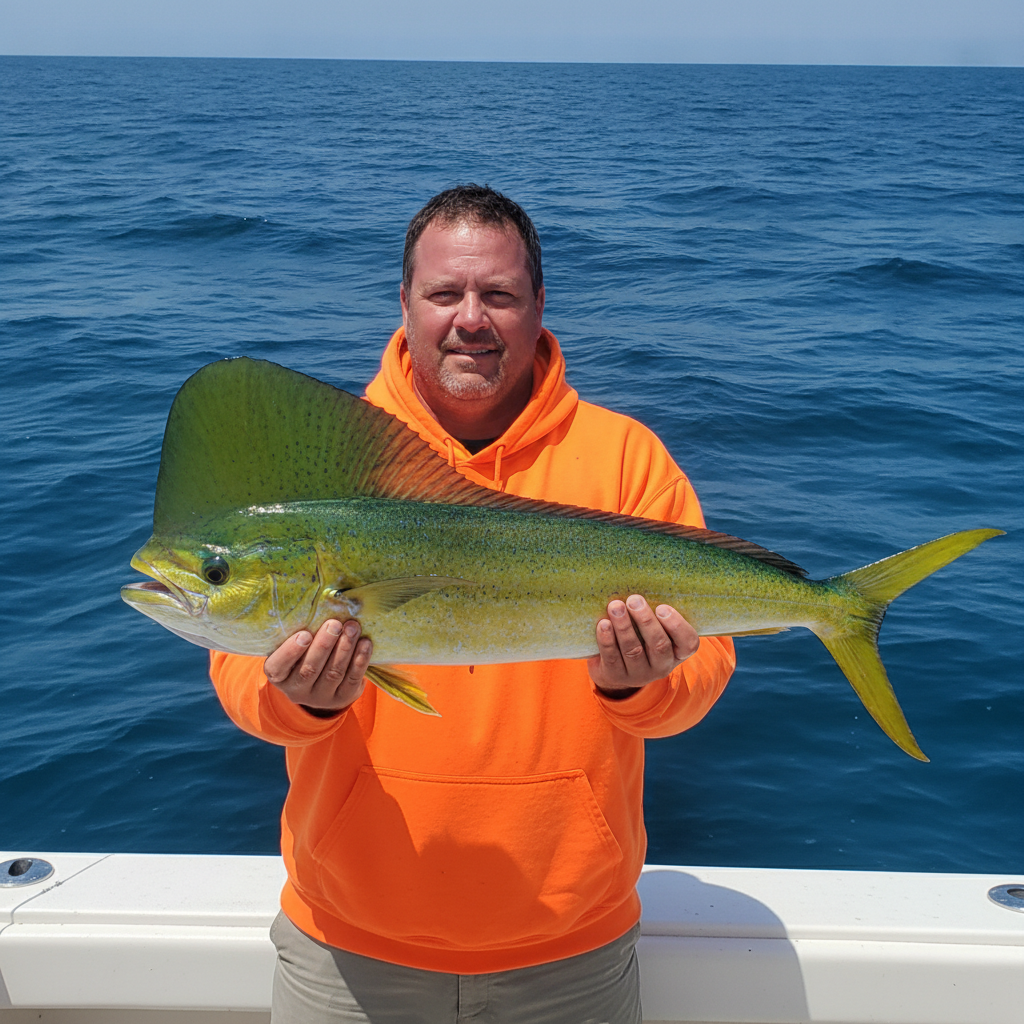
Fort Lauderdale is one of the few places where you can be in 300 feet of water fifteen minutes after leaving the dock, and in late August that proximity is worth everything. Mornings have been calm, the current has been running north hard, and the offshore program has been the best use of a short window before the afternoon storms build.
What’s Hitting
Mahi are the offshore target, scattered on the weedlines and floating debris from 300 out to 900 feet. Sizes are mixed with plenty of schoolies and the occasional better fish under a frigate bird.
On the reef, mutton snapper and mangrove snapper are the steady producers in 60 to 120 feet, best at first light and after dark. Blackfin tuna are on the deeper humps and wrecks. Inshore, tarpon are working the Port Everglades inlet and the bridge shadow lines at night, and snook are on the same structure. Bonito are thick and will keep a light rod bent between weedlines.
Where to Find Them
Run east until you find a weedline with structure — a rip, a color change, a line of sargassum with depth under it. Frigate birds and flying fish are worth more than any GPS number out there.
The reef edges in 60 to 120 feet hold the snapper. The wrecks and humps in 200 to 400 feet are the blackfin and amberjack zone. Inshore, the Port Everglades inlet, the 17th Street Causeway bridge and the New River bridges hold tarpon and snook on the moving tide after dark. Jetty rocks on either side of the inlet hold snapper and jacks.
Tides & Conditions
The Gulf Stream is pressed close here and the north-setting current has been strong, which means drift planning matters more than usual. Water temps are in the mid 80s inshore and low to mid 80s offshore.
Mornings have been light and glassy with a sea breeze filling in by mid-morning and thunderstorms building over the Everglades in the afternoon. Plan for a dawn start. The inlet fishes best on the outgoing tide at night when bait gets flushed through the shadow lines.
Tackle & Tactics
For mahi, keep a 20-pound spinning outfit rigged with a bare 4/0 circle hook and a livewell of pilchards or ballyhoo. When you raise a school, keep one hooked fish in the water to hold the rest of the group at the boat.
Mutton snapper on the reef take a whole ballyhoo or a live pinfish on a long 40- to 50-pound fluorocarbon leader fished on the bottom — long leaders matter in this clear water. For inlet tarpon at night, a live mullet or crab on a 6/0 circle with an 80-pound fluoro leader, drifted down the shadow line with the tide. Do not cast into the light; fish the dark side of the line.
Local Intel This Week
Ramps and access: the Las Olas ramp, the George English Park ramp on the Middle River, Cove Marina in Deerfield and the Dania Beach ramp all get you to the inlet quickly. Shore anglers can fish the Anglin’s Pier in Lauderdale-by-the-Sea and the rocks at South Beach Park.
Fish are concentrating on the offshore weedlines and along the reef drop, with the inlet best after dark. Mutton snapper, mahi and tarpon all carry size, bag and handling rules that differ between state and federal waters — check current FWC and federal Atlantic regulations before keeping fish, and remember that tarpon are a catch-and-release fishery for most anglers.
This Week’s Tip
Do not run past a small weedline looking for a big one. In late August the productive line is often a thin, broken strand with a distinct current edge and bait flickering under it. Idle up, throw a few pilchards, and give it five minutes. Mahi will materialize out of clean blue water that looked empty thirty seconds earlier.
Planning a trip to Fort Lauderdale?
This report tells you what happened. ReelAI tells you what to do about it — a briefing for your date, your target species and how you're fishing, built from our reports plus live NOAA and USGS data.
Powered by ReelAI — fishing.digital's intelligence layer. Answers are generated from fishing.digital reports and public NOAA, NWS and USGS data, and may be incomplete or out of date. Regulations and marine safety information are summaries only; always confirm with the responsible authority before you fish.