
The Space Coast is sitting on the edge of its best season. Late August still fishes like summer — hot, still, storm-prone — but the first finger mullet are trickling down the beach, and once that trickle becomes a flood the whole coast changes. This week is the setup week, and the anglers who are out scouting now will be the ones dialed in when it breaks.
What’s Hitting
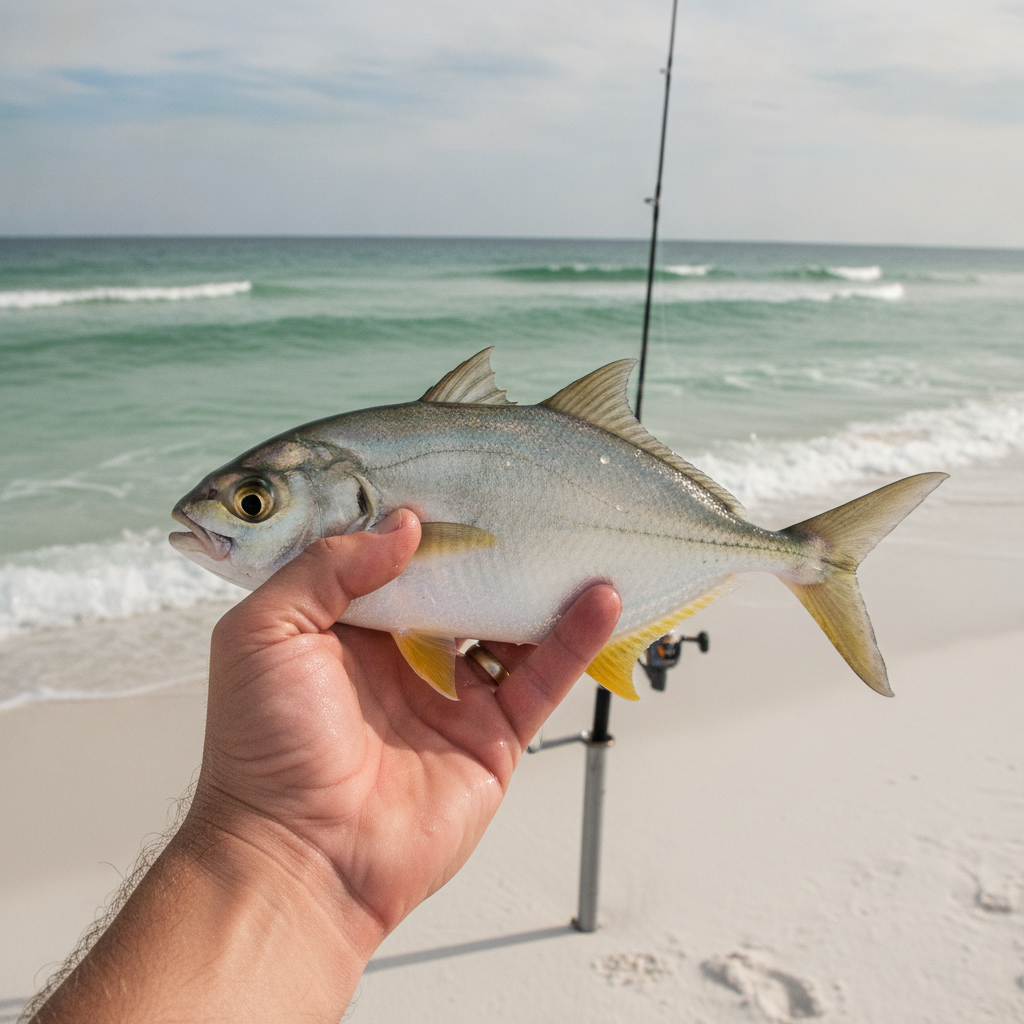
The surf has been the most consistent option. Pompano, whiting and croaker are in the troughs and along the bar cuts, with a few early bluefish and Spanish mackerel mixed in on the clean water.
Slot redfish and speckled trout are in the northern Indian River Lagoon and the Mosquito Lagoon, working the flats early before the water heats. Snook and tarpon are around Ponce Inlet on the moving tide, and juvenile tarpon are showing in the residential canals and the lagoon backwaters. Black drum are on the docks and bridge pilings.
Where to Find Them
Work the surf from Daytona Beach Shores south through New Smyrna, targeting the deeper trough just off the first bar and any cut where water is funneling back out. Ponce Inlet — both jetties and the channel edges — holds snook, tarpon, reds and flounder on the tide.
In Mosquito Lagoon and the north end of the Indian River, the shallow grass flats and potholes are best in the first two hours of light. After that, slide to the deeper edges and the spoil islands. Watch for early mullet schools working south along the beach and around the inlet mouth — they will be dragging jacks, tarpon and snook behind them.
Tides & Conditions
Water temps are in the mid to upper 80s in the lagoon and low 80s in the surf. The lagoon shallows heat fast after nine in the morning, which is why the early window matters so much here.
The surf has been fishing cleanest on a light onshore breeze and the incoming tide. Afternoon storms are a daily feature and can put a real chop on the beach in twenty minutes. Tides are moderate this week — fish the moving water at the inlet and the top of the tide on the lagoon flats.
Tackle & Tactics
Surf anglers should run a two-hook pompano rig with small circle hooks, sand fleas or fresh shrimp, and enough lead to hold in the trough. A 10- to 12-foot rod with 20-pound braid covers it. Add a pompano jig on a second rod for casting to visible bar cuts.
In the lagoon, sight fishing calls for a 7-foot medium spinning outfit, 15-pound braid and a 25- to 30-pound fluoro leader. A weedless soft plastic or a gold spoon covers water quietly. For inlet snook, a live mullet on a 3/0 circle or a big paddletail worked on the down-current side of the jetty rocks.
Local Intel This Week
Access: the Ponce Inlet ramp at Lighthouse Point Park, the Bethune Point ramp in Daytona, the North Causeway ramp in New Smyrna, and the Haulover Canal and Bairs Cove ramps for Mosquito Lagoon. Miles of walk-on beach access along A1A means the surf costs you nothing but a parking spot.
Fish are concentrating in the surf troughs and at the inlet mouth as the early bait moves. Mosquito Lagoon sits partly inside federal refuge boundaries with their own rules, and redfish, snook and trout all carry state season and slot limits — check current FWC and refuge regulations before keeping fish.
This Week’s Tip
In the surf, find the cut before you find the fish. Walk the beach at low tide and mark where the sandbar is broken — those gaps are the highways bait uses to move in and out with the tide. Come back on the incoming, put your baits on either side of that cut, and you will out-fish someone casting blindly a hundred yards down the beach every time.
Planning a trip to Daytona/Space Coast?
This report tells you what happened. ReelAI tells you what to do about it — a briefing for your date, your target species and how you're fishing, built from our reports plus live NOAA and USGS data.
Powered by ReelAI — fishing.digital's intelligence layer. Answers are generated from fishing.digital reports and public NOAA, NWS and USGS data, and may be incomplete or out of date. Regulations and marine safety information are summaries only; always confirm with the responsible authority before you fish.