
The Louisiana marsh in late August is hot, humid and green, and it still gives up redfish to anyone willing to be on the water at daybreak. River levels are low for the season, which has the interior ponds clean and the fish easy to see. The trade-off is heat — by ten in the morning the shallow ponds are cooking and the bite backs off hard.
What’s Hitting
Redfish are the constant. Slot fish are in the interior marsh ponds and along the grass edges, working shallow on the falling tide, and bull reds are showing at the passes and along the beaches as the month closes.
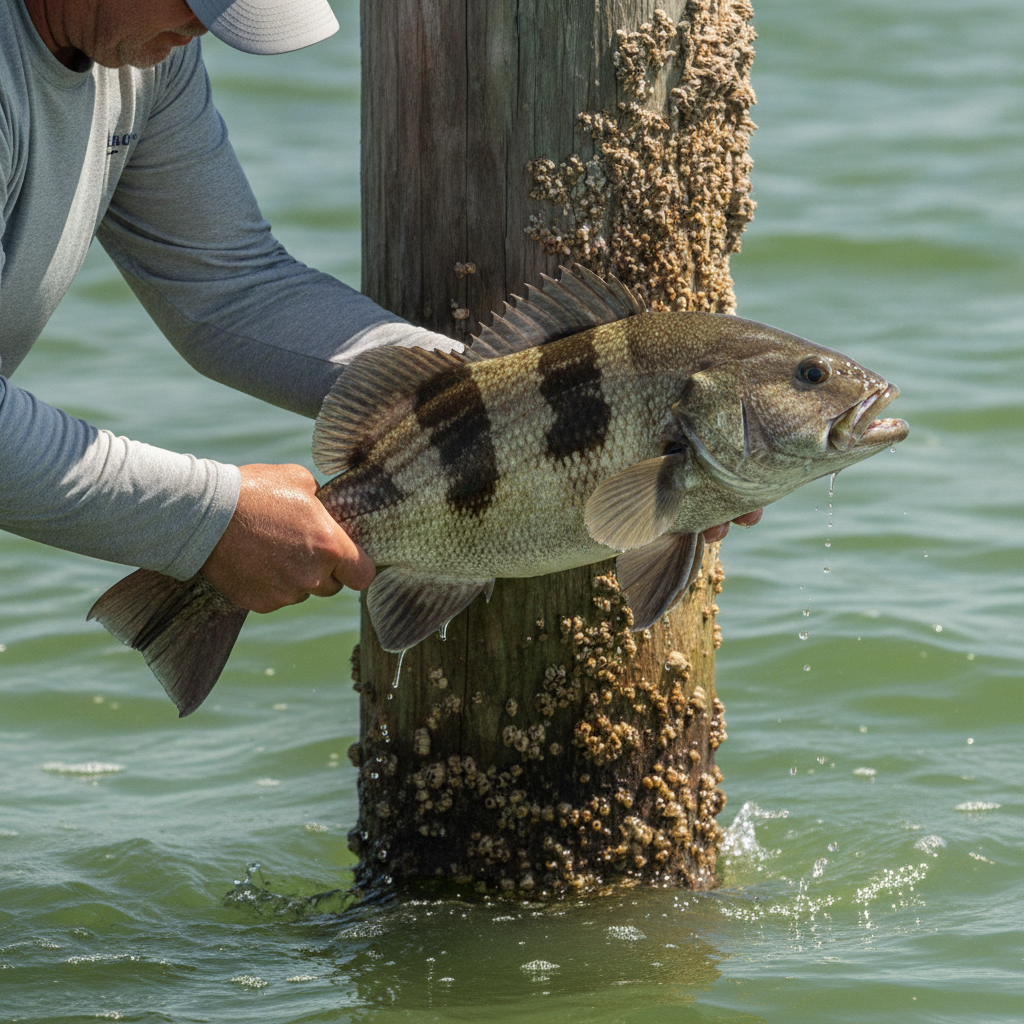
Speckled trout are on the outside islands, the rock jetties and the deeper cuts. Tripletail are on the crab trap floats and channel markers and are one of the most fun sight targets of the season. On the nearshore rigs and platforms, mangrove snapper are stacked and there are cobia, kings and Spanish around them. Flounder are staging along the passes and drains.
Where to Find Them
The interior marsh from Delacroix, Hopedale and Reggio through the Biloxi Marsh is the core redfish water. Work the grass edges, the drains and the shallow ponds on a falling tide when bait gets pulled out.
Trout are on the outside — the Biloxi Marsh islands, the Lake Borgne rocks and the Chandeleur area when the weather allows a run. Tripletail are found by idling the crab trap lines and looking for a dark, leaf-shaped shadow lying under a float. Nearshore rigs and the Grand Isle and Venice area platforms hold the snapper, kings and cobia.
Tides & Conditions
Water temps in the marsh are in the upper 80s and the shallow interior ponds get hotter still through the afternoon. Salinity is up in the interior with the river low, which has pushed trout further into the marsh than usual.
Tides in Louisiana are small and heavily wind-driven — a sustained south wind fills the marsh and a north wind drains it, and the draining tide is when the redfish feed hardest at the drains. Afternoon thunderstorms are a daily feature and can put you a long way from the ramp in a hurry.
Tackle & Tactics
For marsh reds, a 7-foot medium spinning outfit with 20-pound braid and a 30-pound fluorocarbon leader. A gold spoon, a weedless soft plastic or a market shrimp under a popping cork all work; in clear ponds, the quiet weedless plastic gets more eats than the cork.
Trout on the rocks and islands take a soft plastic on a quarter-ounce jighead, or a live shrimp under a cork. Tripletail want a live shrimp on a 1/0 circle pitched past the float and drifted back — never cast directly onto the fish. Snapper on the rigs need light fluorocarbon and a live or fresh dead bait dropped tight to the legs.
Local Intel This Week
Ramps and access: the Delacroix Island and Hopedale ramps in St. Bernard, the Sweetwater Marina ramp in Delacroix, the Grand Isle and Bridge Side Marina ramps, and the Venice Marina ramps for the river mouth. The Grand Isle State Park pier and the Lake Pontchartrain seawall give shore anglers reasonable access.
Fish are concentrating at the marsh drains on falling water and around the nearshore rigs. Redfish, speckled trout and snapper in Louisiana all carry size and bag rules — the state made changes to the speckled trout limits in recent years — so check current Louisiana Department of Wildlife and Fisheries regulations before keeping fish.
This Week’s Tip
In the interior ponds, watch for the mud boil, not the fish. A redfish rooting in soft bottom leaves a plume of stained water that hangs for a minute or two after the fish has moved on. Cast ahead of the plume in the direction it trails, not into the middle of it, and you will put your bait where the fish actually is instead of where it was.
Planning a trip to Louisiana?
This report tells you what happened. ReelAI tells you what to do about it — a briefing for your date, your target species and how you're fishing, built from our reports plus live NOAA and USGS data.
Powered by ReelAI — fishing.digital's intelligence layer. Answers are generated from fishing.digital reports and public NOAA, NWS and USGS data, and may be incomplete or out of date. Regulations and marine safety information are summaries only; always confirm with the responsible authority before you fish.