
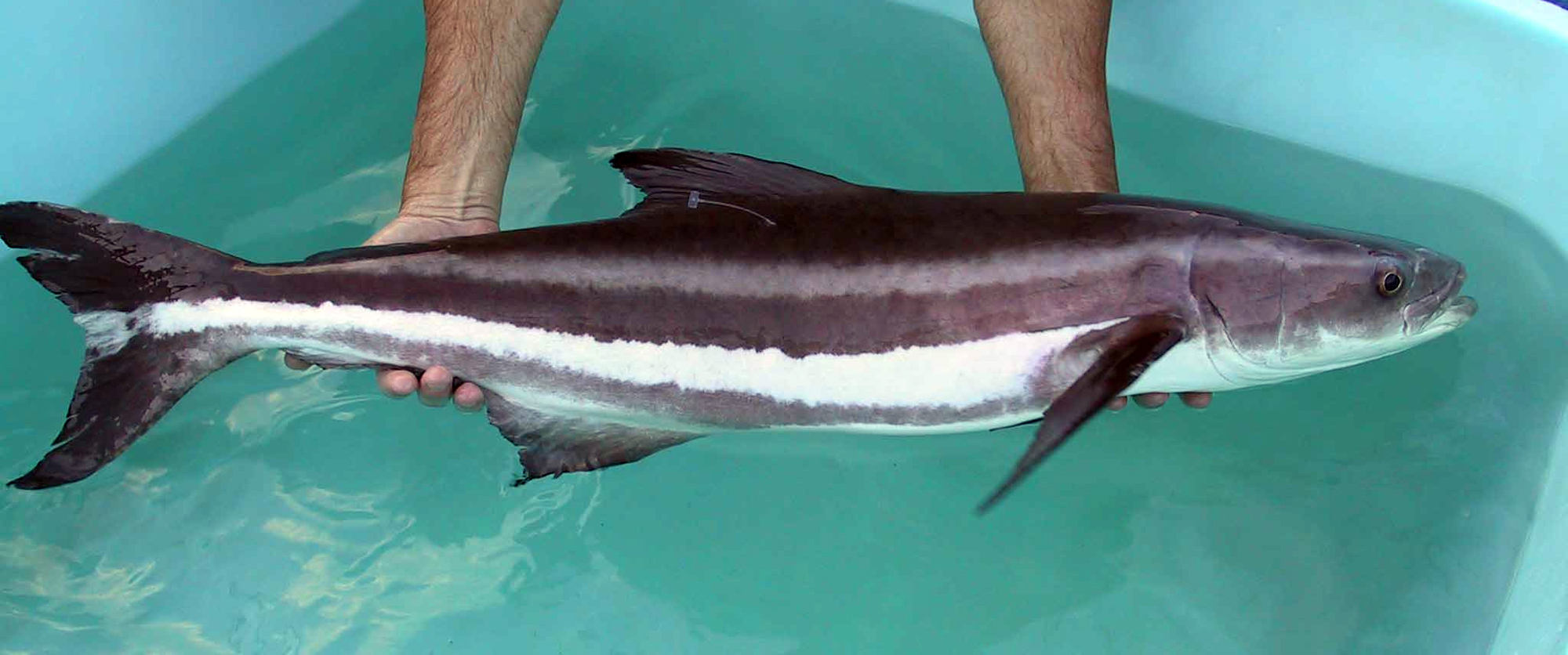
The lower Chesapeake in late August is a sight-fishing bay. The water is clear enough on a calm morning to spot cobia on the surface, the Spanish mackerel are thick along the shipping channel edges, and the shallow-water trout and puppy drum fishing is getting better as the month closes. The upper bay is a different story — hot, stratified, and best fished early.
What’s Hitting
Cobia are the marquee target on the lower bay. Fish are cruising the surface and holding on the buoys, markers and shoal edges from the Bay Bridge-Tunnel north, and they will eat both live bait and a well-placed eel or jig.
Spanish mackerel are everywhere along the channel edges, best on a fast troll. Speckled trout and puppy drum are on the shallow shorelines, grass beds and marsh points, particularly around the Eastern Shore and the Virginia rivers. Red drum are on the shoals. Striped bass are around but under heat stress in much of the bay — early morning and shallow water only. Croaker and spot are keeping bottom anglers busy.
Where to Find Them
The lower bay from the Chesapeake Bay Bridge-Tunnel north through the Nine Foot Shoal, York Spit and the Cabbage Patch is prime cobia water. Look for fish on the surface on calm mornings and around the channel markers.
Spanish are along the shipping channel edges and the Baltimore Channel. Speckled trout and puppy drum are on the grass and marsh edges of Mobjack Bay, the Poquoson flats and the Eastern Shore creeks. Striped bass hold near the Bay Bridge pilings, the Middle Grounds and the mouths of the Potomac and Rappahannock, best at first light.
Tides & Conditions
Surface water is in the low to mid 80s in the lower bay. Late summer stratification means dissolved oxygen is poor in the deeper mid-bay holes — fish are pushed shallower and into moving water than the depth finder would suggest.
Calm mornings are essential for sight casting cobia; anything over ten knots and you will not see them. Tides are moderate with the strongest flow around the channel edges. Afternoon thunderstorms have been common, and they build fast over this much open water — keep an eye on the western sky.
Tackle & Tactics
For cobia, an 8000-class spinner with 50-pound braid and a 50- to 60-pound fluorocarbon leader, plus a live eel or a large bucktail ready to pitch. Have the rod in your hand before you see the fish; a cobia gives you one cast and about four seconds.
Spanish mackerel come on a fast troll — Clark spoons behind planers at six to eight knots. Speckled trout and puppy drum eat a soft plastic on a quarter-ounce jighead or a topwater walked over the grass at dawn. For bay stripers in the heat, fish shallow and early with light tackle and release fish quickly; a stressed fish in eighty-degree water does not survive a long fight.
Local Intel This Week
Ramps and access: the Sunset Boulevard ramp in Virginia Beach, the Lynnhaven Boat Ramp, the Gloucester Point and Messick Point ramps, and the Kiptopeke State Park ramp on the Eastern Shore. The Chesapeake Bay Bridge-Tunnel Island and the Buckroe and Ocean View piers offer shore access.
Fish are concentrating on the shoal edges and channel drops in the lower bay, and on the shallow grass early. Cobia in Virginia requires a free permit and has a defined season, and striped bass rules differ between Virginia and Maryland waters and change frequently — check current VMRC and Maryland DNR regulations before keeping fish.
This Week’s Tip
When you spot a cobia and it refuses your bait, do not immediately re-cast at it. Note the direction it is traveling, idle well ahead of it, shut down, and let it swim to you. A cobia that has just watched a bait land on its head has seen the boat too. Getting in front of a fish and letting it approach on its own terms converts far more sightings into hookups.
Planning a trip to Chesapeake Bay?
This report tells you what happened. ReelAI tells you what to do about it — a briefing for your date, your target species and how you're fishing, built from our reports plus live NOAA and USGS data.
Powered by ReelAI — fishing.digital's intelligence layer. Answers are generated from fishing.digital reports and public NOAA, NWS and USGS data, and may be incomplete or out of date. Regulations and marine safety information are summaries only; always confirm with the responsible authority before you fish.