
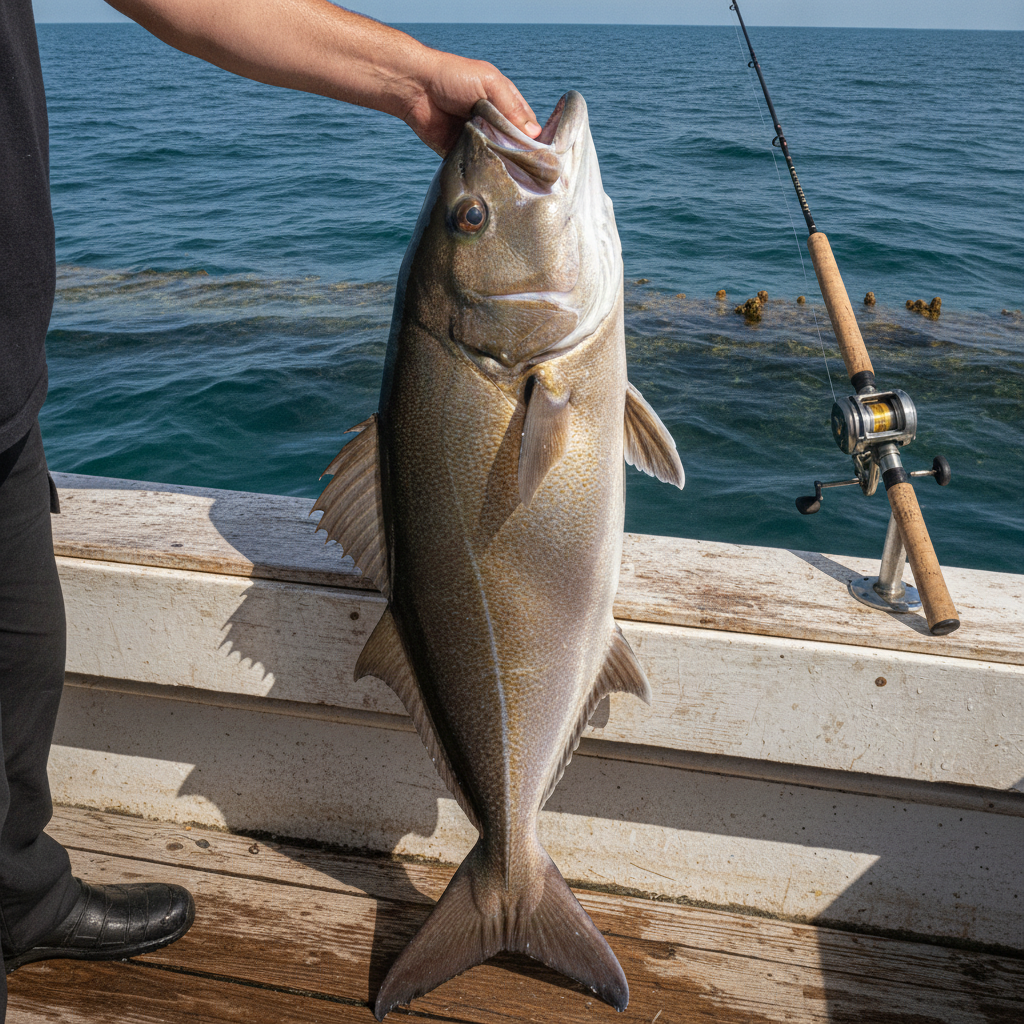
Alabama’s stretch of coast sits on top of one of the largest artificial reef zones in the country, and late August is when that investment shows. Boats out of Orange Beach and Gulf Shores are reaching productive structure quickly, the beach is holding tarpon on the calm mornings, and the back bays are giving up trout and reds early.
What’s Hitting
Amberjack are the brawler of choice on the deeper wrecks and towers, and they are as willing as ever — expect a hard, straight-down fight and bring your back.
Vermilion snapper, mingo, triggerfish and scamp are stacked on the reefs, with gag grouper on the harder bottom. King mackerel and Spanish mackerel are on the nearshore bait, and tarpon are cruising the beachfront on flat mornings. Inshore, speckled trout and slot redfish are on the grass and the bayou mouths of Perdido Bay and Wolf Bay, and flounder are staging around the Perdido Pass rocks.
Where to Find Them
The Alabama artificial reef zone south of Orange Beach holds an enormous amount of public structure in 70 to 250 feet — the deeper wrecks and towers are the amberjack water, the shallower reefs the snapper.
Perdido Pass is the inshore crossroads for flounder, reds, Spanish and the occasional tarpon on moving water. The beachfront from the pass west toward Gulf Shores is worth an idle at first light looking for rolling tarpon. In the back, Wolf Bay, Arnica Bay and the Intracoastal shoreline hold trout and redfish on the grass and around docks.
Tides & Conditions
Gulf water is in the mid 80s and the back bays run warmer. Mornings have been light with the sea breeze building from the south by mid-morning, which is the window for both the offshore run and the beach tarpon.
Tides on the Alabama coast are small and often diurnal, so wind is the dominant water-mover. A steady southerly cleans up the pass and the beach; a north wind flattens and stains it. Afternoon storms build over the mainland and roll south most days — offshore boats should plan to be headed in by early afternoon.
Tackle & Tactics
For amberjack, heavy conventional gear with 65- to 80-pound braid, a 100-pound leader and a live hardtail or a large butterfly jig worked fast off the bottom. There is no finesse in this and the fish will find any weak link in your setup.
Reef snapper come on a knocker rig with a 5/0 circle and a live cigar minnow or cut squid. Beach tarpon call for an 8000-class spinner, 50-pound braid and 60- to 80-pound fluorocarbon with a live crab or a large swimbait cast ahead of a moving fish. Inshore, a popping cork with a live shrimp or a quarter-ounce jig covers trout and reds without much thought.
Local Intel This Week
Ramps and access: the Orange Beach Boat Launch at Cotton Bayou, the Gulf Shores Public Boat Launch on the Intracoastal, and the Perdido Pass and Bear Point ramps. Shore anglers have the Gulf State Park Pier — one of the largest on the Gulf — and good access along the Perdido Pass jetties.
Fish are concentrating on the deeper reef structure offshore and around the pass on moving water. Gulf reef species including red snapper, greater amberjack, gag grouper and triggerfish are managed with tightly defined federal and Alabama state seasons that open and close on short notice and differ between private and for-hire anglers. Check current Alabama Marine Resources and Gulf federal regulations and confirm season status before keeping any bottom fish.
This Week’s Tip
When amberjack stop eating a dropped bait, switch to a vertical jig and speed it up rather than slowing down. These fish are reaction predators and a jig ripped hard off the wreck will trigger strikes from a school that has gone completely indifferent to live bait. It is more work, but it turns a dead spot back on faster than waiting them out.
Planning a trip to Orange Beach / Gulf Shores AL?
This report tells you what happened. ReelAI tells you what to do about it — a briefing for your date, your target species and how you're fishing, built from our reports plus live NOAA and USGS data.
Powered by ReelAI — fishing.digital's intelligence layer. Answers are generated from fishing.digital reports and public NOAA, NWS and USGS data, and may be incomplete or out of date. Regulations and marine safety information are summaries only; always confirm with the responsible authority before you fish.