
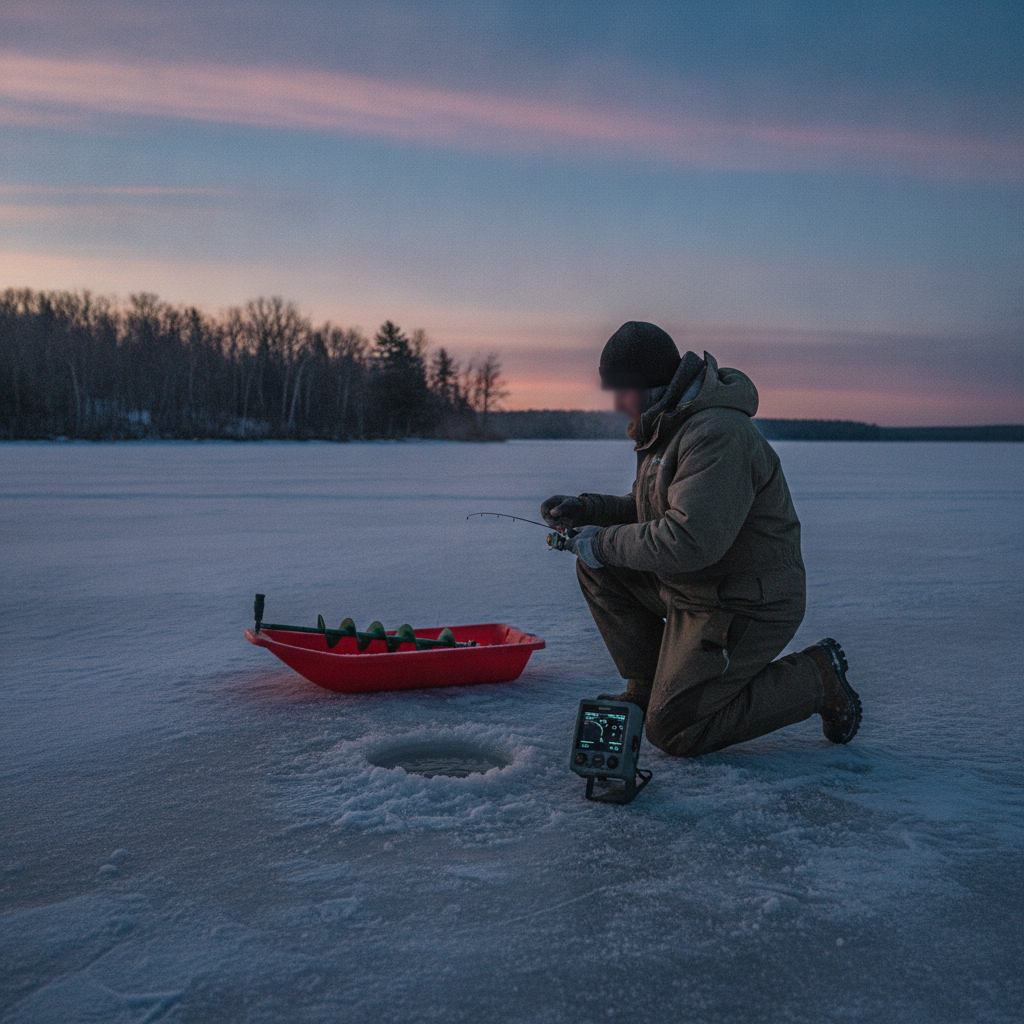
Every winter, anglers ask the same question before the first trip of the season: how thick does the ice need to be? The short answer is that clear, solid ice should be at least four inches before you walk on it. But thickness is only part of the story, and no ice is ever guaranteed safe. This guide covers the commonly cited thickness guidelines, how to check ice yourself, the warning signs to respect and what to do if the worst happens.
Ice Thickness Guidelines
State natural-resource agencies in the northern states publish very similar numbers, and they all apply to new, clear, hard ice on a body of still water. Treat them as minimums, not promises.
- Under 4 inches: stay off.
- 4 inches: minimum for walking and ice fishing on foot.
- 5 to 7 inches: generally cited for a snowmobile or ATV.
- 8 to 12 inches: generally cited for a car or small pickup.
- 12 to 15 inches: generally cited for a medium-weight truck.
Those figures assume clear ice. Always check the guidance published by your own state or provincial agency, because local conditions and rules differ, and many agencies recommend more margin than the bare minimum.
Not All Ice Is Equal
Clear, blue-to-black ice that froze in a single cold stretch is the strongest. White or opaque ice, often called snow ice or frozen slush, is made of air-filled crystals and is widely considered about half as strong as clear ice, so a foot of white ice does not equal a foot of clear ice. Layered ice from repeated thaw and freeze cycles can hide weak seams. Ice that has been through a warm spell or heavy rain is unreliable even when it is still thick.
Where Ice Is Weakest
Thickness varies across a single lake. Be extra careful near inlets and outlets, where moving water thins the ice, around springs, bridges, docks and pressure ridges, along shorelines where sun-warmed rocks and snowmelt weaken the edge, and over areas with submerged vegetation or sunken wood that give off heat. Rivers and lakes with current never freeze as evenly as still ponds, and early in the season the ice on large lakes may be far thinner in the middle than at the edge.
How to Check the Ice
- Ask first. Local bait shops and agency websites often report conditions. Treat reports as a starting point, not a guarantee.
- Drill as you go. Use an auger or an ice chisel (spud bar) to make test holes and measure with a tape or an ice gauge. Check every 100 to 150 feet, and more often near the hazards above.
- Use the spud bar. In the first weeks, strike the ice ahead of you as you walk. If the bar punches through, turn back.
- Watch and listen. Cracking sounds from the ice are common on thick ice, but water seeping through a crack, or ice that sags under your weight, means leave immediately.
Safety Gear to Carry
Ice picks (also called ice claws) worn around the neck or on your sleeves are the single best item, because they let you pull yourself out. Add a flotation vest or float coat, a coil of rope and a throw bag, cleats or creepers for traction, a whistle, a fully charged phone in a waterproof pouch, and a change of dry clothes in the vehicle. Never go alone if you can avoid it, and always tell someone where you are going and when you will be back.
If You Fall Through
Cold-water shock is the first danger, and it passes in a minute or two if you stay calm. Do not try to climb straight out. Instead:
- Turn toward the direction you came from, because that ice held you.
- Place your arms on the ice edge and kick your legs to bring your body flat, like climbing out of a pool.
- Dig in your ice picks and pull forward while kicking.
- Once out, roll away from the hole instead of standing, and get to shelter and warmth immediately.
To help someone else, remember reach, throw, go: reach with a pole or ladder, throw a rope or float, and only go out as a last resort, lying flat, with a way to be pulled back. Call emergency services as soon as possible.
Vehicles on the Ice
Driving on a lake demands far more caution than walking. If you must, keep windows down, doors unlatched and seat belts unbuckled so you can get out fast, keep moving at a slow, steady speed, and never park for long in one place. Many agencies advise against driving on ice at all.
Frequently Asked Questions
Is 2 inches of ice safe? No. Agencies commonly say to stay off ice thinner than four inches.
Is ice thicker in the middle of a lake? Not necessarily. Currents, springs and wind can make it thinner anywhere.
Can ice be safe on one side of a lake and unsafe on the other? Yes, which is why you test as you go.
Keep Learning
Once the ice is safe, our Complete Ice Fishing Guide covers gear and technique, and the walleye, perch and pike guides cover each species. Check state regulations for license and gear rules before you go.
Dennis Suler is a career outdoors writer and lifelong angler. He spent six years on the editorial staff of The Fisherman magazine as a field editor and managing editor — first editing the New Jersey reports section, then managing editor of the Mid-Atlantic edition. He also served as managing editor of Boater’s Digest magazine. He’s a member of the Outdoor Writers Association of America and writes for fishing.digital — covering 40+ U.S. fishing destinations with weekly reports, location guides, and feature articles.
Planning a trip to Freshwater Fishing?
This report tells you what happened. ReelAI tells you what to do about it — a briefing for your date, your target species and how you're fishing, built from our reports plus live NOAA and USGS data.
Powered by ReelAI — fishing.digital's intelligence layer. Answers are generated from fishing.digital reports and public NOAA, NWS and USGS data, and may be incomplete or out of date. Regulations and marine safety information are summaries only; always confirm with the responsible authority before you fish.