
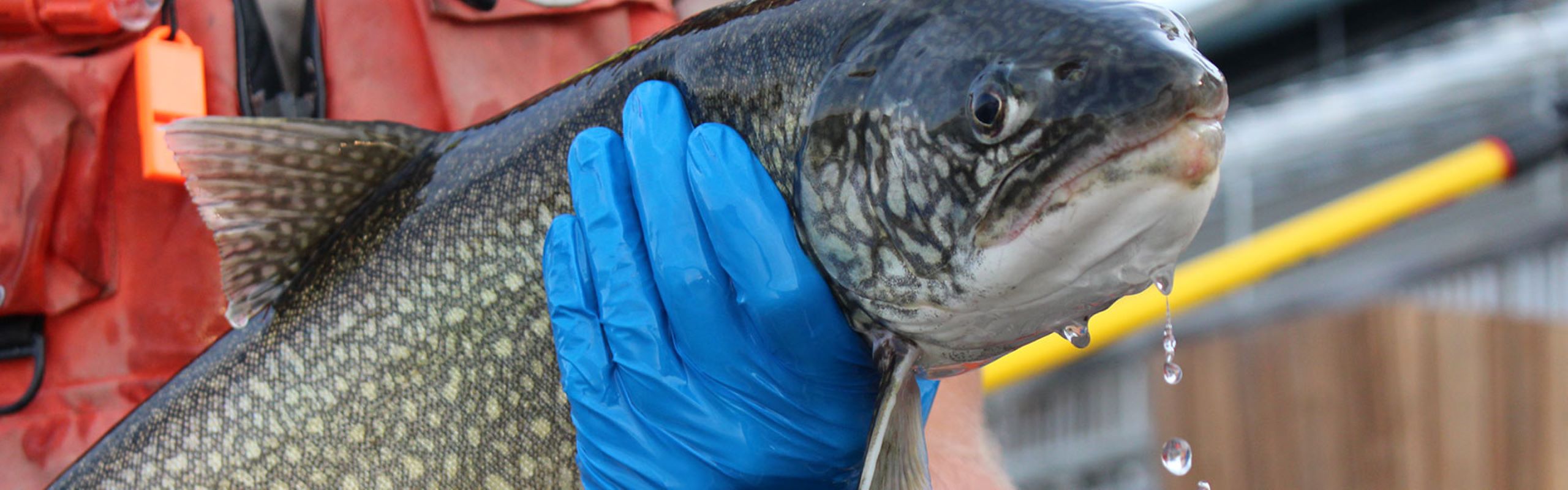
Lake trout, called lakers, togue or mackinaw depending on where you live, are among the most rewarding fish to catch through the ice. They are big, powerful and widely distributed across the northern United States and Canada, and winter often brings them into more accessible depths than in summer. This guide covers where they hold, what gear to use and how to fish both jigs and tip-ups for them.
Where Lake Trout Live
Lake trout favor cold, deep, well-oxygenated lakes. In the United States they are found in the Great Lakes, in lakes across northern New England and the Adirondacks, Lake Champlain, parts of the Rocky Mountains, and Alaska, and they are common across Canada. Because they prefer cold water, they spend much of the summer deep, but in winter, when the whole lake is cold, they move to a wider range of depths and often roam shallower structure in search of food.
Finding Fish Under the Ice
Start with structure: main-lake points, humps, ledges, drop-offs and the edges of deep basins. Lake trout often hunt along these breaks in 25 to 60 feet of water, though in some lakes they are deeper. Use a lake map, drill a number of holes and check each with sonar. Look for marks suspended off the bottom and for baitfish such as smelt or ciscoes, because lakers follow them. Time on the ice matters: low light periods around dawn and dusk are often best.
Gear for Lakers
Auger
Lake trout are large, so use a bigger hole. An 8 to 10 inch auger is common, because it gives you room to land a heavy fish. Keep the hole clear of slush with a skimmer.
Rods and Reels
A medium or medium-heavy rod of 30 to 40 inches with a smooth drag works well. Use a quality spinning or baitcasting reel with 10 to 17 pound line, either monofilament or braid with a fluorocarbon leader. Check your line frequently for abrasion from the ice.
Jigs and Spoons
Big jigging spoons, tube jigs and blade baits in the 1/2 to 1 ounce range, or heavier for deep water, are standard. Colors that work include white, silver, glow, and natural baitfish patterns. Tip with a piece of cut bait or a minnow head where legal.
Jigging Technique
- Lower the lure to the bottom, then lift it a foot or two.
- Use a sharp snap of the rod, then let the lure flutter back down on a controlled drop. Strikes usually come on the fall.
- Pause between lifts. Lake trout are curious and often follow the lure before hitting.
- Raise the lure higher up the water column if fish are marked above the bottom.
- Set the hook firmly, then keep steady pressure, as a laker will run when it sees the hole.
Tip-Ups
Tip-ups let you cover more of the lake, since you can set several lines. Rig each with a strong line, a fluorocarbon leader and a single or treble hook, then bait with a large live or dead baitfish such as a sucker or cisco, where regulations allow. Set the bait near the bottom or a few feet above it, adjust the depth until you find fish, and watch for the flag. When it goes up, approach quietly, take line by hand and set the hook with a steady pull.
Landing and Handling
Bring the fish to the hole head first, and use a gaff only where allowed and necessary. A wide hole helps, and gloves protect your hands from the cold. If you plan to release a fish, handle it quickly and with wet hands, because lake trout are sensitive and slow-growing, and large fish are valuable to the population.
Safety First
Larger lakes with big fish often have changing ice and strong currents, so measure thickness frequently, carry ice picks and tell someone where you are going. Our ice safety guide covers everything you need to know.
Regulations
Lake trout rules vary widely, with different limits, size restrictions, line limits and bait rules by state, province and sometimes by individual lake. Check your local regulations before heading out, and consult our state regulations page as a starting point.
More Reading
For open-water tactics, see How to Catch Lake Trout. For general ice basics, start with the Complete Ice Fishing Guide, and for another predator of the ice, read the ice fishing pike guide.
Dennis Suler is a career outdoors writer and lifelong angler. He spent six years on the editorial staff of The Fisherman magazine as a field editor and managing editor — first editing the New Jersey reports section, then managing editor of the Mid-Atlantic edition. He also served as managing editor of Boater’s Digest magazine. He’s a member of the Outdoor Writers Association of America and writes for fishing.digital — covering 40+ U.S. fishing destinations with weekly reports, location guides, and feature articles.
Planning a trip to Freshwater Fishing?
This report tells you what happened. ReelAI tells you what to do about it — a briefing for your date, your target species and how you're fishing, built from our reports plus live NOAA and USGS data.
Powered by ReelAI — fishing.digital's intelligence layer. Answers are generated from fishing.digital reports and public NOAA, NWS and USGS data, and may be incomplete or out of date. Regulations and marine safety information are summaries only; always confirm with the responsible authority before you fish.