Updated: Thursday, August 27, 2026 · Next update: Thursday, September 3, 2026
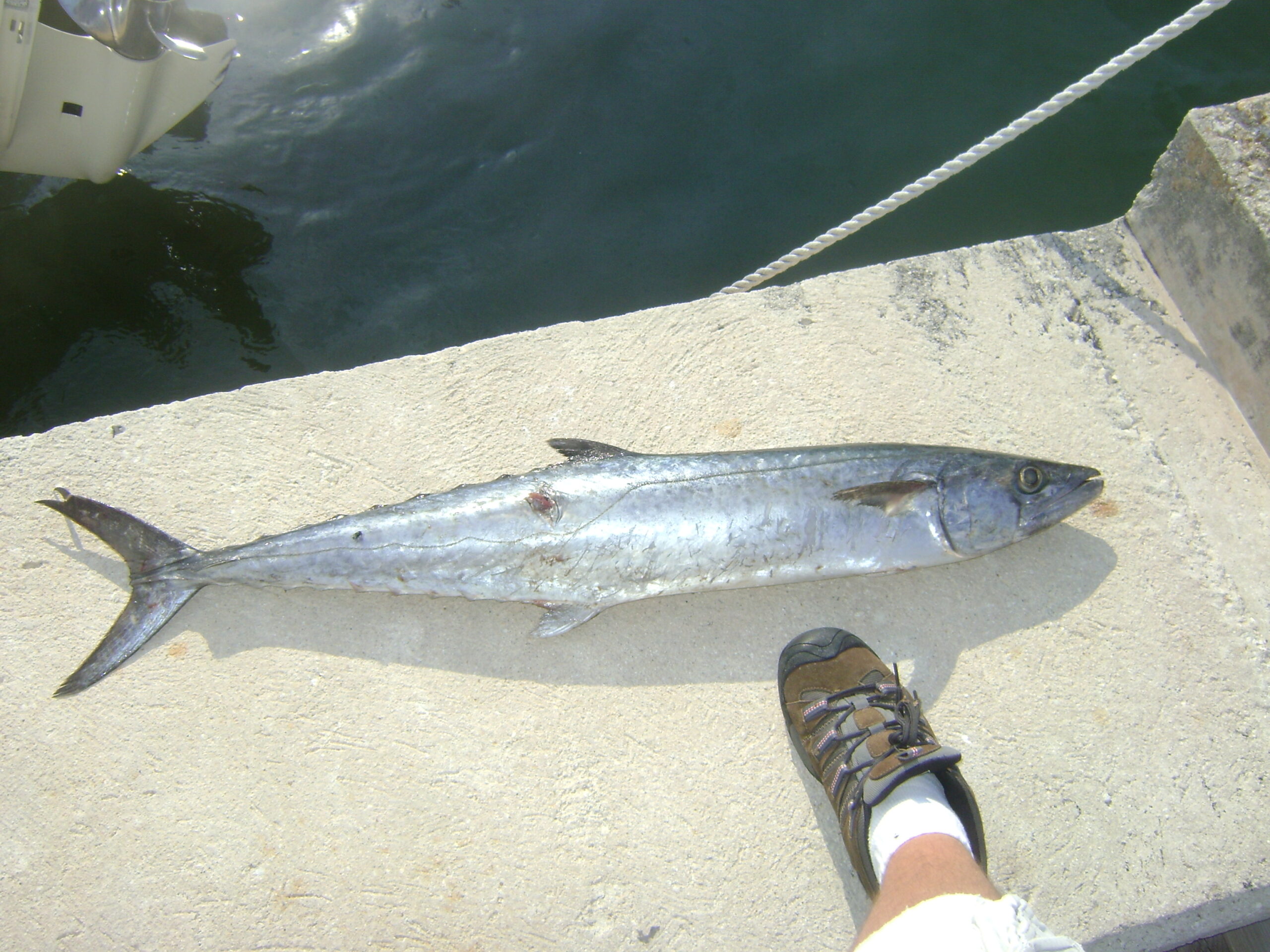
This Jacksonville fishing report covers late August, deep in Northeast Florida’s late-summer pattern. The St. Johns runs warm and slow, the marsh creeks run hot on the low tides, and the most consistent fishing moves just offshore, where the water is cooler and the bait thicker. King mackerel on the nearshore bait pods are the lead target. Plan around calm mornings and the big tidal range.
What’s Hitting
Kings hold on the bait pods and reefs from 40 to 80 feet. Slot and bull redfish work the jetty rocks and river mouth on the moving tide, with bigger fish more consistent as the month closes out.
Mangrove and lane snapper are on the nearshore ledges. Trout work the marsh creeks and ICW grass edges early. Flounder stage in the inlet and along the jetty rocks, and tarpon around the river mouth and beaches are worth a shot at first light.
Where to Find Them
The St. Johns River jetties at Mayport are the workhorse: fish the rocks on the last of the incoming for reds and flounder. The river mouth and ship channel edges hold bull reds and tarpon on the tide change.
The reefs and live bottom off Jacksonville Beach and Mayport hold the kings and snapper. Inshore, work the Intracoastal grass edges and the feeder creeks off the Nassau and Fort George rivers for trout and slot reds. The Sisters Creek and Clapboard Creek systems are reliable on a falling tide.
Tides & Conditions
Tides run three to five feet on this coast, so the tide, not the wind, is the dominant variable. Fish the last two hours of the flood and the first two of the ebb in the marsh, and the moving water on the jetties.
Water sits in the mid 80s inshore and around 80 nearshore. Afternoon thunderstorms roll off the mainland most days. Nearshore visibility is decent on the incoming and dirty on the hard outgoing when the river dumps.
Tackle & Tactics
- Kings: slow-troll live pogies on a stinger rig, a 4/0 to 5/0 nose hook with a treble trailer on light wire, behind a 20- to 30-pound outfit. Find the bait, then work the edges of the pod rather than running through it.
- Jetty reds: a live mud minnow, cut mullet or a half-ounce jighead with a paddletail bounced along the rocks, on 30-pound braid and a 40-pound leader to handle the barnacles.
- Creek trout: a popping cork over a shrimp, or a light jig on the drop-offs.
- Flounder: a live mud minnow dragged slowly on a Carolina rig.
Local Intel This Week
Launch at the Sisters Creek Marina ramp at Heckscher Drive for the marsh creeks, the Mayport ramp for the jetties and reefs, Palms Fish Camp on the north side of the river, or the Atlantic Boulevard ramp on the ICW. Shore anglers can use the Jacksonville Beach and Mayport piers and the jetty rocks at Huguenot Memorial Park.
Fish concentrate on nearshore bait pods and the jetties on moving water, with the marsh creeks best on the fall. Redfish, flounder and king mackerel carry Florida harvest rules that change periodically. Check current FWC and federal regulations and seasons before keeping fish.
This Week’s Tip
When you find a pogy pod, do not throw the cast net right away. Idle around it once and watch the surface. If it is tight and nervous with fish showering off the edges, kings are already on it: get a live bait in first and net bait afterward. Netting first often scatters the pod and ends the action.
Planning a trip to Jacksonville?
This report tells you what happened. ReelAI tells you what to do about it — a briefing for your date, your target species and how you're fishing, built from our reports plus live NOAA and USGS data.
Powered by ReelAI — fishing.digital's intelligence layer. Answers are generated from fishing.digital reports and public NOAA, NWS and USGS data, and may be incomplete or out of date. Regulations and marine safety information are summaries only; always confirm with the responsible authority before you fish.