
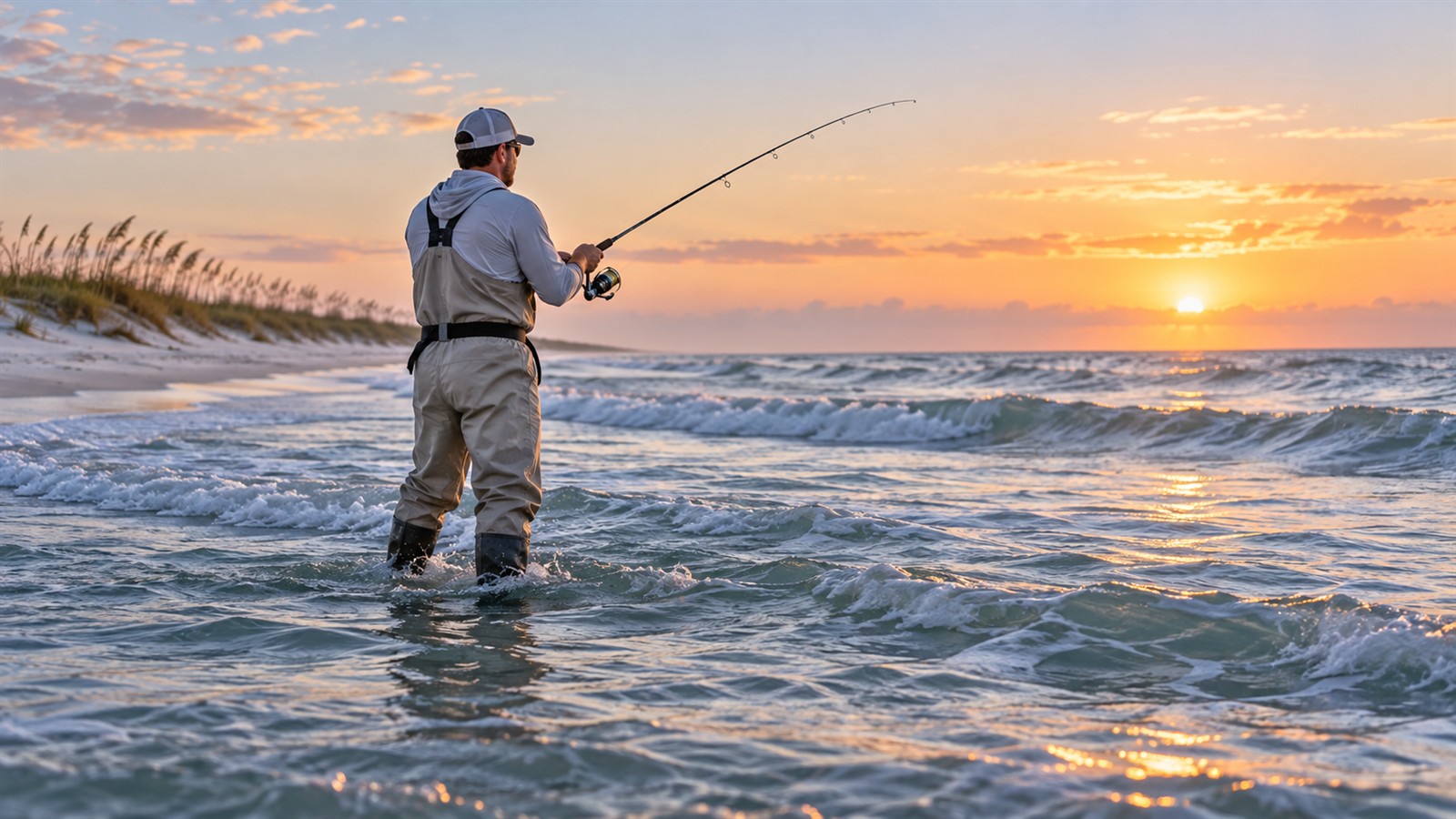
Bottom line: The best fishing waders for most Florida winter anglers are breathable stockingfoot chest waders paired with saltwater-ready wading boots. They handle cool mornings without becoming a sauna when the sun climbs. Neoprene bootfoot waders make more sense for anglers who stand for long periods in genuinely cold surf.
Disclosure: Fishing.Digital may earn a commission from qualifying purchases made through links on this page, at no additional cost to you. We research products by specifications, intended use, manufacturer documentation, and fishing conditions; we do not claim hands-on testing where it did not occur.
Quick Picks
| Best for | Wader | Why it fits |
|---|---|---|
| Most Florida anglers | Simms Tributary Stockingfoot | Breathable construction, reinforced lower legs, included belt |
| Value and fit options | Orvis Clearwater Stockingfoot | Four-layer breathable fabric and practical waist-high conversion |
| Budget entry | Frogg Toggs Canyon II Stockingfoot | Simple breathable protection at an approachable price |
| Cold surf | Frogg Toggs Amphib Neoprene Bootfoot | 3.5mm neoprene and insulated integrated boots |
| Premium durability | Grundens Boundary GORE-TEX | Premium laminate, reduced high-wear seams, refined suspenders |
Do You Actually Need Waders in Florida?
Not year-round. During warm months, wet wading in flats boots, socks, and quick-drying clothing is usually simpler. Waders earn their place after a cold front, on windy winter mornings, and during long sessions where repeated immersion drains body heat. They also help in cool Northeast Florida surf and on winter trips farther north.
For most Florida inshore fishing, breathability matters more than heavy insulation. Air temperatures can rise quickly even when the water remains cool. A breathable shell lets you change the warmth with layers instead of locking you into thick neoprene. Read our companion guide to the best saltwater wading boots for Florida flats before choosing a stockingfoot system.
Best Overall: Simms Tributary Stockingfoot Waders
The Tributary is the sensible all-around choice for an angler who wants one breathable wader for winter flats, protected shorelines, and occasional travel. Simms specifies a three-layer waterproof breathable upper and four-layer lower, with built-in gravel guards, anatomical neoprene stockingfeet, and an included non-stretch wading belt.
That reinforced lower section is useful around shells, grass edges, and boat hardware, while the lighter upper helps when a cool morning turns mild. It is not the cheapest choice, but its balance of protection, mobility, and straightforward features suits the broadest group of anglers.
Best for: Florida anglers who want a versatile first serious pair. Watch for: stockingfoot waders require separate boots, and saltwater use demands a thorough freshwater rinse.
Check Simms Tributary options on Amazon
Best Value: Orvis Clearwater Stockingfoot Waders
The Clearwater is a strong value choice when sizing and comfort matter as much as price. Its four-layer waterproof breathable nylon construction is designed for everyday fishing, and opposing buckles allow the chest to roll down for waist-high use. That is useful in Florida, where conditions can change from chilly at dawn to warm by lunch.
The handwarmer pocket, anatomical neoprene booties, and integrated gravel guards cover the practical essentials without turning this into a feature-heavy premium wader. It is a better fit for mobile flats and shoreline fishing than thick neoprene.
Best for: anglers seeking breathable performance and broad sizing. Watch for: use a saltwater-compatible boot and verify current model sizing before ordering.
Check Orvis Clearwater options on Amazon
Best Budget Pick: Frogg Toggs Canyon II Stockingfoot
The Canyon II is aimed at occasional anglers who need breathable chest coverage without premium pricing. It is a more logical Florida starter than a bulky hunting wader because it leaves insulation choices to the user. Wear a thin synthetic or merino base layer on mild days and add fleece only when the forecast warrants it.
Budget waders deserve realistic expectations: fit, seam durability, and refinement may not match premium models. Inspect them before every trip and carry a small field repair kit. The money saved is best spent on secure footwear and a properly fitted belt.
Best for: occasional cool-weather flats and bank fishing. Watch for: confirm the listing is the current Canyon stockingfoot model and not a similarly named rain garment.
Check Frogg Toggs Canyon options on Amazon
Best for Cold Surf: Frogg Toggs Amphib Neoprene Bootfoot
The Amphib is the specialist in this group. Frogg Toggs specifies a 3.5mm neoprene upper, reinforced knees, a high-back design, and integrated boots with 200-gram insulation and cleated outsoles. That warmth can be welcome when you are standing mostly still in cold surf.
It is usually too warm and cumbersome for active Florida flats fishing. Bootfoot sizing is also less precise than combining stockingfoot waders with separate boots. Choose it because your conditions are genuinely cold—not because neoprene sounds more waterproof. Breathable waders and neoprene waders should both keep water out when intact.
Best for: colder surf sessions and anglers who value warmth over packability. Watch for: cleated soles are not ideal on every hard surface, and felt may be restricted in some destinations.
Check Frogg Toggs Amphib options on Amazon
Premium Pick: Grundens Boundary GORE-TEX Wader
The Boundary is for frequent anglers who can justify premium construction. Grundens uses a GORE-TEX Pro wader laminate, anatomically placed seams intended to reduce wear, a refined suspension system, stretch-woven gravel guards, and shaped neoprene stockingfeet. It is an expensive tool, but its design focuses on movement and long days rather than extra pockets.
Florida anglers do not need this level of wader to fish effectively. The case for it is frequency: if you wade throughout winter, travel to colder fisheries, and keep gear for years, comfort and reduced high-wear seams become more meaningful.
Best for: committed anglers who fish many wader days per season. Watch for: premium cost and the need for separate boots.
Check Grundens Boundary options on Amazon
Breathable vs. Neoprene Waders
Choose breathable stockingfoot waders for Florida flats, walking-intensive fishing, changing temperatures, travel, and the most adaptable fit. Warmth comes from the layers underneath, so avoid cotton and use moisture-moving base layers.
Choose neoprene bootfoot waders when cold water, wind, and long periods of standing are the main problem. They are warmer, heavier, slower to dry, and less adaptable. An integrated boot is convenient but gives you less control over ankle support and sole choice.
How to Fit Fishing Waders
Fit for movement, not just standing in a bedroom. You should be able to kneel, step onto a low platform, and reach forward without the crotch or knees pulling tight. Too much loose material creates folds that rub; too little strains seams. Match stockingfoot size to your actual foot and allow room for one appropriate sock—not several tight layers that reduce circulation.
Try the complete system with the boots you will use. For shells, oysters, mud, and wet ramps, sole design and lateral support matter as much as the wader itself. Our Florida wading-boot guide explains those tradeoffs.
Wader Safety Is Non-Negotiable
- Wear the wading belt snugly whenever you enter the water.
- Waders are not a personal flotation device; wear an appropriate PFD where conditions call for one.
- Do not wade into rough surf, strong inlets, steep drop-offs, or current you cannot comfortably cross.
- Use a staff on unfamiliar bottoms and shuffle on stingray-prone flats.
- Fish with a partner when possible and tell someone your access point and return time.
- Rinse zippers, buckles, boots, and fabric with fresh water after salt exposure, then dry completely out of direct heat.
Surf anglers should study the beach before entering. A trough can deepen abruptly, and outgoing water near an inlet can overpower even a strong swimmer. The complete surf fishing guide covers reading cuts, bars, and moving water.
What We Would Buy for Florida
For winter redfish, seatrout, and snook on protected flats, we would start with a breathable stockingfoot model such as the Simms Tributary or Orvis Clearwater and pair it with supportive non-felt boots appropriate for saltwater. Add a light synthetic base layer and carry a warmer layer rather than automatically buying neoprene.
For repeated cold-surf trips, the Amphib’s insulated bootfoot design becomes more compelling. For frequent use across Florida and colder travel, the Grundens Boundary is the premium upgrade. Whatever the price, fit, belt use, and good judgment matter more than a logo.
Frequently Asked Questions
Are chest waders too hot for Florida?
They can be. Breathable models are practical during cold fronts and winter mornings, but wet wading is usually better in warm conditions. Adjust layers and leave the water if you begin overheating.
Are bootfoot or stockingfoot waders better for surf fishing?
Bootfoot models are warm and convenient; stockingfoot models offer better control over boot fit, support, and sole selection. Mobile anglers often prefer stockingfoot, while cold-weather surf anglers may favor bootfoot.
Can saltwater damage waders?
Salt residue can shorten the life of fabric, hardware, and boots. Rinse the entire system with fresh water after every saltwater trip and dry it thoroughly before storage.
What should I wear under breathable waders?
Use synthetic or merino layers matched to the temperature. Avoid cotton, which holds moisture and can leave you chilled.
Continue planning: Browse the Fishing.Digital tackle guides, check the seasonal fishing guides, or find your destination in our location fishing guides.
Planning a trip to Fishing Gear?
This report tells you what happened. ReelAI tells you what to do about it — a briefing for your date, your target species and how you're fishing, built from our reports plus live NOAA and USGS data.
Powered by ReelAI — fishing.digital's intelligence layer. Answers are generated from fishing.digital reports and public NOAA, NWS and USGS data, and may be incomplete or out of date. Regulations and marine safety information are summaries only; always confirm with the responsible authority before you fish.