
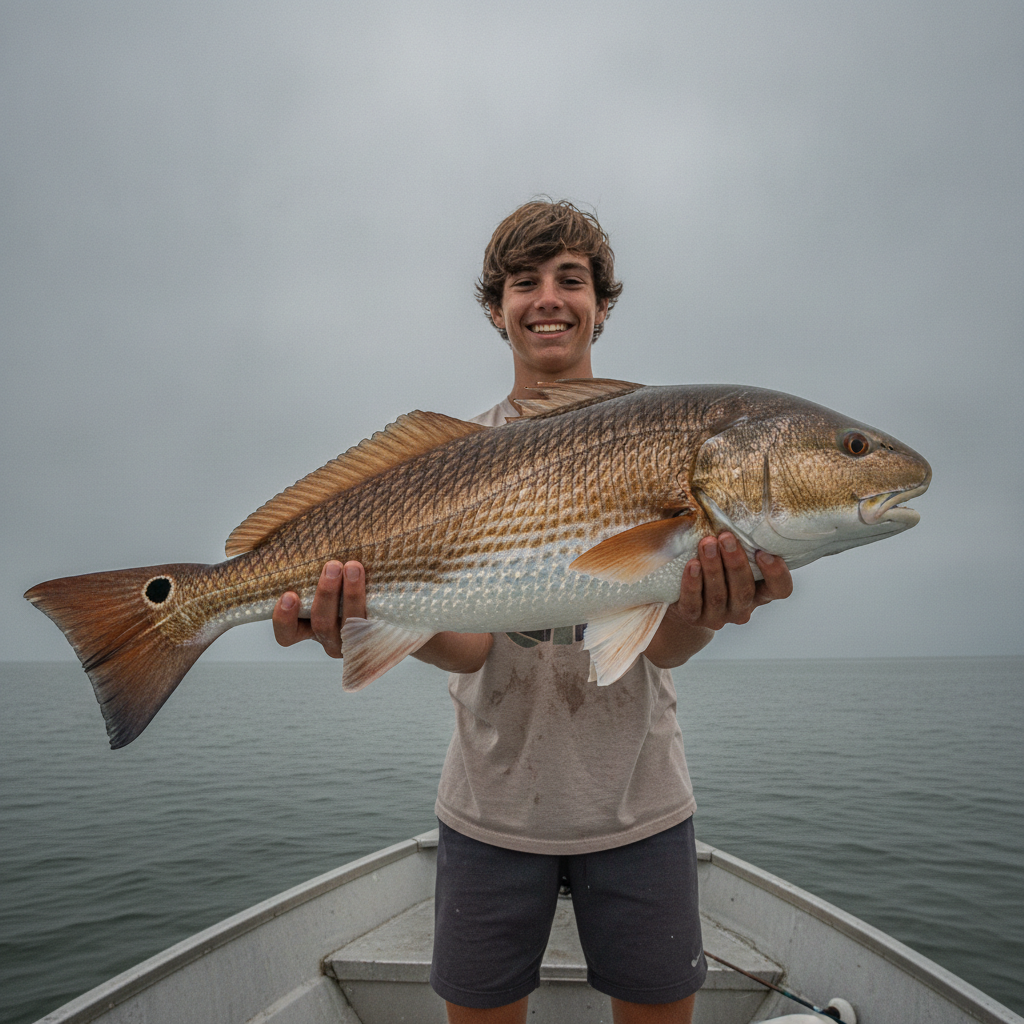
The Space Coast is fishing well on both sides this week. Redfish are tailing the lagoon flats on the calm mornings, and snook have moved onto the beaches and into the Ponce Inlet on the summer pattern.
What’s Hitting
Redfish are tailing and pushing the shallow lagoon flats at first light. Snook are stacked around Ponce Inlet and cruising the beach troughs. Trout are holding on the deeper grass, and mangrove snapper have filled the inlet rocks and dock structure.
Where to Find Them
Pole or wade the skinny lagoon flats around Mosquito Lagoon and the northern Indian River at dawn for tailing reds. Snook work the Ponce Inlet jetties and the beachfront. The deeper grass edges hold trout on the morning low.
Tides & Conditions
Water is warm in the low-to-mid 80s. Calm, clear mornings are essential for sight-fishing tailing reds — get out before the sea breeze ripples the flats. Snook feed hardest around the tide changes at the inlet. Afternoon storms are a daily feature; plan an early start. Finger mullet and glass minnows are building in the lagoon and along the beaches, which is drawing the snook to the inlet and the beach troughs. On the flats, the tailing redfish are grazing on crabs and shrimp in the potholes, so a bait that mimics that natural forage in the skinny water draws the most confident eats.
Tackle & Tactics
For tailing reds, a weedless gold spoon or a soft plastic jerkbait dropped softly ahead of the fish is the ticket; fly anglers throw a weedless shrimp pattern. Snook eat a white paddletail or a live mullet at the inlet. Trout hit a popping cork and shrimp.
Local Intel This Week
Bethune Point ramp in Daytona and the Highbridge Park ramp in Ormond Beach serve the north end, with the Port Orange Causeway ramp covering the Ponce Inlet area. Reds are concentrating on the shallow lagoon flats, snook at the inlet and along the beach. Always check current FWC/state and federal regulations and open seasons before keeping any fish — bag and size limits change through the summer.
This Week’s Tip
When a red is tailing hard in the shallows, its head is down and its vision is limited — use that. Make a quiet, accurate cast that lands the bait a couple of feet ahead and let it sit; twitch it only when the fish is close enough to notice, and you’ll draw far fewer spooks.
More Daytona / Space Coast Resources
Daytona / Space Coast Fishing Guide · Daytona / Space Coast Seasonal Calendar · All Daytona / Space Coast reports →
Also read: Daytona/Space Coast Fishing Report — Week of July 30, 2026: Surf Redfish, Pompano and Whiting
Reports updated every Thursday on fishing.digital.
Planning a trip to Daytona/Space Coast?
This report tells you what happened. ReelAI tells you what to do about it — a briefing for your date, your target species and how you're fishing, built from our reports plus live NOAA and USGS data.
Powered by ReelAI — fishing.digital's intelligence layer. Answers are generated from fishing.digital reports and public NOAA, NWS and USGS data, and may be incomplete or out of date. Regulations and marine safety information are summaries only; always confirm with the responsible authority before you fish.