
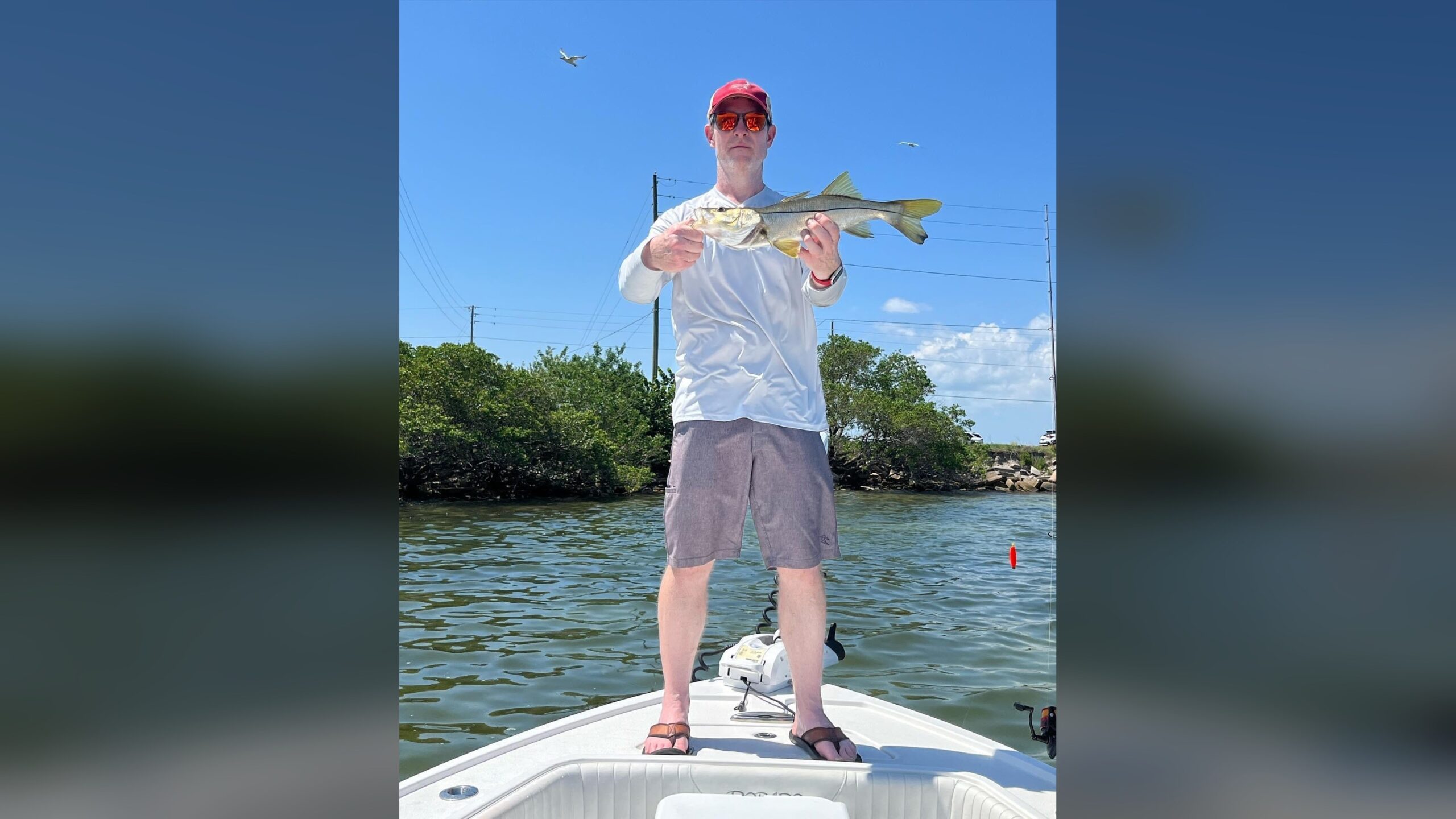
The Space Coast is fishing well across both the surf and the lagoon this week. In the surf, tarpon and snook are cruising the trough — the Atlantic snook season is closed, so those fish are catch-and-release only. A few late-season pompano are still mixed into the surf along with whiting and the occasional bluefish on sand fleas and Fishbites.
In the Indian River and Mosquito Lagoon, redfish are schooling on the flats and around the spoil islands on the higher tides, and spotted seatrout are reliable on the deeper grass and potholes with the better fish early. Topwater at first light has been drawing explosive strikes before the sun gets high.
Black drum are holding around the bridges and docks, taking dead shrimp on the bottom, and mangrove snapper have moved onto the structure in fishable numbers. Jack crevalle are roaming the lagoon and provide steady pull when the gamefish go quiet.
Offshore out of Ponce Inlet, the kingfish and cobia action has been decent over the nearshore reefs, with bottom fishing producing snapper and a few flounder. The inlet itself has held tarpon and big jacks on the moving tide.
Summer heat means early mornings are the move. The lagoon redfish and trout bite should stay productive on the low-light periods, and the surf is worth a dawn walk for cruising snook and tarpon.
Spots & Access This Week
Haulover Canal and the Beacon 42 ramp are the standard entry points to the Mosquito Lagoon, and both fill early on weekends. Bethune Point and the Rose Bay ramp serve the Halifax River, and the Ponce Inlet ramps put you on the inlet and the nearshore reefs. Shore anglers have easy access at the Daytona beach drive-on ramps, the New Smyrna jetty, and the Ponce Inlet jetty park, all of which produce surf and structure fish. Right now the fish are holding on inlet structure and in lagoon potholes rather than out on the open shallow flats, so the productive spots are smaller and more specific than they are in spring.
Tackle & Tactics Notes
In the surf, a two-hook pompano rig with fresh sand fleas or shrimp fished in the first trough on the outgoing does most of the work, and you do not need a long rod for it — an eight- or nine-foot stick with 20-pound braid covers the near trough comfortably. On the lagoon, approach shallow water quietly and cast well ahead of moving fish; a weedless gold spoon, a soft plastic on a light jighead, or a live shrimp under a popping cork are the three lures that cover almost every situation. At the inlet, tarpon and big jacks are working the moving tide and will take a large soft plastic or a live mullet on heavy fluorocarbon. Snook are around the inlet and bridges under a seasonal Atlantic-coast closure, so plan on releasing them and doing it fast.
Conditions Outlook
Surf temperatures will hold in the mid-eighties with generally clean water on the light-wind mornings and an onshore breeze dirtying things up by midday. Lagoon water will keep running warm and low on oxygen in the shallows, so the fish will stay pinned to potholes and shade. Afternoon storm cells develop fast over open lagoon water and lightning is a genuine hazard out there — build the day around a sunrise start and be off the water by early afternoon.
This Week’s Tip
Once the sun is up on the lagoon, stop looking for tailing fish and start looking for potholes. Redfish slide off the shallow grass into sand holes that are only a foot or two deeper, and those holes hold fish long after the tailing bite has ended. Idle the edges, mark the holes on your chartplotter, and come back to the same ones the next trip — they produce week after week.
More Daytona / Space Coast Resources
Daytona / Space Coast Fishing Guide · Daytona / Space Coast Seasonal Calendar · All Daytona / Space Coast reports →
Also read: Daytona/Space Coast Fishing Report — Week of July 30, 2026: Surf Redfish, Pompano and Whiting
Reports updated every Thursday on fishing.digital.
Planning a trip to Daytona/Space Coast?
This report tells you what happened. ReelAI tells you what to do about it — a briefing for your date, your target species and how you're fishing, built from our reports plus live NOAA and USGS data.
Powered by ReelAI — fishing.digital's intelligence layer. Answers are generated from fishing.digital reports and public NOAA, NWS and USGS data, and may be incomplete or out of date. Regulations and marine safety information are summaries only; always confirm with the responsible authority before you fish.