
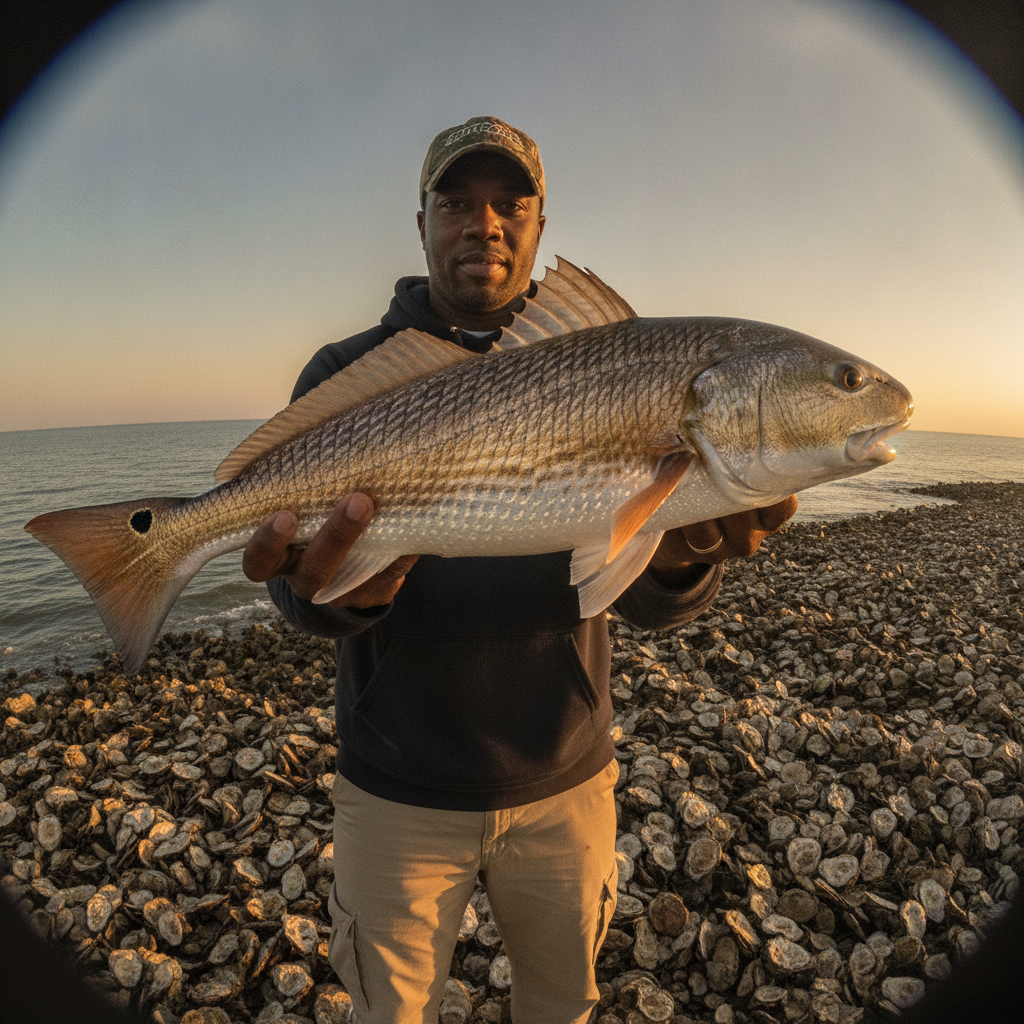
The Space Coast is in full summer mode with redfish tailing the Mosquito Lagoon flats at first light, snook pushing onto the beaches, and a mix of surf species still in the wash. Mornings are calm and clear before the afternoon storms build off the interior — the early window is the one to fish.
What’s Hitting
Redfish are tailing on the Mosquito Lagoon and Indian River flats early, and big black drum are mixed in. Snook have pushed onto the beaches and around the Sebastian and Ponce inlets (closed season — release them). Surf anglers are still picking at pompano, whiting, and the occasional permit, and tarpon are showing in the inlets and along the beaches. Trout are on the deeper grass.
Where to Find Them
Hit the Mosquito Lagoon and northern Indian River flats at first light for tailing reds and black drum. Ponce and Sebastian inlets hold snook, tarpon, and snapper on the tide. Work the surf from Daytona down through the Cape for pompano and whiting. Trout are holding on the three- to six-foot grass flats. The beaches hold cruising snook and tarpon early.
Tides & Conditions
The lagoon fishing is best in the dead-calm early morning when you can see tailing and waking fish on the flats. Inlet tarpon and snook follow the moving tide. Surf fishing improves on a moving tide with clean water. Afternoon thunderstorms are the daily pattern, so be off the water or sheltered by early afternoon. Water is warm and clear. The Mosquito Lagoon is gin-clear and skinny, so the no-wind dawn window is short but golden before the sea breeze textures the surface.
Tackle & Tactics
Sight-fishing the lagoon calls for weedless soft plastics, gold spoons, and well-placed live shrimp or cut bait for the bigger drum. On the beach, white jigs and live baits work for snook. Surf anglers should fish pompano rigs with sand fleas and Fishbites. Keep a tarpon setup ready at the inlets with 50- to 60-pound fluoro and a live bait.
Local Intel This Week
Halifax Harbor Marina in Daytona and the Ponce Inlet-area ramps reach the inlet and the nearshore, while the Haulover Canal ramp puts you on Mosquito Lagoon’s reds. Redfish are tailing the lagoon flats and snook are working the inlet and beaches on the low-light tides. Mosquito Lagoon has special seatrout and redfish rules — confirm current FWC regulations before keeping anything.
Spots & Access This Week
Bethune Point ramp in Daytona and the Highbridge Park ramp in Ormond Beach serve the north end, with the Port Orange Causeway ramp covering the Ponce Inlet area. Redfish are tailing the shallow lagoon flats around Mosquito Lagoon and the northern Indian River at first light, while snook work the Ponce Inlet jetties and the beach troughs. The deeper grass edges are holding trout on the morning low.
Reading the Water
When a red is tailing hard in the shallows, its head is down and its vision is limited — make a quiet, accurate cast that lands a couple of feet ahead and let it sit, twitching only when the fish is close enough to notice. Calm, clear mornings are essential for the sight-fishing; get out before the sea breeze ripples the flats, and save the inlet snook for the moving tide when the current pulls bait through the cut.
This Week’s Tip
On the lagoon flats, the calmest, quietest approach wins. Pole or drift rather than running the trolling motor, watch for tails and pushes in the low light, and make a single accurate cast ahead of the fish. These shallow-water reds spook at the smallest disturbance — stealth puts more fish in casting range than any lure choice.
More Daytona / Space Coast Resources
Daytona / Space Coast Fishing Guide · Daytona / Space Coast Seasonal Calendar · All Daytona / Space Coast reports →
Also read: Daytona/Space Coast Fishing Report — Week of July 30, 2026: Surf Redfish, Pompano and Whiting
Reports updated every Thursday on fishing.digital.
Planning a trip to Daytona/Space Coast?
This report tells you what happened. ReelAI tells you what to do about it — a briefing for your date, your target species and how you're fishing, built from our reports plus live NOAA and USGS data.
Powered by ReelAI — fishing.digital's intelligence layer. Answers are generated from fishing.digital reports and public NOAA, NWS and USGS data, and may be incomplete or out of date. Regulations and marine safety information are summaries only; always confirm with the responsible authority before you fish.