
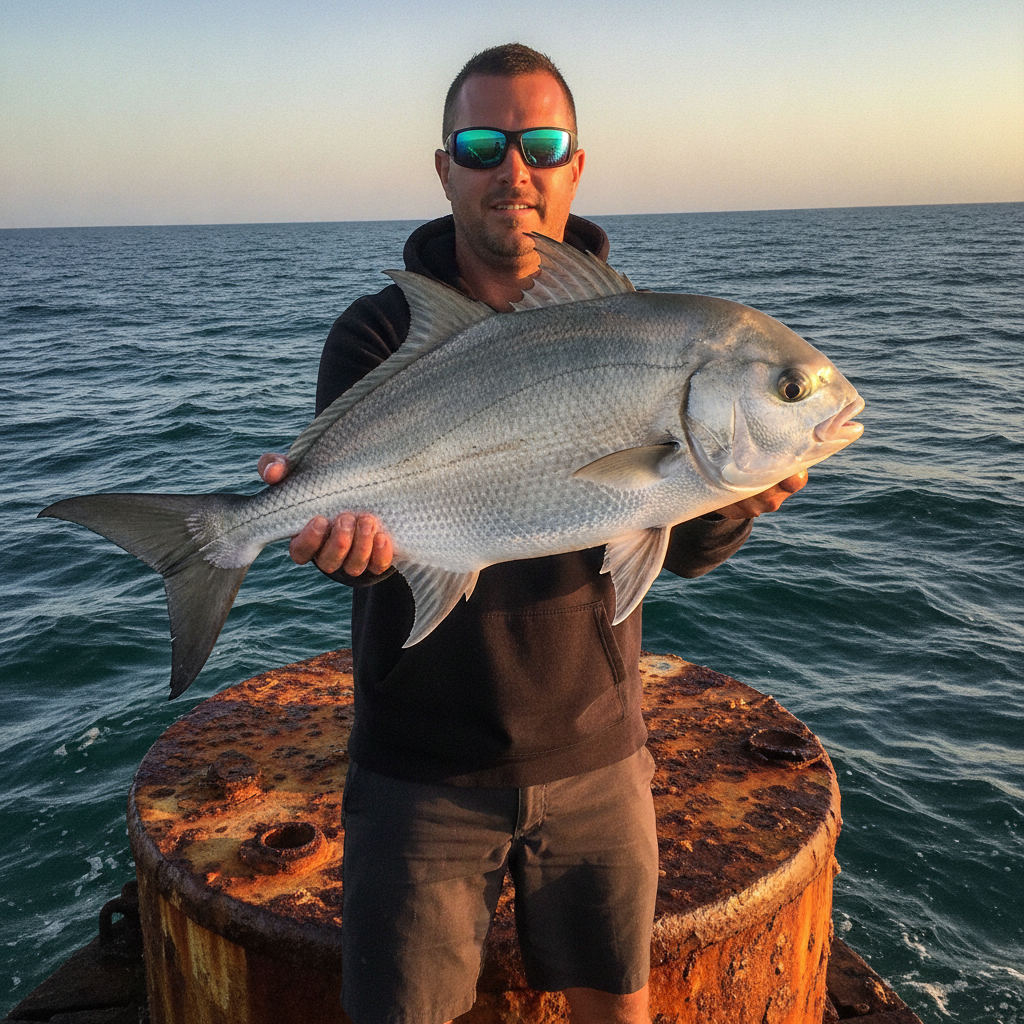
Deep summer in the Keys means calm water, brutal heat, and a bite that runs on the moon rather than the clock. Seas have been laid down most of the week, which is opening up the wrecks and the deeper patches to smaller boats. The tradeoff is heavy afternoon convection and water temperatures that make midday fishing largely a waste of time.
What’s Hitting
Permit on the wrecks are the headline. Fish are stacked over the ocean-side wrecks in 60 to 120 feet and eating crabs freelined back in the chum. Mangrove snapper are in full spawning mode on the patch reefs and around the bridge rubble, which is the most reliable meat fishing in the Keys right now. Mutton snapper are feeding well on the deeper edges around the moon, and yellowtail continue to come over the transom on a good chum slick. Offshore, scattered mahi are holding to weed and frigate birds well outside, and blackfin tuna are showing on the humps at first light. On the flats, bonefish are eating early and late but shut down hard once the sun gets high.
Where to Find Them
Work the ocean-side wrecks off Marathon and Islamorada for permit. Patch reefs in 20 to 35 feet are the snapper factories — anchor uptide, get a slick going, and let the fish come to you. Muttons are on the outside edges in 70 to 110 feet. Bonefish and small permit are on the oceanside flats and the Gulf-side banks on the early flood. Bridge channels through the Middle Keys are holding tarpon and big snapper after dark.
Tides & Conditions
Water temperatures are 87 to 89 degrees on the flats and mid-80s on the reef. Tides are building toward a strong set later in the week, which should sharpen the mutton and snapper bite considerably. Winds have been light and variable, ideal for running offshore but slow for flats fishing, where a little chop helps. Afternoon storms build over the mainland and drift down most days after two.
Tackle & Tactics
Permit on the wrecks want a live crab on a 4/0 circle, 40-pound fluorocarbon, and no weight if you can get away with it. Snapper on the patches respond to a long 15- to 20-pound fluoro leader, a small hook, and a steady chum stream of cut ballyhoo. For muttons, a long fluorocarbon leader with a knocker-style sinker and a whole ballyhoo or live pinfish on the bottom is the classic setup. Yellowtail want the lightest leader you can stand and a slow flatline drift back in the slick.
Local Intel This Week
Founders Park in Islamorada, the ramp at Marathon’s 33rd Street, and the Murray Nelson ramp in Key Largo are the practical launch points; all get busy by 7 a.m. on weekends. Fish are concentrating on hard structure and edges, not on open bottom. Multiple Keys species carry seasonal closures, slot limits, and special Monroe County rules — check current FWC regulations and seasons before keeping any fish.
This Week’s Tip
On a wreck full of permit, the mistake is anchoring on top of them. Set up well uptide and let the crab drift back naturally into the school. Permit that see a bait fall out of a boat directly overhead will not eat it, but the same crab arriving on the current 80 feet back gets crushed.
Planning a trip to Florida Keys?
This report tells you what happened. ReelAI tells you what to do about it — a briefing for your date, your target species and how you're fishing, built from our reports plus live NOAA and USGS data.
Powered by ReelAI — fishing.digital's intelligence layer. Answers are generated from fishing.digital reports and public NOAA, NWS and USGS data, and may be incomplete or out of date. Regulations and marine safety information are summaries only; always confirm with the responsible authority before you fish.