
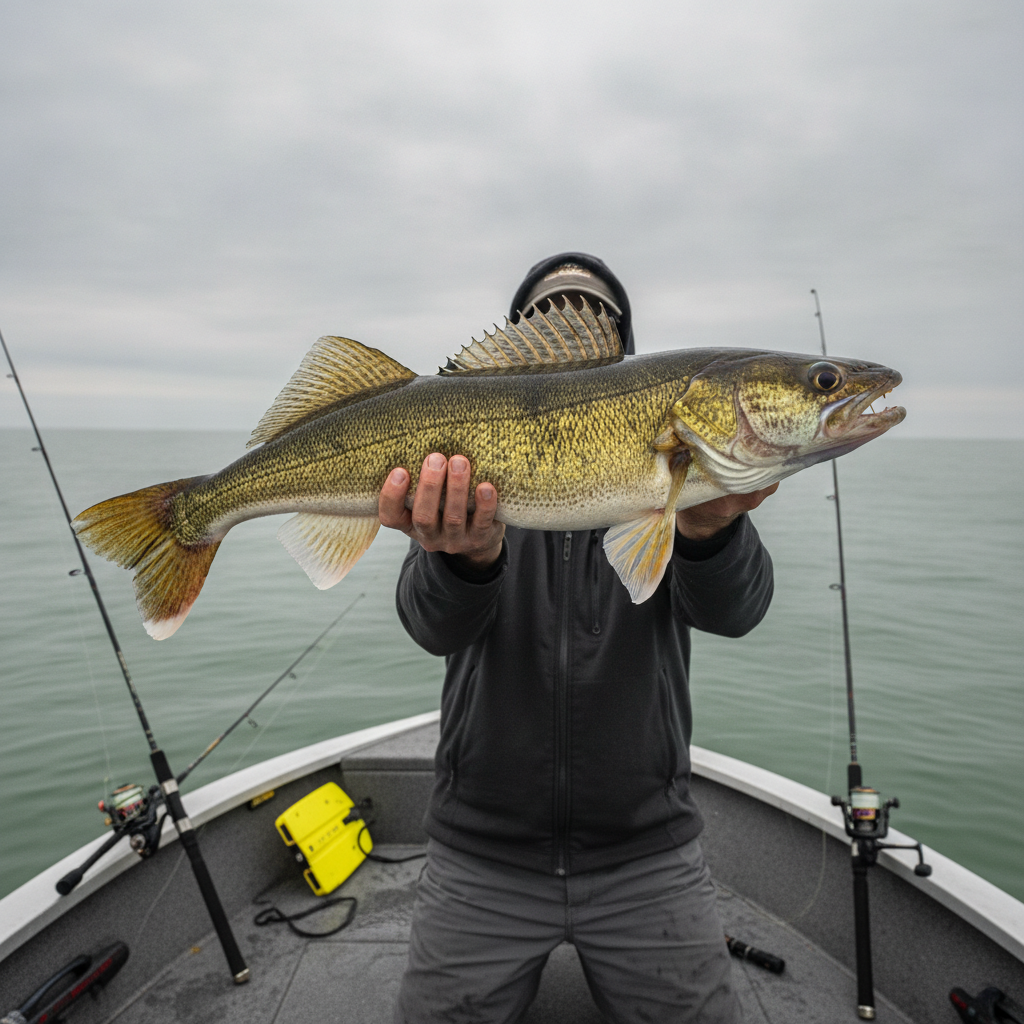
This week on the Great Lakes the fall transition is under way. Chinook are beginning to stage off the river mouths on Michigan and Ontario, the Lake Erie walleye have settled into the central basin pattern, and the smallmouth fishing on the deep structure has been excellent. Surface temperatures are near their annual peak, which keeps most of the action on the thermocline or in the early morning.
What’s Hitting
Chinook salmon are the marquee fish, staging in the deeper water off the river mouths and starting to bunch up. Coho and steelhead are mixed in on the same water. On Lake Erie, walleye have settled into the central basin and are feeding well on the troll, with good numbers of yellow perch showing on the deeper bottom. Smallmouth bass are on the deep rock and reef structure across Erie, Michigan and Huron. Lake trout are deep and steady for anglers who want them.
Where to Find Them
For staging kings, work 60 to 120 feet off the Michigan port towns and the New York and Ontario shorelines near the tributary mouths — the fish are relating to the thermocline and the cold water plume. On Erie, the central basin between Cleveland and Fairport in 55 to 75 feet has been the walleye water. Perch are on the deeper bottom in the same general area. Smallmouth are on the reefs and deep rock in 20 to 40 feet on Erie’s western basin and the Michigan and Huron reef complexes.
Tides & Conditions
No tides here — wind and thermocline run the show. Surface temperatures are in the low 70s with the thermocline setting up between 40 and 70 feet depending on the lake and the recent wind. A strong blow can turn the whole water column over and reset the pattern within a day, so check the forecast before committing to a long run. Mornings have been calm with an afternoon breeze. Water clarity is good in the deeper basins.
Tackle & Tactics
For staging kings, a downrigger and dipsy program with flasher-fly combinations and spoons run right at the thermocline is standard — vary the speed until you find the number the fish want, usually between 2.2 and 2.8 mph. Erie walleye respond to worm harnesses on bottom bouncers and to crawler harnesses behind inline weights, plus crankbaits on planer boards at 1.2 to 1.8 mph. Smallmouth on deep rock want a dropshot with a goby-imitating plastic or a tube on 8- to 10-pound fluorocarbon.
Local Intel This Week
Access is good across the region: the Wells Street and Ludington municipal ramps on the Michigan side, the Fairport Harbor and Wildwood ramps on the Ohio Erie shore, and the Olcott and Wilson ramps on Lake Ontario all handle trailers well and give quick access to deep water. Fish are concentrating on the thermocline and on hard structure — not on shallow flats. Great Lakes seasons, slot limits and creel limits differ by state and by lake and change annually; check current state DNR regulations before keeping any fish.
This Week’s Tip
When staging kings ignore your spread, drop one line significantly deeper than the thermocline before you change lures. Pre-run fish often sit twenty feet below the temperature break in the coldest water they can find, and a single deep rigger will tell you in twenty minutes whether the whole program needs to move down.
Planning a trip to Great Lakes?
This report tells you what happened. ReelAI tells you what to do about it — a briefing for your date, your target species and how you're fishing, built from our reports plus live NOAA and USGS data.
Powered by ReelAI — fishing.digital's intelligence layer. Answers are generated from fishing.digital reports and public NOAA, NWS and USGS data, and may be incomplete or out of date. Regulations and marine safety information are summaries only; always confirm with the responsible authority before you fish.