
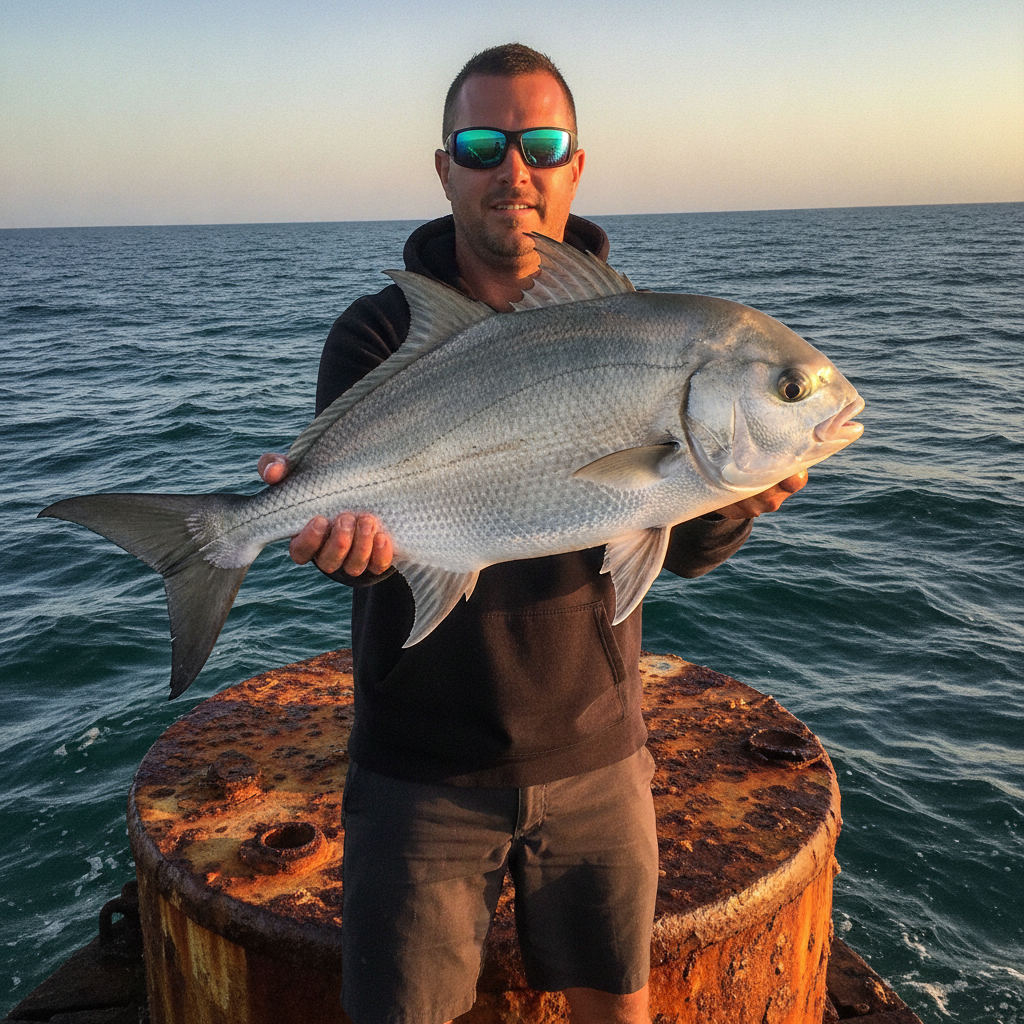
Permit (Trachinotus falcatus) are the flats angler’s ultimate adversary — notoriously selective, spooky, and unpredictable, they have driven some of the world’s best anglers to distraction. A large permit tailing on a shallow flat is one of the most exciting sights in fishing, and convincing one to eat is one of the sport’s greatest challenges. Landing a permit — particularly on fly — earns a level of respect among serious anglers that few other fish can match.
Range & Habitat
Permit range from Massachusetts to Brazil, with the largest populations in South Florida, the Florida Keys, and the Yucatán. They inhabit shallow coral flats, patch reefs, wrecks, and sandy edges in clear, warm water. The Florida Keys, Belize, and the Yucatán are the world’s top permit destinations. They feed primarily on crabs, though they also eat shrimp and small baitfish. Large permit (20+ lbs) are most commonly found in the Keys and Bahamas.
Best Tackle
Spinning: 7–7’6″ medium-heavy fast action spinning rod, 3000–4000 reel, 20–30 lb braid, 20–30 lb fluorocarbon leader 6 feet. Fly: 9–11 weight fly rod, intermediate or floating line, 20 lb class tippet, 30–40 lb fluorocarbon shock tippet.
Top Techniques
Sight-Casting: The primary permit technique. Pole or wade quietly on shallow flats looking for tailing, cruising, or mudding permit. Make a precise cast directly to the fish — permit require pinpoint accuracy. Patch Reef Fishing: Anchoring upcurrent of patch reefs and freechunking crabs downtide. Permit patrol these reefs looking for crabs. Wreck Fishing: Permit often congregate around nearshore wrecks — chumming with crabs and fishing a live crab on a light jighead is very effective.
Best Baits & Lures
- Live Blue Crab (2–3″): The #1 permit bait in every situation. Free-line or use a minimal weight — natural presentation is everything.
- Live Hermit Crab: Extracted from its shell, a hermit crab is extraordinarily effective for permit on the flats.
- Live Shrimp: Less effective than crabs for large permit but produces bites on smaller fish and in feeding situations.
- EP Crab Flies (Merkin Crab, McCrab): The top permit flies. Size 2–4 on a 60° jig hook. Drop it directly in the fish’s path and let it sink naturally.
- Bucktail Jig: On wrecks and reefs, a bucktail worked in the current near the structure is a genuinely effective permit lure — those fish behave nothing like flats fish.
- Soft Plastic Crabs (DOA, Gulp): When live crabs are unavailable, quality soft plastic crab imitations can fool permit.
Seasonal Patterns
Fall (October–November): The absolute peak permit season in the Florida Keys. The largest fish of the year are feeding aggressively on the flats. Spring (March–May): Permit are active and visible on the flats as water warms. Year-round in South Florida and Keys: Permit can be targeted any month — winter provides quieter flats and less boat pressure.
Pro Tips
- Approach matters as much as presentation: A permit that sees or hears your boat before you cast will never eat. Pole quietly, keep a low profile, and shut off the engine 200 yards from the fish.
- Lead the fish by 6–10 feet: Cast ahead of the fish’s direction of travel and let the bait/fly sink naturally to the bottom directly in the fish’s path.
- Don’t move the bait when the fish approaches: Unlike most predators, permit want to see the bait sitting still on the bottom. Resist the urge to twitch — a motionless crab is most convincing.
- If you have never caught one, start on a wreck: Permit school on nearshore wrecks and are far more aggressive there than on the flats. A day of wreck fishing with crabs teaches you what a permit bite actually feels like, and that knowledge is worth a season of flats refusals.
- Expect rejection: Even perfectly presented baits are refused frequently. Permit refusals are not failures — they’re part of the game. Stay patient, stay quiet, and keep looking.
Regulations
Florida manages permit with an 11-inch fork-length minimum and a small daily bag, plus additional restrictions on larger fish and a separate set of rules inside the Special Permit Zone in South Florida and the Keys, which also carries a seasonal closure. The details have changed more than once. Check current FWC regulations before keeping a permit — and most serious flats anglers release all of them regardless.
Want current conditions? Browse our weekly fishing reports — updated every Thursday.
Best Permit Tackle
Affiliate disclosure: fishing.digital earns a small commission on qualifying purchases at no extra cost to you.
1. Merkin Crab Fly, Size 2
Del Brown’s pattern, still the most-fished permit fly in the world. Drop it in the fish’s path and let it fall to the bottom untouched. Check price on Amazon
2. 9-Weight Saltwater Fly Rod
A 9-weight is the flats standard — enough to turn over a weighted crab in wind and enough backbone for a 20-pound fish. A 10 or 11 is not overkill for big Keys permit. Check price on Amazon
3. 12 lb Fluorocarbon Tippet
12 lb class tippet with a 30-40 lb fluorocarbon bite section. Light enough for clear Keys water, strong enough that a long fight over coral does not end badly. Check price on Amazon
4. Live Blue Crabs
The definitive permit bait on spinning tackle — small crabs, 1-2 inches, free-lined with as little weight as you can get away with. You catch these or buy them locally; nobody ships them.
Planning a trip to Permit?
This report tells you what happened. ReelAI tells you what to do about it — a briefing for your date, your target species and how you're fishing, built from our reports plus live NOAA and USGS data.
Powered by ReelAI — fishing.digital's intelligence layer. Answers are generated from fishing.digital reports and public NOAA, NWS and USGS data, and may be incomplete or out of date. Regulations and marine safety information are summaries only; always confirm with the responsible authority before you fish.