
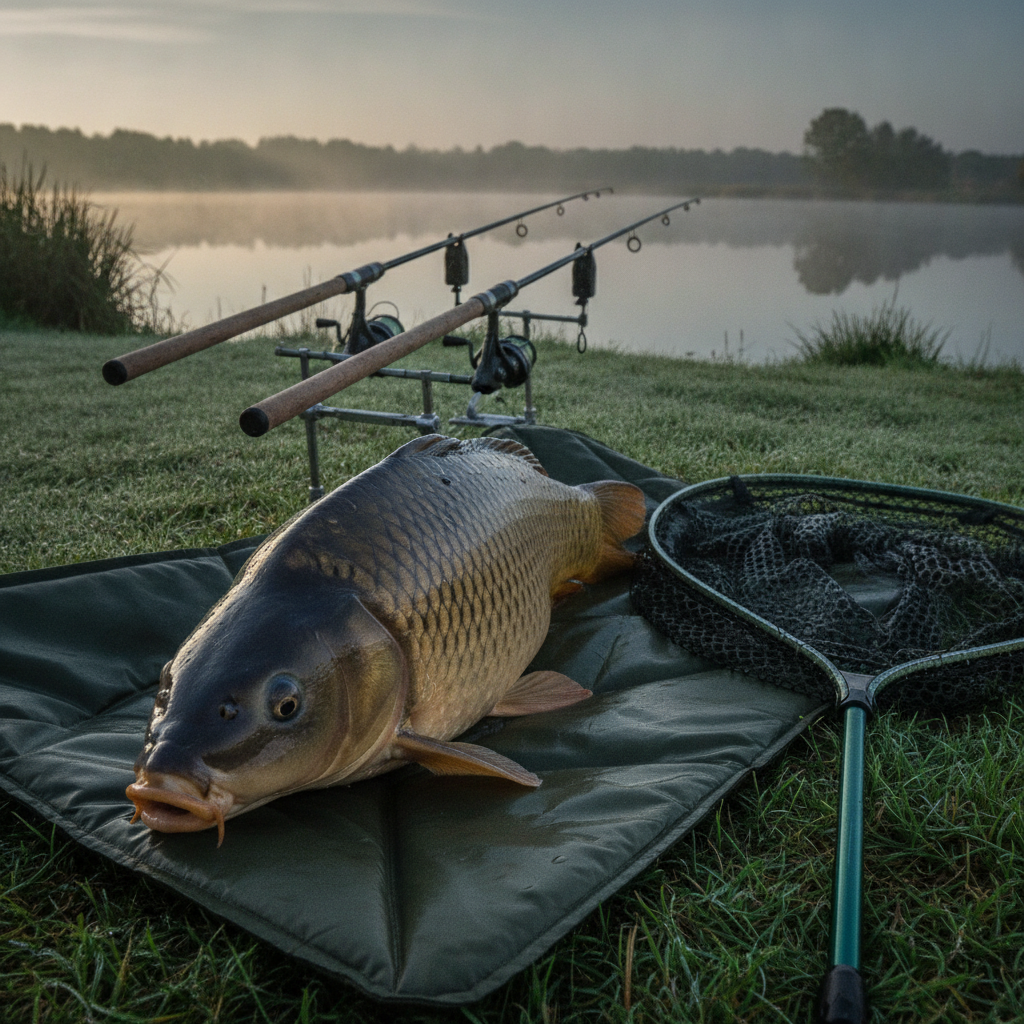
Common carp (Cyprinus carpio) are the most widely distributed freshwater fish on earth — and increasingly recognized by American anglers as a legitimate, challenging sportfish. Sight-fishing for feeding carp on the flats is directly analogous to saltwater bonefish fishing: spooky, powerful fish in shallow water requiring precise presentations. A 20+ lb carp on fly tackle is a full-body experience that will surprise any angler who hasn’t tried it.
Where to Find Carp
Carp are found throughout North America in lakes, rivers, ponds, and reservoirs. They prefer slower water with soft or silty bottom and are found in urban park ponds, large reservoir flats, river backwaters, and shallow lake bays. In warm months they feed in the shallows, rooting for crustaceans and plant material with their downturned mouths — exactly like bonefish. Find the flats, find feeding fish, sight-cast to them.
Best Tackle
Fly Fishing: 8-9 weight rod, 200 yards of backing, floating line, 8-10 lb tippet. Carp are much larger and stronger than bonefish — the runs are extraordinary. Spinning: 7″ medium-heavy, 3000-4000 reel, 15-20 lb braid with 15-20 lb fluorocarbon leader.
Top Techniques
Sight-Fishing: The most rewarding approach. Wade or boat along shallow flats looking for tailing or mudding carp. Lead the fish by 3-5 feet — the presentation must land softly and sink to the bottom naturally. Any sudden movement or splash puts them down. Corn and Boilies (bottom fishing): The traditional carp fishing method — hair rig with corn kernels or boilies on a bed of groundbait. Extremely effective for those who prefer a more patient approach.
Best Baits and Lures
- Carp Flies (San Juan Worm, Hybrid Crayfish): Weighted flies that sink quickly and imitate worms, crayfish, or mulberries depending on season.
- Sweet Corn (on hair rig): The most classic carp bait — simple and devastatingly effective.
- Boilies: Commercial round baits in various flavors (fishmeal, strawberry, maple cream) used by dedicated carp anglers.
- Mulberries: During mulberry season, carp feed heavily under trees. Present a free-floating mulberry near a feeding fish.
- Nightcrawlers: Effective in rivers and lakes drifted or still-fished near bottom.
Seasonal Patterns
Spring-Fall: Carp are accessible in the shallows throughout the warm season. The spawn (May-June) brings large fish into very shallow water. Summer: Best sight-fishing in warm months when carp are actively feeding on the flats. Winter: Carp slow down significantly in cold water — limited activity.
Pro Tips
- Treat them like bonefish — stealth, precision, and patience are the keys to carp on the fly.
- Watch for bubbles and muds — feeding carp disturb the bottom and create visible signs in the water.
- Be ready for long runs — a 20 lb carp in a flat will test your reel’s drag and backing capacity.
Regulations
Carp are generally unregulated with no size or bag limits in most US states — they’re considered an invasive species in North America. Check your state DNR for any specific regulations.
Browse all species guides: How To Catch Fish — Complete Species Guides | Weekly Fishing Reports.
Best Carp Tackle
Affiliate disclosure: fishing.digital earns a small commission on qualifying purchases at no extra cost to you.
1. Carp Hair Rig Kit
Traditional carp setup — hair rig with boilies or corn over groundbait. Check price on Amazon
2. San Juan Worm Fly Size 10 Red
#1 carp fly in America. Cast ahead of feeding fish, let it sink naturally. Check price on Amazon
3. Carp Boilies Variety Pack
Commercial boilies in multiple flavors for traditional hair rig fishing. Check price on Amazon
4. 9-Weight Fly Rod Carp
9-weight handles carp’s powerful initial run — same rod as bonefish fishing. Check price on Amazon
Shop all fishing gear: Amazon Fishing Department
Planning a trip to Carp?
This report tells you what happened. ReelAI tells you what to do about it — a briefing for your date, your target species and how you're fishing, built from our reports plus live NOAA and USGS data.
Powered by ReelAI — fishing.digital's intelligence layer. Answers are generated from fishing.digital reports and public NOAA, NWS and USGS data, and may be incomplete or out of date. Regulations and marine safety information are summaries only; always confirm with the responsible authority before you fish.