
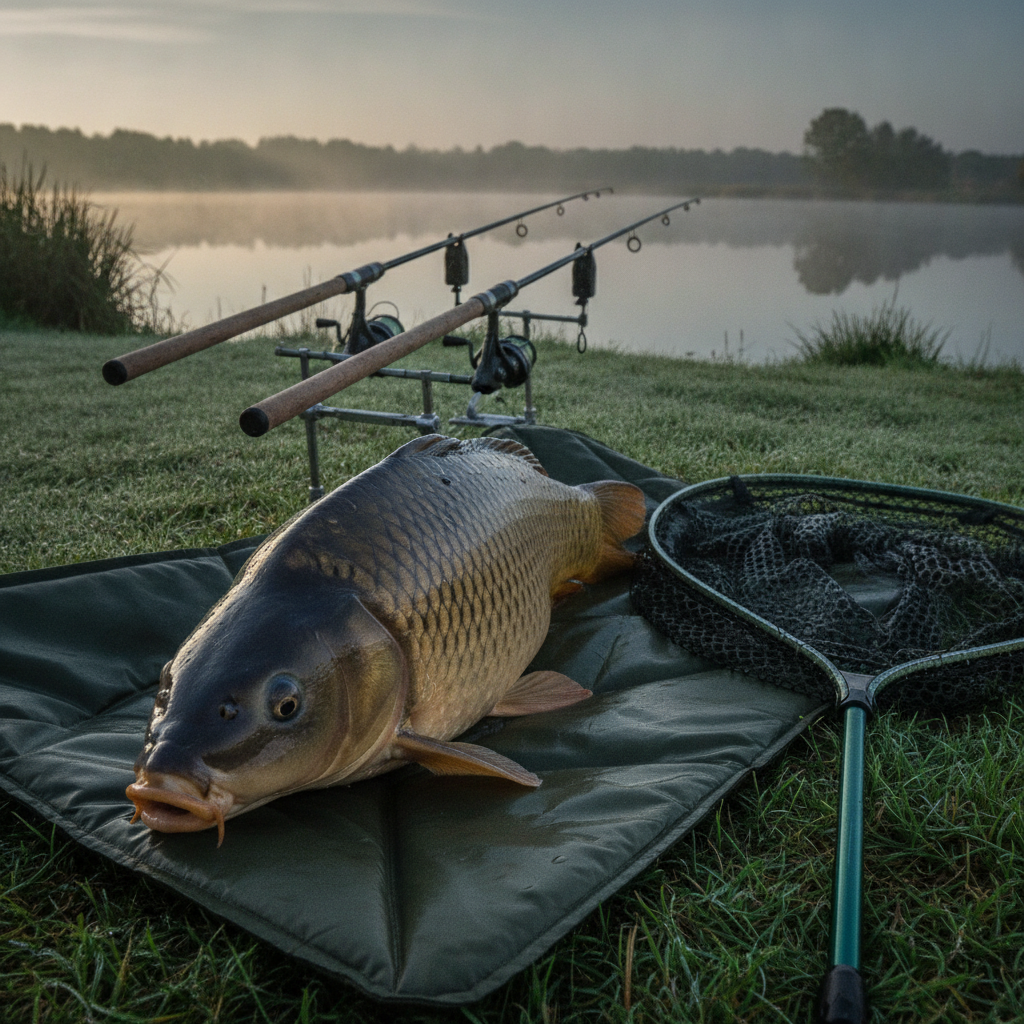
Common carp (Cyprinus carpio) are one of the most overlooked gamefish in North America and one of the most prized in the rest of the world. Carp can exceed 50 pounds in the U.S., feed in water other species ignore, take everything from bread to flies, and pull harder than almost any freshwater fish their size. Whether you’re after specimen carp on European-style tackle, sight-fishing flats carp on a fly rod, or hammering them on light spinning gear from the bank, this guide covers every productive approach.
Where to Find Carp: Range & Habitat
Common carp are present in virtually every state in the continental U.S. They thrive in slow rivers, large reservoirs, farm ponds, urban lakes, and irrigation canals. Key conditions: muddy or moderate-clarity water, summer temperatures above 65°F, ample vegetation or soft bottom for foraging, and minimal heavy current. Trophy carp waters in the U.S. include the Potomac River (DC/MD/VA), Lake Erie tributaries (especially the Sandusky), the Delaware River, the Connecticut River, the Mississippi River backwaters, the Trinity River (TX), Lake Champlain, and the lower Colorado River.
Tackle for Carp
Specimen / Euro-Style Setup
Rod: 12′ carp rod, 2.75-3 lb test curve (TC). Brands: Daiwa Black Widow, Wychwood Riot, Sonik VaderX. Reel: Baitrunner or “freespool” reel (Shimano Baitrunner, Daiwa Black Widow BR) — essential so a feeding carp can pick up bait without feeling resistance. Main line: 12-15 lb monofilament for general work; braid (30 lb) for snaggy water or distance. Hooklink: 15-20 lb coated braid (Korda N-Trap, ESP Tungsten Loaded). Hooks: Size 4-8 wide-gape carp hooks (Korda Wide Gape, Gardner Mugga). Indicators: Bite alarms with bobbins or running indicators are standard for serious carp anglers.
Light Spinning / Float Setup
Rod: 7-8′ medium-light spinning rod with a soft tip. Reel: 2500-3000 size with smooth drag. Line: 8-12 lb mono. Float fishing: Waggler or driftbeater float with sweetcorn or worm on a size 8-10 hook is deadly on park-pond carp.
Fly Tackle for Carp
Rod: 7-8 weight, 9′ fast action — needs backbone to turn a 15 lb fish in lily pads. Reel: Sealed disc drag, 100+ yards of 20 lb backing. Line: Weight-forward floating for flats sight-fishing; clear intermediate for deeper presentations. Leader: 9-12′ tapered to 10-15 lb fluorocarbon. Flies: Hybrid carp flies (San Juan worm variants, hot-headed nymphs, soft-hackle damsels, Carp Carrots, Backstabbers, mulberry/sniffle patterns).
Top Techniques
Hair-Rigged Boilies (Specimen Carp)
The dominant method for trophy carp worldwide. A boilie (round flavored bait, boiled and dried) is rigged on a “hair” — a short loop of braid extending past the hook — so the bait hangs free of the hook. When the carp inhales the boilie, the hook is sucked in with it and pivots to embed in the lower lip. Pair with a method feeder or a PVA bag of free offerings to create a baited zone.
Sight-Fishing Flats Carp on Fly
Wade clear-water flats (often impoundment shorelines or river back eddies) and look for “mudding” or “tailing” carp pushing soft bottom. Cast 2-3 feet ahead of a feeding fish, let the fly sink to the bottom, then twitch it slightly as the carp closes in. The take is often visible — a slight tilt or pause. Set with a strip-strike; trout-style overhead sets pull flies out of carp mouths. The comparison to bonefishing is not marketing — the fish tail and mud the same way, spook at the same shadow, and a 20-pounder will take you well into the backing on its first run. Have 100+ yards of it on the reel and a drag you trust.
Bread & Float for Surface-Feeding Carp
In summer, carp cruise the surface taking mulberries, cottonwood seeds, and any floating bread. Cast a crust or balanced bread imitation in front of a cruising fish and hold on. Some of the most exciting freshwater fishing available.
Pack Bait / Doughball Fishing
An American classic. Pack a stiff bait (cornmeal, oats, strawberry Jell-O, sugar) around a treble hook on a heavy sinker; cast to a likely spot and wait. The pack bait dissolves slowly, drawing carp to the rig.
Best Baits
Boilies: Sweet (Tutti Frutti, Strawberry, Pineapple) and savory (Spicy Squid, Krill) — match seasonal preferences. Sweet corn: Whole-kernel canned corn is one of the most reliable baits anywhere. Bread: Stale white bread crumbed onto the surface draws cruisers. Pack bait: Cornmeal + Jell-O + breadcrumb is a classic. Worms / nightcrawlers: Underused but excellent in early spring. Mulberries: Where mulberry trees overhang the water in June, carp station beneath them and eat nothing else. A free-drifted berry — or a berry imitation on a fly rod — is the only thing that works under those trees. Tigernuts and maize: Heavily used in European competitive scene.
Reading Carp Water
Look for these tells: bubblers — streams of bubbles rising as carp root the bottom; tailers — fish with tail visible at the surface in shallow water; cloudy mud trails — recent feeding zones; jumpers and rollers — carp regularly breach for aeration and breeding; weed lines and pad edges — natural ambush and grazing areas. Mid-morning (after sun warms the shallows) and the last hour of light are prime feeding windows in warm months.
Best Times to Fish
Spring (April-June): Pre-spawn carp feed heavily; sight-fishing peaks during the spawn (water temperatures 65-70°F). Summer (July-August): Best surface fishing; mornings and evenings best. Fall (September-October): Bulking up before winter — best month for trophy fish. Winter (November-March): Slow but possible; carp hold in deep holes and feed sporadically. Bait choice shifts to small, dark, slow-sinking offerings.
Hot Spots
East: Potomac River (D.C. tidal water), Susquehanna Flats (MD), Delaware River, Connecticut River, the Long Island Sound tributaries. Midwest: Lake Erie tributaries (Sandusky River, Maumee), Mississippi River backwaters (Iowa, Wisconsin, Illinois). South: Trinity River (TX), Lower Colorado (TX), Tennessee River system. West: Colorado River (Utah-Arizona), Lake Powell, Lake Mead, lower Snake River.
Why Carp Matter
Carp are often dismissed as “trash fish” in the U.S., a holdover from the 1880s when state hatcheries stocked them as a food source. The reality: carp are powerful, intelligent, and accessible to anglers without boats. A 20-pound carp on light tackle is among freshwater’s most thrilling fights. Catch-and-release is universal in serious carp fishing; the species deserves the respect it gets in Europe and increasingly in the U.S.
Regulations
Common carp are generally classified as “non-game” or “rough fish” in most U.S. states and have minimal or no bag/size limits. State fishing licenses are still required. Some states allow bowfishing for carp. Always verify current state rules before fishing — a few states have introduced carp-friendly slot or trophy regulations in recent years.
More Resources
Browse all How-To Guides · Fly Fishing Hub · Location Guides
Best Carp Tackle
Affiliate disclosure: fishing.digital earns a small commission on qualifying purchases at no extra cost to you.
1. Hair-Rig Kit (curved hooks, stops, corn)
An unbranded starter kit — curved-shank barbed hooks, bait stops, a boilie needle and artificial corn. Enough to tie the rigs described above without buying components separately. Check price on Amazon
2. San Juan Worm, Size 10 Red
The most reliable carp fly in America. Cast ahead of a feeding fish and let it sink to the bottom untouched. Check price on Amazon
3. 15 mm Strawberry Boilies
A sweet 15 mm boilie is the standard hair-rig bait for warm-water carp. Match one flavour to what you scatter as free offerings. Check price on Amazon
4. 8- or 9-Weight Fly Rod
An 8- or 9-weight has the backbone to turn a heavy fish out of pads and to punch a weighted fly into wind — the same rod most anglers use for bonefish. Check price on Amazon
Planning a trip to Carp?
This report tells you what happened. ReelAI tells you what to do about it — a briefing for your date, your target species and how you're fishing, built from our reports plus live NOAA and USGS data.
Powered by ReelAI — fishing.digital's intelligence layer. Answers are generated from fishing.digital reports and public NOAA, NWS and USGS data, and may be incomplete or out of date. Regulations and marine safety information are summaries only; always confirm with the responsible authority before you fish.