
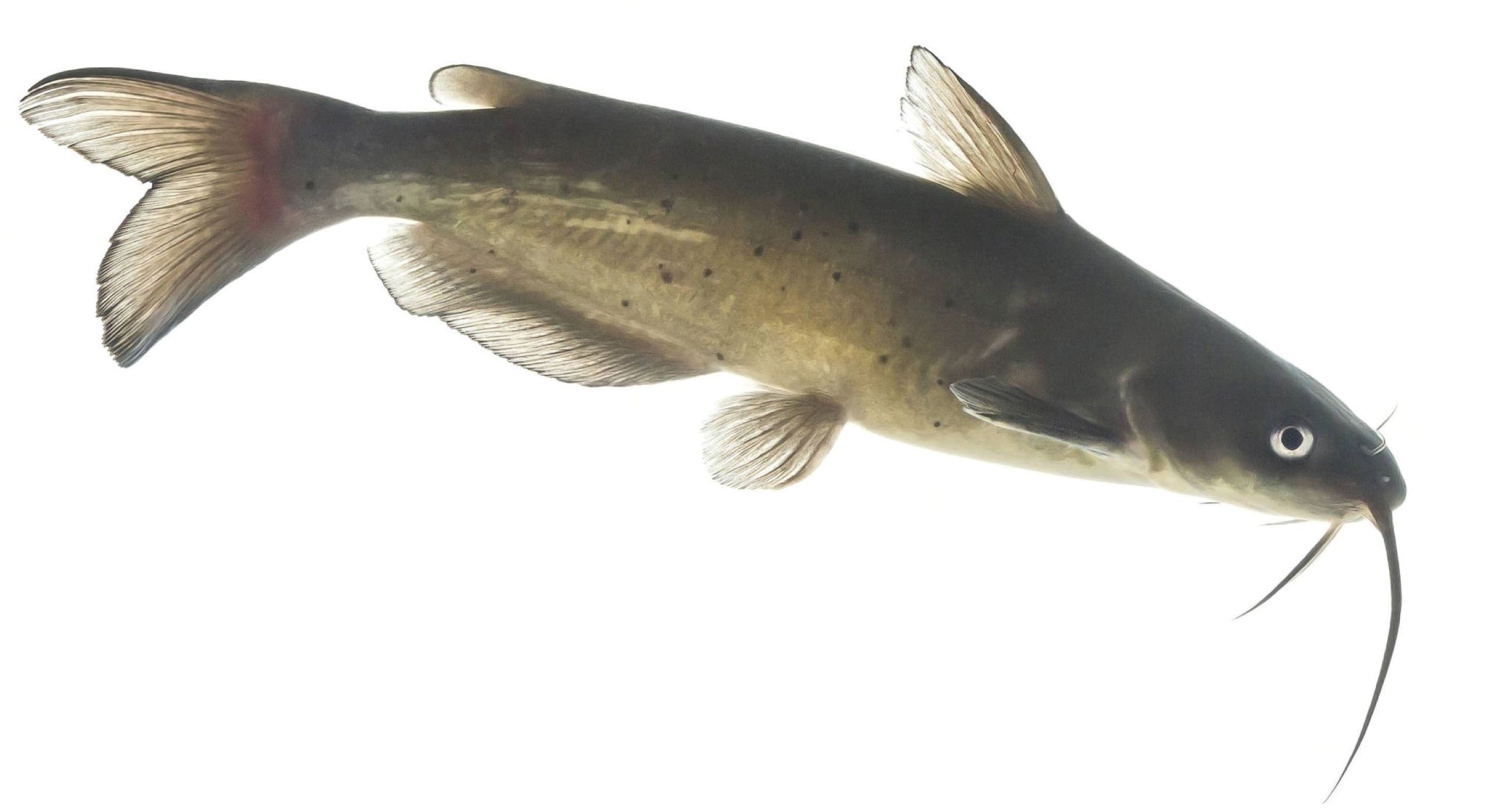
Channel catfish (Ictalurus punctatus) are the most widely distributed and commonly caught catfish in North America — found in virtually every river system, reservoir, and farm pond from Montana to Florida. They are hard-fighting, excellent on the table, and highly catchable even for beginners, and fish over 20 lbs come out of quality water regularly. Night fishing for channel cats is a summer tradition across the country, and their accessibility — neighborhood pond to major river — is a big part of why they’re beloved by anglers of all ages.
Range & Habitat
Channel catfish are found throughout the central and eastern US and have been introduced widely elsewhere. They prefer rivers, reservoirs, and lakes with moderate current, sandy or gravel bottom, and deep holes — channel edges, tailwaters below dams, outside bends, and anywhere current concentrates food. They are especially abundant in river systems and reservoirs across the Midwest and South. Channel cats are opportunistic feeders that locate food primarily by smell and taste, using their sensitive barbels to find it, and they are most active at night and in low light.
Best Tackle
Medium-heavy to heavy spinning or casting: 7′–9′ medium-heavy rod, 3500–6000 reel, 14–30 lb monofilament or 20–40 lb braid. Go heavier for large fish and heavy cover — you want backbone for the hookset and for pulling a big cat out of wood. Circle hooks: 2/0–6/0 circle hooks dramatically reduce deep-hooking and are strongly recommended.
Top Techniques
Bottom Fishing (Slip Sinker Rig): The most productive catfish method by a wide margin. An egg or no-roll sinker that slides freely on the main line above a swivel, with a 12–24″ leader and a 2/0–5/0 circle hook. Cast to deep holes, channel edges, current breaks, and below dam tailraces, then let the bait sit — the fish will find it by smell.
Drift Fishing: Drift live or cut bait along the bottom through river runs and holes and let the current do the work. Very effective for covering water on large rivers.
Float Fishing: A slip float lets you hold bait at a specific depth in current, off a snaggy bottom, or over a shallow flat at night.
Anchored Night Fishing: Anchor in a productive hole after dark and set multiple rods. It is the most relaxing approach to catfishing and often the most productive.
Best Baits & Lures
- Chicken Liver: The most popular and effective channel cat bait — potent, cheap, and available everywhere. Use a treble hook with mesh or a bait holder to keep it on. Fresh beats frozen every time.
- Cut Shad: The top bait in most major river systems. Fresh-cut shad is irresistible to large channel cats.
- Cut Bait (perch, bluegill, sucker): Fresh pieces of local forage fish, where legal, are outstanding in rivers.
- Nightcrawlers: A clean, versatile bait that catches catfish everywhere, particularly in smaller lakes and ponds.
- Stink Bait, Dip Bait, and Punch Bait: Commercial prepared baits fished on dip tubes, sponge hooks, or treble hooks. Messy, aromatic, and extremely effective in warm months.
- Live or Cut Sunfish: Bigger bait means bigger cats — a sunfish lip-hooked and allowed to swim produces trophy channel catfish.
Seasonal Patterns
Summer (June–August): Peak channel catfish season. Warm water activates feeding and disperses scent, and night fishing is exceptional. Spring (April–May): Pre-spawn fish feed aggressively below dams, near tributary mouths, and in channel bends. Fall: Excellent fishing continues through October as fish feed ahead of winter. Winter: Catfish slow down but stack in the deepest holes — slow presentations, fewer bites, but large fish are very possible.
Pro Tips
- Fresh bait is better: Channel cats have extraordinarily sensitive smell receptors. Fresh bait out of the cooler significantly outfishes old or previously frozen bait.
- Fish after dark: Channel cats are strongly nocturnal in warm months. Evening through midnight is consistently the best window.
- Fish below dams: Tailwaters concentrate channel cats year-round. The oxygenated water and constant food supply make them some of the most productive catfish locations available.
- Find current breaks and deep holes: Cats stage where current deposits food. Read the river before you bait up.
- Use circle hooks: They reduce gut-hooking and improve release survival, and with a slip-sinker rig the fish hooks itself.
- Be patient: Catfishing is mostly waiting. Set several rods in productive water and let the fish come to you.
Regulations
Channel catfish regulations vary widely by state. Most states set no minimum size or a 12–15″ minimum, with generous daily bag limits in the 15–25 fish range. Some waters have trophy-protection slot limits. Check your state agency’s current rules.
Best Channel Catfish Tackle
Affiliate disclosure: fishing.digital earns a small commission on qualifying purchases at no extra cost to you.
1. 2/0 Kahle (Wide-Gap) Hook
A wide-gap kahle-style hook holds chicken liver and cut bait far better than a standard J-hook. Confirm the size on the pack before you buy — these are sold in a range of sizes. Check price on Amazon
2. No-Roll Slip Sinker Kit
Flat no-roll sinkers hold bottom in river current instead of tumbling downstream. An assortment in 1–3 oz covers most water. Check price on Amazon
3. Berkley Gulp! Catfish Dough
Scent-heavy prepared dough bait — highly effective and a good deal less messy than homemade stink bait. Check price on Amazon
4. Ugly Stik Catfish Rod (7′ Medium-Heavy)
Built for catfish — strong backbone for big fish, enough tip to feel the bottom. Choose the 7′ medium-heavy from the size options. Check price on Amazon
Browse all species guides: How To Catch Fish — Complete Species Guides | Weekly Fishing Reports — updated every Thursday.
Planning a trip to Channel Catfish?
This report tells you what happened. ReelAI tells you what to do about it — a briefing for your date, your target species and how you're fishing, built from our reports plus live NOAA and USGS data.
Powered by ReelAI — fishing.digital's intelligence layer. Answers are generated from fishing.digital reports and public NOAA, NWS and USGS data, and may be incomplete or out of date. Regulations and marine safety information are summaries only; always confirm with the responsible authority before you fish.