
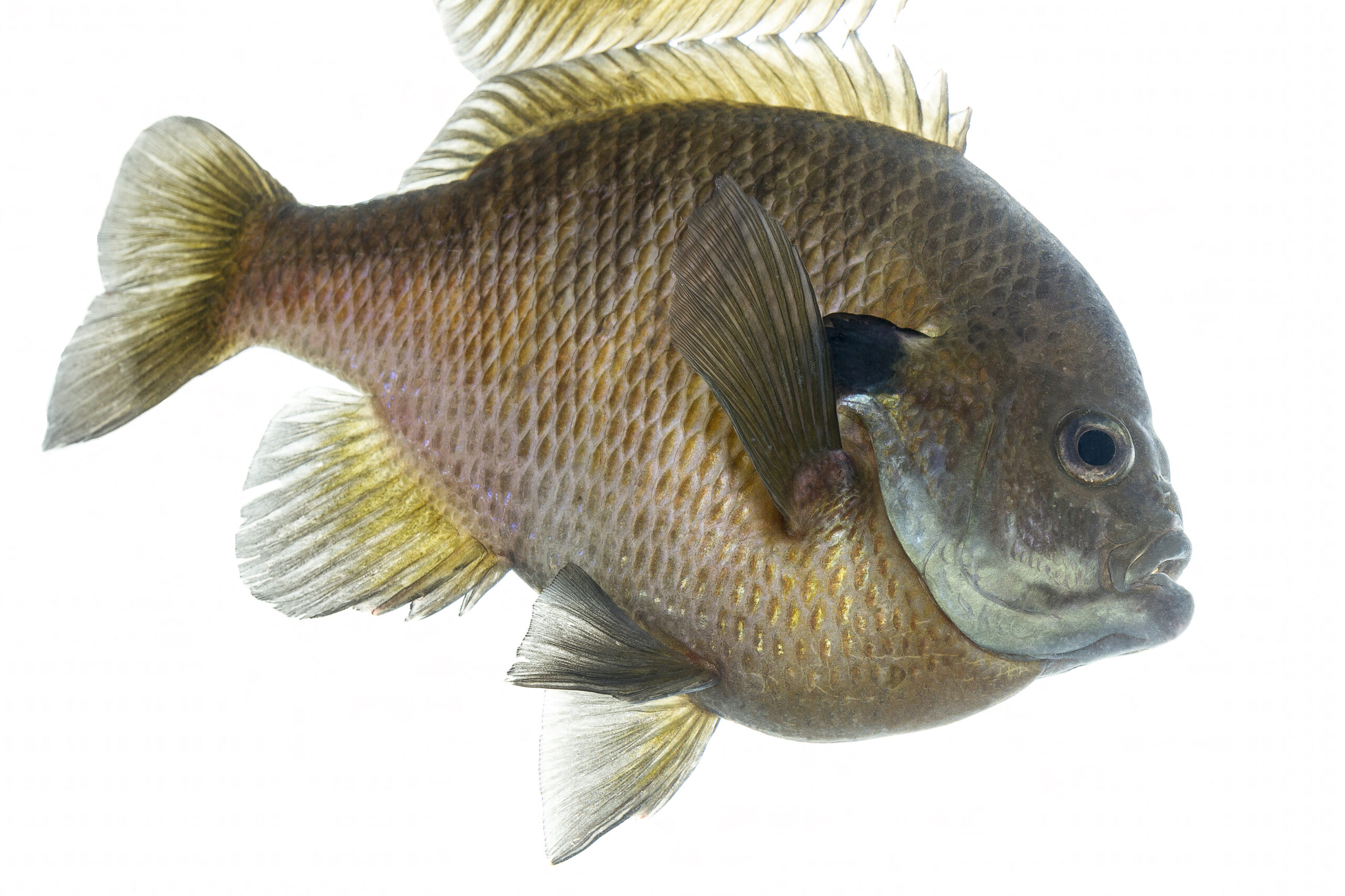
Bluegill (Lepomis macrochirus) and their panfish relatives — pumpkinseed, redear sunfish, green sunfish, and rock bass — are the most accessible and forgiving fish in freshwater. Found in virtually every pond, lake, and slow river in North America, panfish are the fish that introduce millions of children to the sport, and they remain a genuine pleasure on ultralight tackle throughout an angler’s lifetime. They bite readily, fight hard for their size, and provide excellent table fare.
Range & Habitat
Bluegill and panfish are found throughout the eastern US and have been widely introduced nationwide. They inhabit ponds, lakes, slow rivers, backwaters, and reservoirs with abundant vegetation, dock structure, and shallow sandy or gravel bottoms. They school around any available structure — dock pilings, lily pads, weed edges, fallen logs — and concentrate in large numbers during the spring spawn.
Best Tackle
Ultralight is ideal: 5–6’6″ ultralight spinning rod, 1000 reel, 2–6 lb monofilament or fluorocarbon. A light fly rod (2–4 weight) is exceptional for bluegill. Even a simple cane pole or telescoping rod with fixed line is highly effective.
Top Techniques
Float Fishing: A small bobber/float with a live worm or crickets suspended 1–3 feet down is the classic bluegill method — simple, effective, and productive for all ages. Small Jig Fishing: Small 1/32–1/16 oz jigs retrieved slowly or dipped vertically near structure. Fly Fishing: Dry flies, small poppers, and wet flies are extraordinarily effective for bluegill — excellent sport on 3–4 weight gear.
Best Baits & Lures
- Nightcrawler pieces: The most universally effective bluegill bait. Cut a nightcrawler into thirds and thread onto a small hook.
- Crickets: The top bluegill bait in the South. More active and aromatic than worms — bluegill love crickets.
- Waxworms: Excellent ice fishing and cold-water bluegill bait.
- 1/32 oz Marabou Jig: The top artificial for bluegill — small, light, and irresistible. Yellow, white, and pink are top colors.
- Small Foam Popper (fly): Bluegill surface strikes on a tiny foam popper are some of freshwater fishing’s purest fun.
Seasonal Patterns
Spring–Early Summer (April–June): The spawn — the absolute peak. Bluegill move into the shallows and build beds in 1–4 feet of water. Fish are concentrated, visible, and highly aggressive. Summer: Excellent fishing continues throughout summer — early morning and evening are most productive. Fall: Fish remain active until water cools significantly. Ice Fishing: Bluegill are the top ice fishing panfish — small jigs and waxworms produce excellent action through the ice.
Pro Tips
- Match hook size to fish size: Most bluegill bites are small — use size 6–10 hooks. Oversized hooks mean missed fish.
- Find the beds in spring: Bluegill spawning beds are visible in clear, shallow water — oval depressions in sand or gravel. Position upwind and cast to the edges.
- Small bobbers: Use the smallest float that will support your bait. Large bobbers create resistance that spooky panfish feel.
Regulations
Panfish regulations are generally very liberal. Most states have no minimum size and allow 25–50 fish per day. Some managed ponds may have more restrictive rules.
Browse our weekly fishing reports — updated every Thursday.
Planning a trip to Bluegill/Panfish?
This report tells you what happened. ReelAI tells you what to do about it — a briefing for your date, your target species and how you're fishing, built from our reports plus live NOAA and USGS data.
Powered by ReelAI — fishing.digital's intelligence layer. Answers are generated from fishing.digital reports and public NOAA, NWS and USGS data, and may be incomplete or out of date. Regulations and marine safety information are summaries only; always confirm with the responsible authority before you fish.