
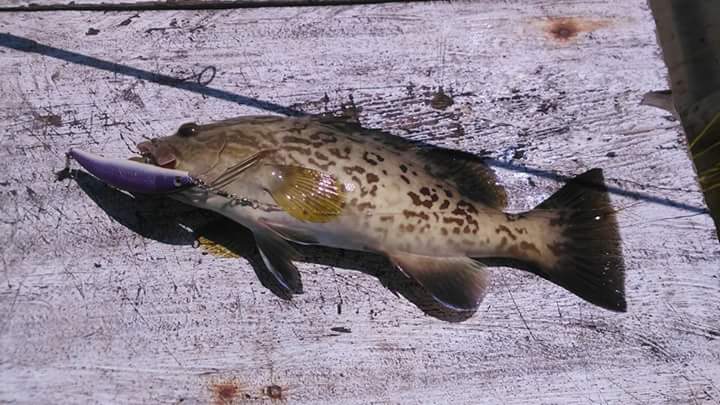
Gag grouper (Mycteroperca microlepis) are the most targeted grouper species on the US East Coast and Gulf — a powerful bottom-dwelling predator found on nearshore and offshore reefs, ledges, and rocky structure from the Carolinas to the Gulf of Mexico. Renowned for their ability to dive back into structure the instant they feel the hook, gag grouper demand heavy tackle, fast reactions, and confident technique.
Range & Habitat
Gag grouper range from North Carolina south through Florida and across the Gulf of Mexico. They inhabit rocky bottom, coral reefs, artificial reefs, ledges, and wrecks from 30 feet out to 200+ feet. Juvenile fish are found in seagrass beds and shallow nearshore areas. Adult gags typically relate to structure — the more prominent the structure, the bigger the fish. Gulf grouper tend to run larger than Atlantic fish. Gags also move with the season — inshore onto nearshore ledges in 60-120 feet through fall and winter, back out to deeper structure in late spring and summer — which puts them within reach of small boats for a good part of the year. The Gulf population has recovered substantially from its low point, and the nearshore fishery is productive again.
Best Tackle
Heavy conventional (required): 6’6″–7′ heavy to extra-heavy conventional rod rated 50–80 lb, paired with a high-capacity lever-drag or star-drag reel spooled with 65–80 lb braid. Heavy gear is non-negotiable — gag grouper must be stopped before they reach structure or the fight is lost. 60–80 lb fluorocarbon leader 4–6 feet.
Top Techniques
Bottom Fishing: The classic gag grouper technique. Drop a live or dead bait to the bottom directly on structure and wait. When the grouper picks up the bait and begins moving toward its hole, engage the reel and come tight immediately — hesitation loses fish.
Vertical Jigging: Large butterfly jigs, knife jigs, or slow-pitch jigs worked vertically near structure. Effective for active fish and can trigger strikes from fish that won’t eat natural baits.
Live Bait Fishing: Free-lining a large live pinfish, pigfish, or grunts near the bottom on the upcurrent side of structure is the most effective large-fish technique.
Trolling Deep Divers: On shallow nearshore ledges, pulling a deep-diving plug over the structure will raise gags off the bottom and draw strikes from fish that will not commit to a bait sitting still. A useful search tool when you are prospecting new rock.
Best Baits & Lures
- Live Pinfish: The top gag grouper live bait on the Atlantic coast and in the Gulf. Hook through the back behind the dorsal fin.
- Live Grunts/Pigfish: Excellent bottom baits that are both hardy and attractive to large grouper.
- Live Blue Runner: Large live blue runners produce the biggest gag grouper.
- Dead Cigar Minnow: Rigged on a knocker rig and fished on the bottom. The most accessible grouper bait for anglers who can’t catch live bait.
- Cut Squid: The dependable standby when live bait is scarce. Fresh beats previously frozen every time.
- Bucktail Jig (2-4 oz): Worked near the bottom with short hops. Effective for active fish.
- Slow-Pitch Jigs: Modern slow-pitch jigging is very effective for gag grouper — the fluttering action on the drop triggers aggressive strikes.
Seasonal Patterns
Open-season windows: Both the Gulf and the South Atlantic close gag season for part of the year to protect spawning fish, and the open window has shifted from season to season — confirm the current dates before you plan a trip. Fall and winter: The most productive stretch in the Gulf, as fish move onto nearshore ledges within reach of smaller boats and aggregate on offshore structure. Some of the largest fish of the year come in the cold months. Spring and summer: Fish transition back to deeper structure and the fishery becomes a longer run.
Pro Tips
- Heavy drag from the start: Set drag at 30–40% of line strength. The instant a gag picks up your bait it will run for the nearest hole — you must stop it immediately.
- Fish the upcurrent side: Position the boat upcurrent of structure and drop baits so they drift naturally into the strike zone at the base of the reef or ledge.
- Mark fish before anchoring: Make multiple passes over structure with your sounder before dropping anchor. Mark the fish and structure position, then anchor appropriately upcurrent.
- Fish circle hooks: Gags come up from depth, and a gut-hooked fish that has to be released is usually a dead fish. A circle hook in the corner of the jaw makes venting or descending a short fish far easier — and in much of this fishery non-stainless circle hooks and a descending device are required gear.
- Quick hookset: Don’t give a gag any slack. When you feel the bite, come tight immediately and keep maximum pressure throughout the fight.
Regulations
Gag grouper are tightly managed and the rules move. Both the Gulf and South Atlantic carry a minimum size in the low-to-mid twenties of inches, a small daily bag, and a seasonal closure timed to the spawn — but the exact dates, sizes, and aggregate grouper limits have changed in each of the last several seasons. Check current NOAA, SAFMC, and GMFMC regulations, plus your state’s rules, before every trip.
Want current gag grouper conditions? Browse our weekly fishing reports — updated every Thursday.
Best Gag Grouper Tackle
Affiliate disclosure: fishing.digital earns a small commission on qualifying purchases at no extra cost to you.
1. PENN Squall II Lever Drag, Size 30
A size 30 lever-drag conventional is the workhorse of this fishery — enough line capacity and enough drag to turn a fish before it reaches the hole. (The current listing is the Squall II, not the original Squall.) Check price on Amazon
2. 80 lb Fluorocarbon Leader
A spec more than a product: 4-6 feet of 80 lb fluorocarbon between braid and hook. Abrasion resistance against rock matters more here than invisibility. Check price on Amazon
3. Pre-Tied Knocker Rig
A knocker rig runs the sinker down to the hook so the whole thing rides the bottom together and hangs up less. Pre-tied rigs save time; carry 4-12 oz of lead to match the current. Check price on Amazon
4. 7/0 Circle Hook
A 7/0 circle is the right size for a live pinfish or grunt. Any quality offset-free circle in that size works — this one is a widely available example. Check price on Amazon
Planning a trip to Gag Grouper?
This report tells you what happened. ReelAI tells you what to do about it — a briefing for your date, your target species and how you're fishing, built from our reports plus live NOAA and USGS data.
Powered by ReelAI — fishing.digital's intelligence layer. Answers are generated from fishing.digital reports and public NOAA, NWS and USGS data, and may be incomplete or out of date. Regulations and marine safety information are summaries only; always confirm with the responsible authority before you fish.