
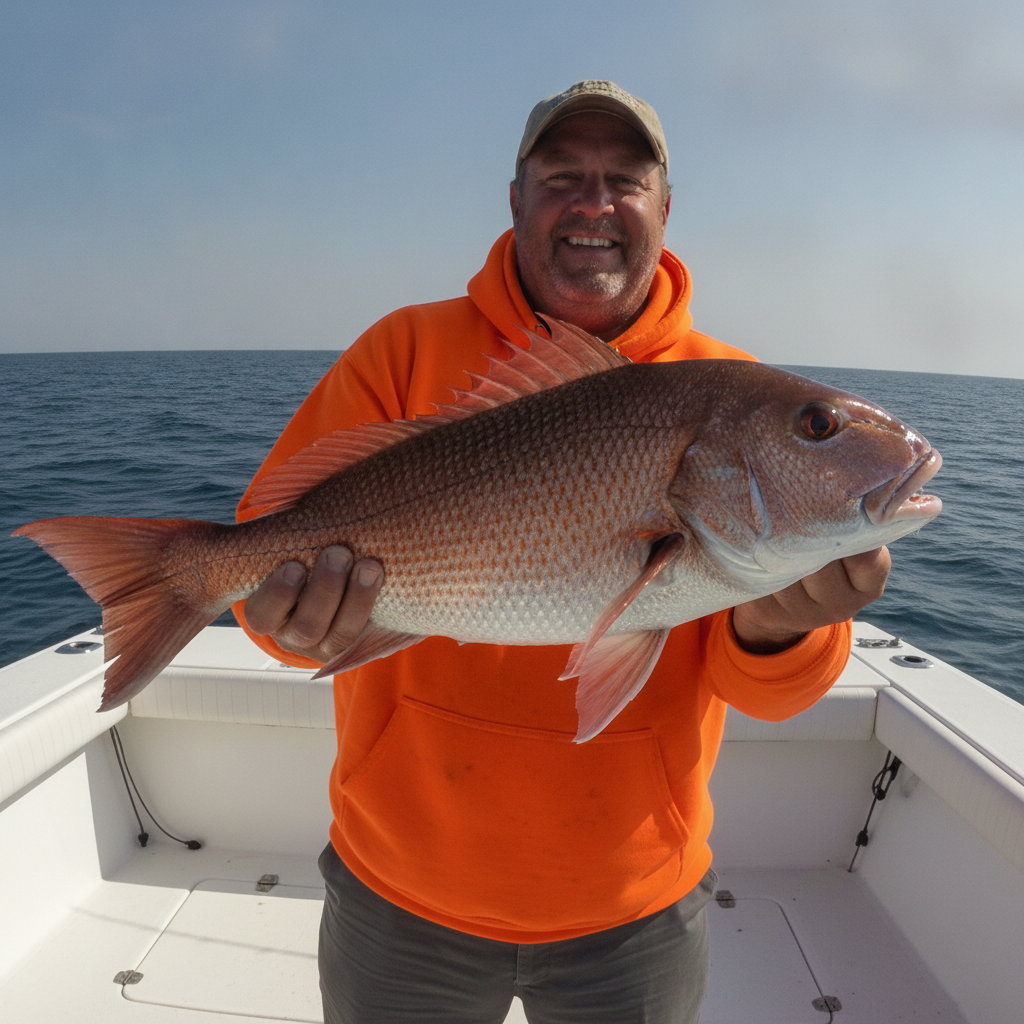
Red snapper (Lutjanus campechanus) are the most coveted reef fish in the Gulf of Mexico — a beautiful, hard-fighting bottom fish with brilliant crimson coloring and some of the finest meat in saltwater. They are also the centerpiece of one of the most regulated and most contested fisheries in America. The Gulf season draws enormous pressure from Texas to Florida every summer, and landing a big red snapper off a deep reef is a rite of passage for Gulf Coast anglers.
Range & Habitat
Red snapper are found from the Mid-Atlantic south through Florida and throughout the Gulf of Mexico, with the largest population in the Gulf. They inhabit natural and artificial reefs, rocky ledges, and hard bottom from 30 feet to 600+ feet. The densest concentrations sit on Gulf artificial structure — oil and gas platforms, shipwrecks, and deliberately deployed reef material. Natural ledges and live bottom in the Panhandle and Southeast are productive too. Juveniles hold on shallower nearshore structure; the largest adults live on deeper offshore reefs. Snapper are strongly structure-oriented and are year-round residents of their home reef, returning to it after being displaced.
Best Tackle
Medium-heavy to heavy conventional: 6′6″–7′ heavy conventional rod (30–50 lb class), a 30–50 size lever-drag or star-drag reel with 400+ yards of 65–80 lb braid, and 3–5 feet of 40–60 lb fluorocarbon leader. In very deep water (150–300 ft), heavier sinkers and electric reels are common for comfort on high-volume trips.
Top Techniques
Bottom Fishing: Drop a bait to the bottom near structure and wait. Red snapper are aggressive and the bite is usually decisive. The knocker rig — an egg sinker riding right down against the hook — is the most popular snapper rig for keeping bait pinned near the bottom.
Vertical Jigging: Large jigs worked near the bottom produce excellent results. Snapper hit jigs hard, and the fight on a jig is far better than on bait.
Mid-Water Fishing: Large red snapper often suspend 10–40 feet above the reef. Fishing at those depths — identified on the sounder — is the most reliable way to pick off the biggest fish in the school.
Chunking: Dropping cut bait chunks while chumming pulls snapper up off the structure and holds them in the slick, sometimes right to the surface.
Best Baits & Lures
- Live Cigar Minnows: The top Gulf snapper bait. Hook through the nose or behind the dorsal and drop to the reef.
- Live Pinfish: The best large-fish bait when you can get it, and excellent on Atlantic coast structure. A big live pinfish free-lined near a prominent reef produces trophy snapper.
- Cut Squid: The most widely used snapper bait anywhere — available everywhere, durable, and very effective.
- Cut Bonito or Tuna: Fresh chunks of oily fish are extremely effective on large red snapper.
- Vertical Jigs (2–8 oz): Knife jigs, butterfly jigs, and slow-pitch jigs in pink, white, and red/white all produce.
- Shrimp (live or frozen): Excellent in shallower reef areas.
- Sabiki Rigs: For catching your own. Cigar minnows and blue runners caught on a sabiki are the best possible snapper bait.
Seasonal Patterns
Summer (June–August): The primary Gulf red snapper season, when the federal season is typically open. Dates are set annually by NOAA and change every year — verify before the trip. State waters: Alabama, Louisiana, Mississippi, Texas, and Florida run their own state-waters seasons, which are often longer or offset from the federal dates. South Atlantic: The season generally falls somewhere between May and August and has recently been only a few days long. Year-round: The fish are on the structure all year; only the harvest window moves.
Pro Tips
- Fish the season dates precisely: Red snapper regulations are among the most strictly enforced in federal fisheries, and federal seasons have historically been very short. Know your season, bag limit, and minimum size before you leave the dock.
- Find the structure: Red snapper don’t live in open sand. Every reef, wreck, platform, and hard-bottom feature holds fish — use the chart plotter and sounder to find it before you drop.
- Mid-water fish are the biggest: The largest snapper often suspend 20–40 feet off the bottom. Watch the sounder and fish the depth where the big marks appear.
- Use circle hooks: They reduce gut-hooking, improve release survival, and are increasingly required in Gulf snapper fisheries.
- Vent or descend released fish: Snapper brought up from more than about 60 feet suffer barotrauma. Carry a descending device — it is required gear in the Gulf — and use it on any fish that can’t swim down on its own.
Regulations
Gulf red snapper: 16-inch minimum, 2 fish per person per day for private recreational anglers, with the season announced annually by NOAA each spring. South Atlantic seasons and limits differ and are typically much shorter. State-waters seasons vary by state. Always verify the current season and bag limits at fisheries.noaa.gov before your trip.
Best Red Snapper Tackle
Affiliate disclosure: fishing.digital earns a small commission on qualifying purchases at no extra cost to you.
1. 5/0 Circle Hook (Bottom Rig)
A 5/0 circle hook is the standard size for snapper on bait, and circle hooks are required in many Gulf snapper fisheries. They cut gut-hooking dramatically. Check price on Amazon
2. Penn Fathom II Conventional Reel, 25 Size
Strong level-wind reel with the capacity to drop on 80–200 foot reef structure. Check price on Amazon
3. Heavy Bottom Rod, 6′6″ 30–50 lb Class
A 30–50 lb class conventional rod rated for the depths and fish sizes you’ll encounter. Check price on Amazon
4. Cigar Minnows (from the bait shop)
The standard Gulf snapper bait. Buy live if you can, frozen if you can’t, or catch your own on a sabiki — either way, stock the cooler before you leave the dock. Bait doesn’t ship; get it locally.
Browse all species guides: How To Catch Fish — Complete Species Guides | Weekly Fishing Reports — updated every Thursday.
Planning a trip to Red Snapper?
This report tells you what happened. ReelAI tells you what to do about it — a briefing for your date, your target species and how you're fishing, built from our reports plus live NOAA and USGS data.
Powered by ReelAI — fishing.digital's intelligence layer. Answers are generated from fishing.digital reports and public NOAA, NWS and USGS data, and may be incomplete or out of date. Regulations and marine safety information are summaries only; always confirm with the responsible authority before you fish.