
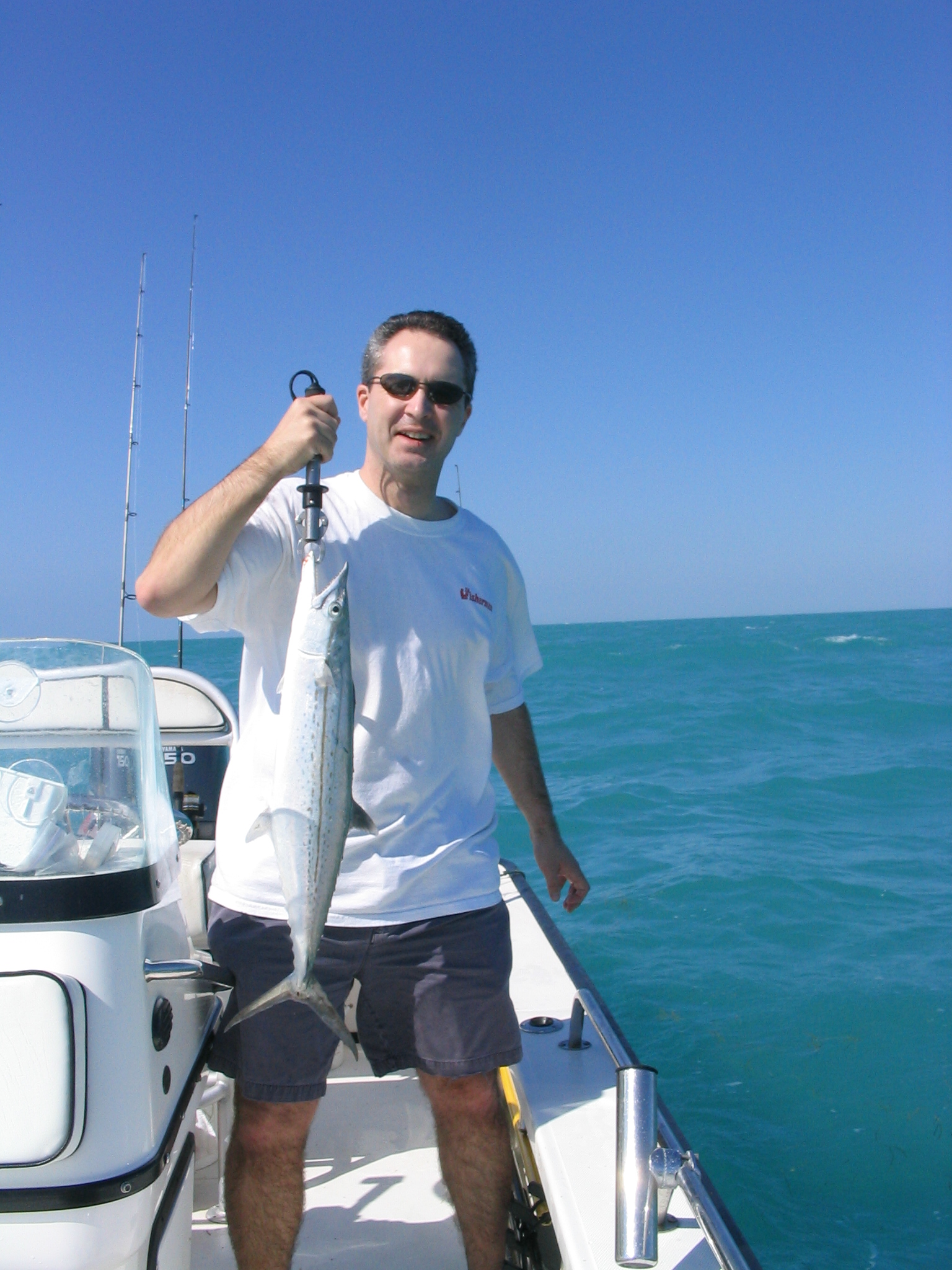
Spanish mackerel (Scomberomorus maculatus) are one of the most exciting nearshore gamefish on the East Coast and Gulf — fast, aggressive, and willing to attack just about any lure or bait presented at speed. They aren’t as large as kings, but they are far more accessible, feeding just beyond the surf zone, around piers, and in the mouths of inlets where surf, pier, and small-boat anglers can all reach them. A school of Spanish blitzing bait on the surface is one of inshore fishing’s great sights, and catching them on light spinning tackle is genuinely thrilling.
Range & Habitat
Spanish mackerel range from the Chesapeake Bay south through the Gulf of Mexico and down to Brazil. They are highly migratory, arriving in northern waters in spring and retreating south in fall. They are found from the surf zone out to about 40 feet — tight to beaches, at inlets and passes, on nearshore reefs, and occasionally inside bays. They prefer clean, clear water and are almost always tied to bait: find the bait, find the Spanish. Feeding schools are frequently visible blitzing on the surface.
Best Tackle
Rod: 6′6″–7′ medium-light to medium fast-action spinning rod. Reel: 2500–4000 size. Line: 10–20 lb braid. Leader: 18–24″ of 20–30 lb fluorocarbon. Spanish have sharp teeth, but wire visibly kills the strike rate — fluorocarbon is the compromise, and you accept the occasional cut-off. Step up toward 40 lb, or a short length of light wire, only if they are chopping you off repeatedly on long fights.
Top Techniques
Casting to Breaking Fish: The most exciting method. When Spanish are blitzing, cast small spoons, metal jigs, or Gotcha plugs into the melee and retrieve fast. Keep moving — the school moves quickly.
Trolling: Trolling Clarkspoons or Drone spoons at 5–7 knots near bait schools and color lines is the most consistent way to cover ground and find fish.
Jigging: Working small metal jigs vertically or on a fast horizontal retrieve through schools marked on the sounder is very effective.
Live Bait Under a Float: A small live pilchard, finger mullet, or shrimp drifted near breaking fish or around inlet structure — less exciting than casting, but reliable when the fish won’t chase artificials.
Best Baits & Lures
- Clarkspoon (size 00 to 1): The definitive Spanish mackerel lure. Note that Clarkspoons are sized by number, not by weight — 00 and 0 are the standard Spanish sizes. Troll them behind a planer or a trolling sinker, or cast and burn them.
- Got-Cha Plug: A small, dense casting plug. Deadly on surface-feeding Spanish on a fast retrieve — all-silver, silver/chartreuse, and silver/pink are the standards.
- Stingsilver / Kastmaster (1/2–3/4 oz): Metal casting spoons for surface-feeding fish and for jigging through the water column.
- Small Paddle Tail Swimbaits (2–3″): White or silver on a 1/4 oz jighead. Effective on feeding schools.
- DOA Shrimp or Small Paddletail: The answer when fish are lethargic and want a slower presentation.
- Live Shrimp, Pilchards, or Finger Mullet: Drifted near structure or at inlets. The best bet for larger specimens.
Seasonal Patterns
Spring (March–June): Spanish arrive with warming water following the bait north — the first schools of the year show in the Carolinas around April, and their arrival is one of the first signs of spring on the East Coast. Summer: Widespread throughout the range — surf, piers, and nearshore. Pier fishing is excellent. Fall: The southern migration produces dense schools close to shore and excellent action at inlets and beaches as fish funnel through. Winter: Present year-round in South Florida and the Gulf.
Pro Tips
- Fast retrieve is essential: Spanish key on speed. A slow retrieve rarely triggers a strike — burn the lure and only slow down if they’re refusing it.
- Light fluoro over wire: Wire leader kills the strike ratio dramatically. Run 20–30 lb fluorocarbon and accept the occasional bite-off.
- Look for birds and bait: Diving terns over flickering baitfish almost always have Spanish underneath.
- Use a quality snap swivel: Metal spoons generate constant line twist — a good ball-bearing swivel is not optional.
- Wear old clothes: Spanish mackerel blood stains instantly and permanently. Old clothes or rain gear, and a bucket of water within reach.
Regulations
Spanish mackerel are managed federally and by state. The Atlantic recreational limit is generally 15 fish per person per day with a 12-inch fork length minimum; Gulf limits and sizes differ and both are adjusted periodically. Verify current NOAA and state fisheries regulations before you fish.
Best Spanish Mackerel Tackle
Affiliate disclosure: fishing.digital earns a small commission on qualifying purchases at no extra cost to you.
1. Clarkspoon, Size 00
The #1 Spanish mackerel lure, trolled at 5–7 knots near bait schools. Clarkspoons are sized 00 through 3 — 00 is the Spanish size. Check price on Amazon
2. Got-Cha Plug Assortment
The go-to casting lure for blitzing Spanish. Retrieve as fast as you can turn the handle. An assortment covers the silver, chartreuse, and pink patterns. Check price on Amazon
3. Fluorocarbon Leader for Spanish
Run 20–30 lb fluorocarbon as your everyday leader and step up to 40 lb only when they’re chopping you off on long fights. Check price on Amazon
4. Kastmaster, 3/4 oz Chrome
A metal casting jig for surface schooling fish — cast past the blitz and burn it back. Check price on Amazon
Browse all species guides: How To Catch Fish — Complete Species Guides | Weekly Fishing Reports — updated every Thursday.
Planning a trip to Spanish Mackerel?
This report tells you what happened. ReelAI tells you what to do about it — a briefing for your date, your target species and how you're fishing, built from our reports plus live NOAA and USGS data.
Powered by ReelAI — fishing.digital's intelligence layer. Answers are generated from fishing.digital reports and public NOAA, NWS and USGS data, and may be incomplete or out of date. Regulations and marine safety information are summaries only; always confirm with the responsible authority before you fish.