
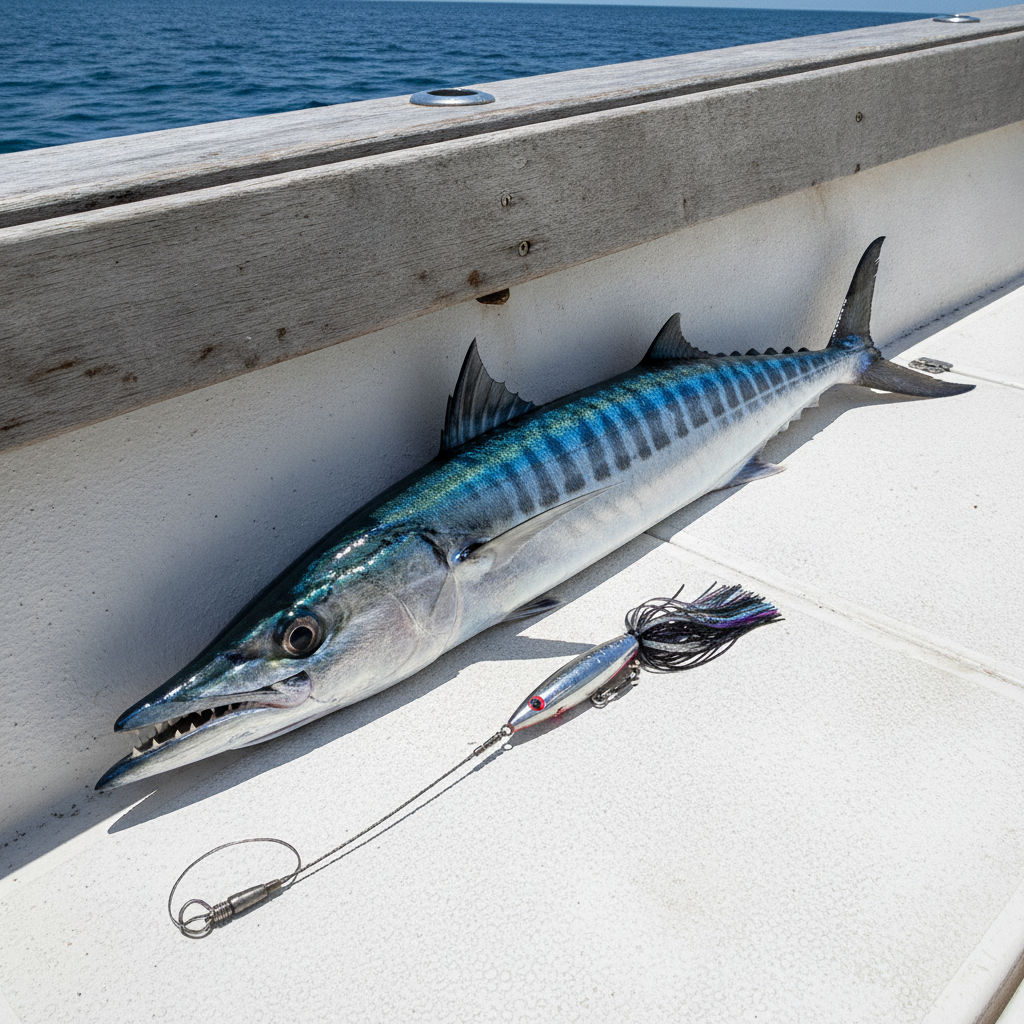
Wahoo (Acanthocybium solandri) are the muscle cars of the offshore world — sleek, powerful, and capable of initial runs that peel line off reels faster than almost any fish in the sea. With speeds exceeding 60 mph, razor-sharp teeth, and spectacular jumps, wahoo are one of the most prized offshore targets from the Carolinas to the Florida Keys and beyond. They’re also arguably the finest-tasting offshore fish available — Hawaiians call them ‘ono, which means “delicious,” and nobody who has eaten one fresh argues the point.
Where to Find Wahoo: Range & Habitat
Wahoo are found in tropical and subtropical waters worldwide. On the US East Coast they’re most abundant from Cape Hatteras south, with excellent concentrations off the Carolinas in fall, Florida year-round, and the Bahamas and Caribbean. They associate with offshore structure — seamounts, ledges, current edges, and weedlines — and are most active in water 70°F and warmer. They’re solitary or found in small groups rather than large schools.
Best Tackle for Wahoo
Trolling: 50–80 lb class conventional outfit. Heavy wire leader (No. 7–9 single-strand wire, 3–5 feet) is mandatory — wahoo have razor teeth that will cut through anything less. Penn International, Shimano Tiagra, or similar big-game reels with 500+ yards of capacity.
Casting/Jigging: Heavy 7–8″ spinning or conventional rod with 50–65 lb braid and 80–100 lb fluorocarbon or wire leader.
Top Techniques for Catching Wahoo
High-Speed Trolling: The most effective wahoo technique. Troll spreads of Islander/Sea Witch lures over rigged ballyhoo, jet heads, or large diving lures at 12–18 knots. The high speed is specifically intended to trigger wahoo’s predatory response — they will chase and eat baits moving at speeds that would leave other fish behind.
Slow Trolling with Planers: Trolling a rigged bait or large spoon on a #3 or #4 planer at 6-8 knots gets your bait down in the water column where wahoo often suspend. Let out 100-200 feet of line behind the planer and match the drop to whatever depth the fish are showing on the sounder.
Chunking: Drifting with live or dead bait chunks in areas of known wahoo concentration. Less targeted than trolling but effective when fish are in the area.
High-Speed Casting: Large jet lures and diving plugs cast and retrieved very quickly can trigger strikes from wahoo near the surface.
Best Baits & Lures for Wahoo
- Rigged Ballyhoo (under Sea Witch or Islander): The standard wahoo trolling bait. Rig with heavy wire and a 9/0–10/0 hook. Speed is key — 12–18 knots.
- Ilander Lures: Large skirted lures in blue/white, black/purple, or green/yellow. The go-to high-speed wahoo producer.
- Jet Heads: Bullet-shaped trolling lures that run cleanly at high speed. Excellent wahoo producers.
- Drone Spoons: Large trolling spoons on a planer produce excellent wahoo results at 5–7 knots.
- Yo-Zuri Bonita: Large high-speed trolling plug specifically designed for wahoo. The most popular wahoo plug on the market.
- Mann’s Stretch 30/40: Deep-diving plugs that hold 30-40 feet at trolling speed. Very effective on fish sitting just under the thermocline.
- Large Vertical Jigs: 6–8 oz knife jigs worked quickly through the water column are effective when wahoo are marked on the sounder.
Seasonal Patterns
Fall (October–December): Peak wahoo season on the US East Coast. Fish migrate along the Gulf Stream edge — the Outer Banks, Gulf Stream canyons, and the Bahamas all produce excellent fall wahoo.
Winter (December–February): Good wahoo fishing continues in South Florida and the Keys as fish move south with the season.
Year-round (Florida, Bahamas, Caribbean): South Florida and the Keys have year-round wahoo, with peaks in fall–winter. The Bahamas are exceptional year-round.
Pro Tips
- Use wire leader — no exceptions: Even a brief touch of a wahoo’s teeth on monofilament or fluorocarbon will part the line. Single-strand coffee-colored wire (AFW or Malin) is standard.
- Speed kills: If you’re not trolling fast enough, you’re not targeting wahoo. 14–18 knots is the wahoo sweet spot for most spreads.
- Watch the sounder: Wahoo often suspend at specific depth horizons — 60–120 feet is common. Match your planer or lure depth to where the fish appear on the screen.
- Sharp hooks are critical: Wahoo often hit at speed and the hook must penetrate instantly. Check and replace hooks regularly.
- Fish the first light: Wahoo are most aggressive in the first two hours of daylight. Being on the numbers at sunrise is worth more than any lure choice.
- Check the spread every 20-30 minutes: Wahoo slash at baits without eating them, and a lure that has been cut in half catches nothing for the next hour. Pull and inspect on a schedule.
- Respect the fish in the boat: A green wahoo on the deck is genuinely dangerous. Have a billy ready, subdue the fish before anyone reaches for the hooks, and keep hands clear of the head.
- Bleeding improves table quality: For fish you intend to eat, bleed immediately at the tail and put on ice. Wahoo’s exceptional meat quality is best preserved with immediate care.
Regulations
Always verify current size and bag limits with your state fisheries agency before keeping fish.
Want current wahoo conditions near you? Browse our weekly fishing reports — updated every Thursday.
Best Wahoo Tackle
Affiliate disclosure: fishing.digital earns a small commission on qualifying purchases at no extra cost to you.
1. High-Speed Trolling Lure Set
Heavy skirted and jet-head lures built to track cleanly at 12-18 knots. Ordinary trolling lures blow out at wahoo speeds. Check price on Amazon
2. 80 lb Single-Strand Wire
Non-negotiable. A brief touch of a wahoo’s teeth parts fluorocarbon; single-strand wire is what every serious wahoo spread is rigged with. Check price on Amazon
3. Rapala X-Rap Magnum 30
A deep-diving trolling plug that holds its depth at speed and takes a beating. One of the few off-the-shelf plugs that genuinely works on wahoo. Check price on Amazon
4. Trolling Planer, Size 4
Puts a bait down to the horizon where wahoo suspend. Pair it with a heavy rod and a dedicated planer reel. Check price on Amazon
Planning a trip to Wahoo?
This report tells you what happened. ReelAI tells you what to do about it — a briefing for your date, your target species and how you're fishing, built from our reports plus live NOAA and USGS data.
Powered by ReelAI — fishing.digital's intelligence layer. Answers are generated from fishing.digital reports and public NOAA, NWS and USGS data, and may be incomplete or out of date. Regulations and marine safety information are summaries only; always confirm with the responsible authority before you fish.