
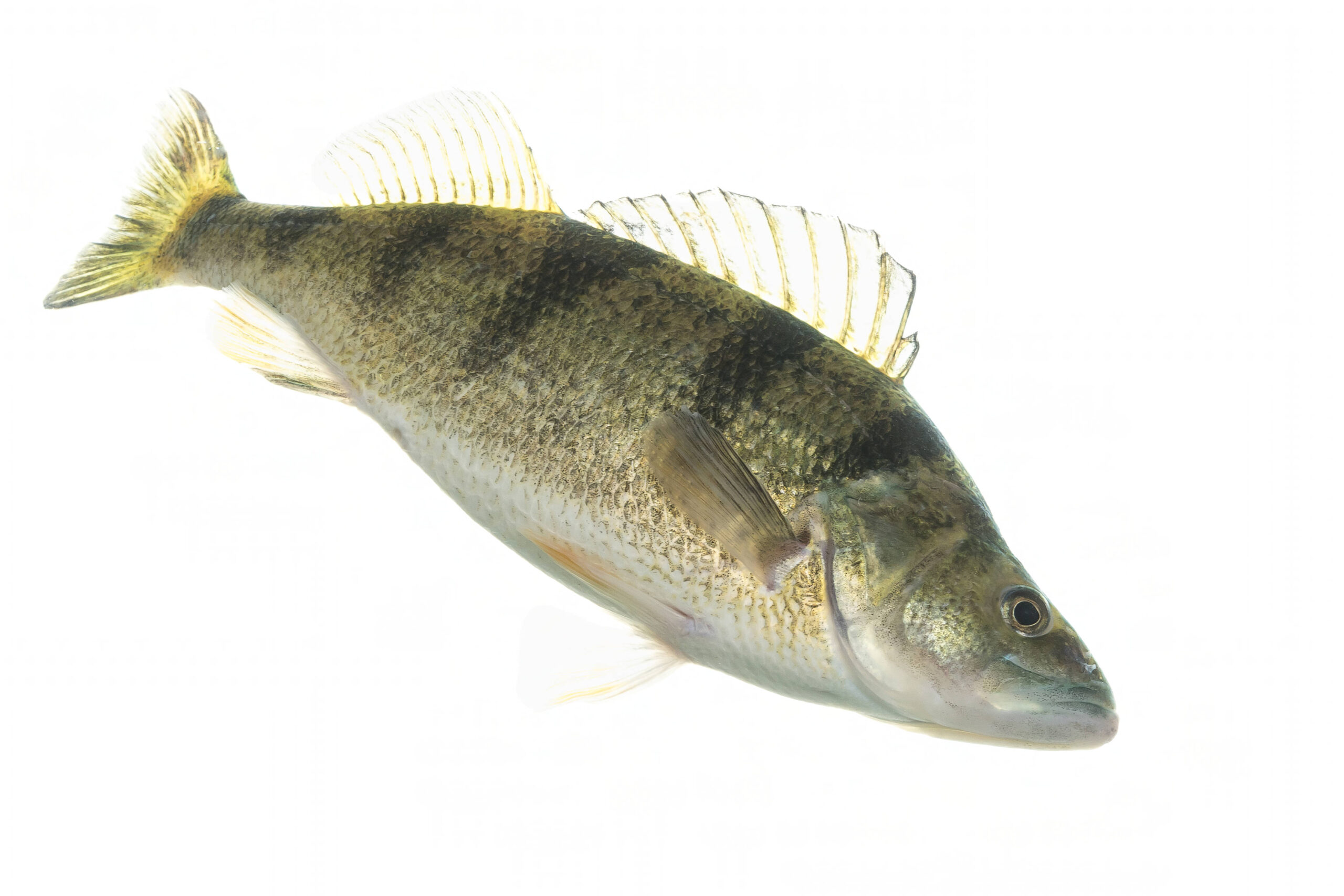
Yellow perch (Perca flavescens) are the most popular panfish in the northern US — the prized quarry of ice fishermen from Minnesota to New England and the fish that fills coolers on Great Lakes charter boats every spring. They are excellent table fare, with sweet, mild, white flesh comparable to walleye, and they school in large numbers, so finding them means high-volume action. The winter perch jigging tradition on the Great Lakes is an institution, and the spring run of big perch on Lake Erie pulls serious anglers from hundreds of miles away.
Range & Habitat
Yellow perch are native to the Great Lakes drainage and the northeastern US, extending west to the Great Plains and south to Georgia, and they have been stocked widely across the northern US and Canada. They are most abundant in the Great Lakes and connected systems, the Finger Lakes, the Chesapeake Bay region, and countless midwestern and northeastern lakes. They prefer clear to moderately turbid lakes and large slow rivers with sand, gravel, or rocky bottom, and relate to vegetation edges, rocky structure, and open water. They are schooling fish — if you catch one, there are more.
Best Tackle
Ultralight: 5′–7′ ultralight to light spinning rod, 1000–2000 reel, 4–8 lb monofilament or 6–8 lb braid with a 6 lb fluorocarbon leader. Perch have small mouths — use small hooks and light line. A simple two-hook bottom rig with small Aberdeen hooks is the standard perch setup, and the same outfit you’d use for bluegill and crappie works perfectly.
Top Techniques
Bottom Rig with Minnow or Worm: The classic perch technique. A two-hook spreader rig baited with small minnows or worm pieces, dropped to the bottom over known perch structure.
Jigging: Small 1/32–1/8 oz jigs tipped with a waxworm, minnow head, or soft plastic. Drop to the bottom near structure and work with light hops.
Drop Shot: A small minnow or plastic held just above bottom on a drop shot is an excellent way to keep the bait in the strike zone while you search for the school.
Ice Fishing: The most popular perch method of all. Tip-ups and tip-downs with small minnows, small jigs with waxworms, and jigging spoons all produce through the ice.
Best Baits & Lures
- Small Live Minnow (1–2″, fathead or shiner): The top perch bait in most situations, in every season. Hook through the lip or back on a size 6–8 Aberdeen hook.
- Nightcrawler Pieces: Cut small — perch have small mouths and a whole worm is too much.
- Waxworms and Spikes: Outstanding ice fishing bait. Thread two or three on a small jigging spoon or jighead.
- Small Jigging Spoon (Swedish Pimple, Jigging Rap): The standard ice fishing perch lure, tipped with a minnow eye or waxworm.
- Small Jigs (1/32–1/8 oz) with soft plastic: On a drop shot or straight vertical presentation.
- Gulp Alive 1″ Minnow: An artificial that outperforms natural bait in a surprising number of situations.
Seasonal Patterns
Spring (March–May): Perch congregate in large schools to spawn and move shallow — exceptional catch rates near spawning areas. The Erie spring run for jumbo perch in shallow water is legendary. Summer: Fish move deeper, schooling in 15–30 feet at thermocline depth over sand and rock. Dock fishing is excellent in many lakes. Fall: Good fishing continues through October as fish feed hard before ice-up. Ice Fishing: The peak season for many perch anglers — fish stack in specific areas under the ice and perch are the #1 target across the Great Lakes region and upper Midwest.
Pro Tips
- Find the school: Yellow perch are extremely schooling-oriented. One fish means dozens more are nearby — mark the spot, stay put, and work the same depth thoroughly.
- Move if the bite dies: Perch schools travel constantly. If it stops, try a different depth or move horizontally until you find them again.
- Downsize in clear water: Small minnows and tiny jigs outfish larger presentations on Lake Erie and other clear fisheries.
- Fish multiple rods where legal: Running two or three rods at different depths is the fastest way to find the level the school is holding.
- Keep bait fresh: Perch are active feeders but prefer lively bait. Replace minnows and worms often.
- Great table fare: Many anglers consider yellow perch the finest-eating freshwater fish there is. Ice them properly for the best quality.
Regulations
Yellow perch regulations vary by state. Great Lakes states typically set daily bag limits between 15 and 50 fish with no minimum size — Lake Erie has its own specific limits in Ohio, Pennsylvania, and New York. Check current state regulations before you fish.
Best Yellow Perch Tackle
Affiliate disclosure: fishing.digital earns a small commission on qualifying purchases at no extra cost to you.
1. Swedish Pimple Jigging Spoon, 1/4 oz
The classic ice fishing and open-water perch spoon. Tip it with a minnow head. Check price on Amazon
2. Lindy Jig, 1/8 oz
A 1/8 oz jig tipped with a live minnow or small soft plastic, worked vertically near the bottom, is the everyday perch presentation. Check price on Amazon
3. Live Minnow on a Size 6 Hook Under a Float
A small live fathead or shiner on a size 6 hook under a float is the single most reliable perch setup there is. Buy the minnows at a local bait shop — live bait doesn’t ship.
4. Ultralight Spinning Rod, 6′ Light
A light, sensitive rod for reading the subtle perch bite through a float or on a vertical jig. Check price on Amazon
Browse all species guides: How To Catch Fish — Complete Species Guides | Weekly Fishing Reports — updated every Thursday.
Planning a trip to Yellow Perch?
This report tells you what happened. ReelAI tells you what to do about it — a briefing for your date, your target species and how you're fishing, built from our reports plus live NOAA and USGS data.
Powered by ReelAI — fishing.digital's intelligence layer. Answers are generated from fishing.digital reports and public NOAA, NWS and USGS data, and may be incomplete or out of date. Regulations and marine safety information are summaries only; always confirm with the responsible authority before you fish.