
Updated: Thursday, November 5, 2026 · Next update: Thursday, November 12, 2026
This Long Island NY fishing report is a seasonal outlook for early November, shaped by the southward baitfish exit, the new moon on Monday, November 9, and the longer nights following daylight saving. Anglers should expect a transition from the fall blitz toward structure-oriented fishing on both shores. Use it to plan gear and timing, then check with local bait shops for the freshest information on where fish are located.
What’s Hitting
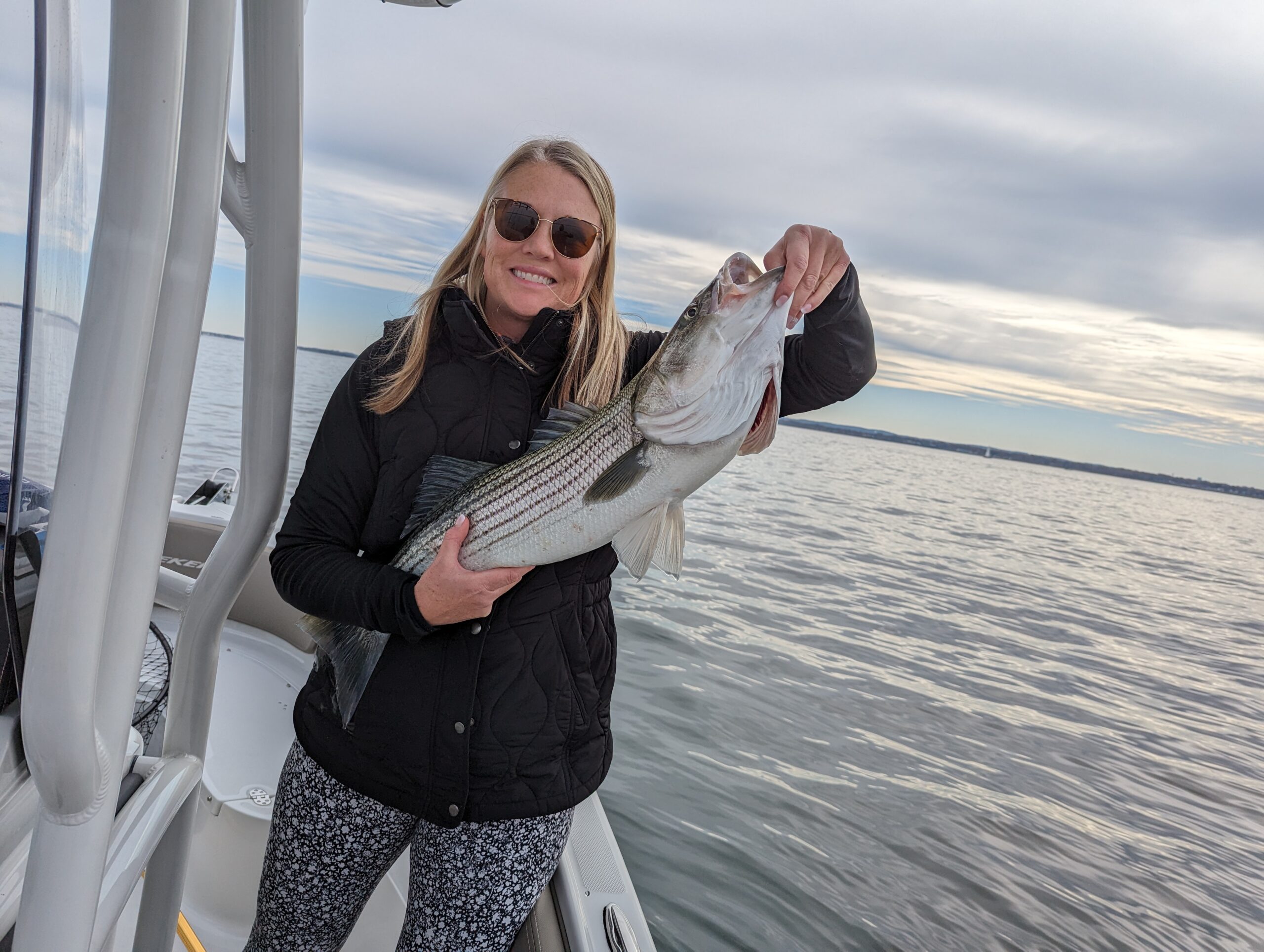
Early November on Long Island commonly means striped bass pushing out of the Sound and along the South Shore beaches as bay anchovies, spearing, and the last of the peanut bunker move. Surf fishing around Montauk and the Hamptons can still produce on a good evening, especially after a northeast blow settles. Blackfish usually hit their stride on rocky shorelines and jetties as water cools, and black sea bass often hold on offshore wrecks and reefs where legal. Porgies may linger on structure near the South Shore inlets. Bluefish often thin out, but stragglers can show with the bait. A fast change in wind can turn a quiet beach into a productive one overnight.
Where to Find Them
On the North Shore, boulder fields near Orient Point and the rocky shoreline around Port Jefferson are traditional tog and striper territory. On the South Shore, Jones Beach and Democrat Point on Fire Island give surf anglers wide sandy options, and Shinnecock Inlet and Moriches Inlet concentrate fish on moving water. Out east, Montauk Point’s rips and the Ditch Plains area draw the largest crowds this time of year. Wreck and reef fishing from the South Shore depends on boat access and a calm window. The Peconic Bay shorelines near Southold and Shelter Island also hold tog and stripers when wind makes the ocean beaches unfishable.
Tides & Conditions
The new moon on Monday, November 9 should create stronger tidal flow around the inlets and rips next week, which often improves striper and tog fishing near current seams. Night tides tend to matter more now, and a falling tide on the South Shore inlets can pull bait toward the ocean. With daylight saving ended, darkness comes earlier, giving evening anglers more usable hours. Watch for onshore swells after a coastal storm, which can make jetties unsafe even when the fishing looks tempting.
Tackle & Tactics
Surf anglers typically want a ten-foot spinning or conventional rod, thirty-pound braid, and a fluorocarbon leader. Bucktails, swimming plugs, and soft plastic shad bodies mimic the bait on beaches, while eels and bunker chunks suit nights and cold water. Blackfish gear is simpler and heavier, with a short stiff rod, sixty-pound braid, a sturdy tog hook, and crab baits. Black sea bass respond to clam strips or jigs on a high-low rig. Pack waders with felt or cleats, a headlamp, and spare leader material. Keep a rain jacket and extra leader spools in the truck.
Local Intel This Week
Access runs from simple to demanding. Robert Moses State Park and Democrat Point at the western end of Fire Island offer big surf and inlet access with seasonal vehicle limits. Gilgo Beach and Jones Beach State Park are popular South Shore stops, while Montauk Point State Park and Camp Hero provide dramatic rocky casting platforms for experienced anglers. Wet rocks and sudden swells are hazardous, so keep a safe distance from the water’s edge. Check current state and federal regulations and seasons before keeping fish. Most of these areas require parking permits or fees in season, so verify the rules before you drive out. The Montauk Harbor docks and Gosman’s area also help anglers find bait and local advice.
This Week’s Tip
Scout a Jones Beach or Democrat Point stretch at low tide in daylight, noting where sandbars and cuts form, then return after dark on the incoming tide and cast a bucktail or swimming plug along the edges. Bring a headlamp with a red setting so your eyes adjust and you do not spook fish near the shoreline.
Planning a trip to Long Island NY?
This report tells you what happened. ReelAI tells you what to do about it — a briefing for your date, your target species and how you're fishing, built from our reports plus live NOAA and USGS data.
Powered by ReelAI — fishing.digital's intelligence layer. Answers are generated from fishing.digital reports and public NOAA, NWS and USGS data, and may be incomplete or out of date. Regulations and marine safety information are summaries only; always confirm with the responsible authority before you fish.