
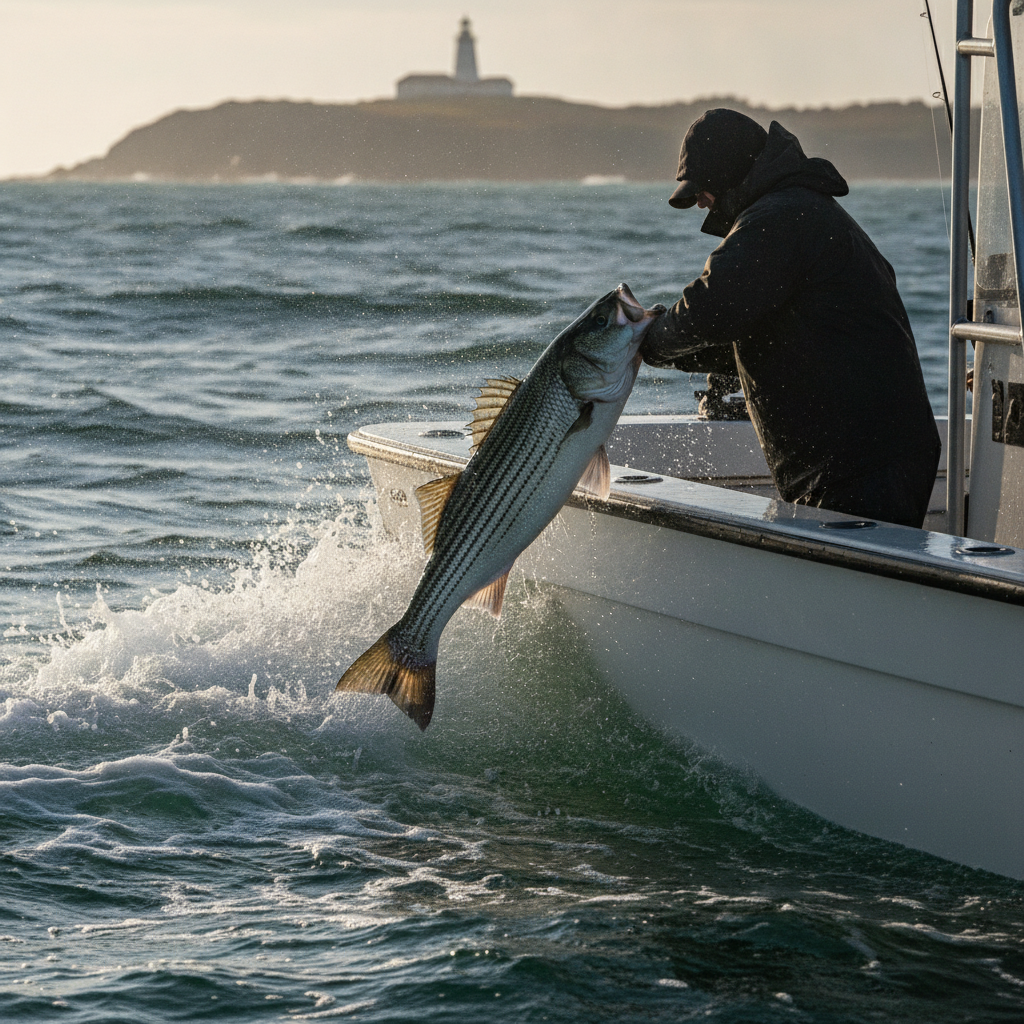
Montauk in the last week of August is a place holding its breath. The summer fishery is still going strong, the first albies have shown, and everyone at the Point knows that the fall run is three or four weeks out. The rips are producing at night and on the low-light tides, and the fluke fishing has been as good as it gets all year.
What’s Hitting
Striped bass are in the rips off the Point, best on the moving tide at dawn and after dark. Bluefish are mixed in and plentiful.
False albacore and bonito have started to show around the Point and along the south side — early days yet, but the first fish are always the news here. Fluke are on the structure and the deeper edges, with genuine doormats coming from the rougher bottom. Porgies and sea bass are on every rockpile in numbers. Offshore, there are tuna and mahi for boats with the range and a good weather window.
Where to Find Them
The rips off Montauk Point — the north and south rips and the tide lines around the lighthouse — are the striper water. Fish the down-current side of the rip line where bait tumbles through.
Fluke are on the rough bottom off the north side and out toward Block Island, on the sand-to-rock transitions. Porgies and sea bass are on the rockpiles and wrecks throughout Block Island Sound. Albies and bonito are being found by looking for birds and bait along the south side beaches and around the Point on calm mornings. Surfcasters work the boulder fields at the Point and along the north side.
Tides & Conditions
Water temps are at their annual peak, in the low 70s. That is what has the albies moving in and what pushes the striped bass into the low-light hours.
The rips run on the tide and the tide is everything here — the same spot that is dead on slack is a wall of white water two hours later. Plan around the moving water. Fog has been an occasional morning issue, and the southwest afternoon sea breeze has been building most days. Watch for the first cool northerly nights; they move the whole system forward.
Tackle & Tactics
For rip stripers, a conventional or heavy spinning outfit with 50-pound braid, drifting a bucktail or a live eel through the rip. At night, a darter or a needlefish swung on the tide is classic and still works.
Fluke on hard bottom want a bucktail with a Gulp trailer worked vertically on short drifts. Add a teaser. For albies, a light spinner with 20-pound braid, fluorocarbon and a small epoxy jig — the fish are on tiny bait and profile matters more than color. Porgies and sea bass take clams and squid on a high-low rig.
Local Intel This Week
Access: the Montauk Harbor ramps at Star Island and the East Lake Drive ramp, and the Three Mile Harbor ramp in East Hampton. Shore anglers have iconic access at Montauk Point State Park, the boulder fields at Turtle Cove and Camp Hero, and the Montauk jetties — the wading here is genuinely dangerous in a running tide, so know the water before you commit.
Fish are concentrating in the rips on moving water and around the hard bottom for fluke. New York striped bass is under a strict slot limit with circle-hook requirements for bait fishing, and fluke and sea bass carry their own seasons and size limits — check current NYSDEC marine regulations before keeping fish.
This Week’s Tip
In the rips, do not fish the white water — fish the seam behind it. Stripers sit in the calmer pocket immediately down-current of the standing wave, waiting for disoriented bait to tumble past. Cast into the rip, let your offering wash through, and be ready right as it drops out the back edge. That is where nearly every strike happens.
Planning a trip to Montauk?
This report tells you what happened. ReelAI tells you what to do about it — a briefing for your date, your target species and how you're fishing, built from our reports plus live NOAA and USGS data.
Powered by ReelAI — fishing.digital's intelligence layer. Answers are generated from fishing.digital reports and public NOAA, NWS and USGS data, and may be incomplete or out of date. Regulations and marine safety information are summaries only; always confirm with the responsible authority before you fish.