
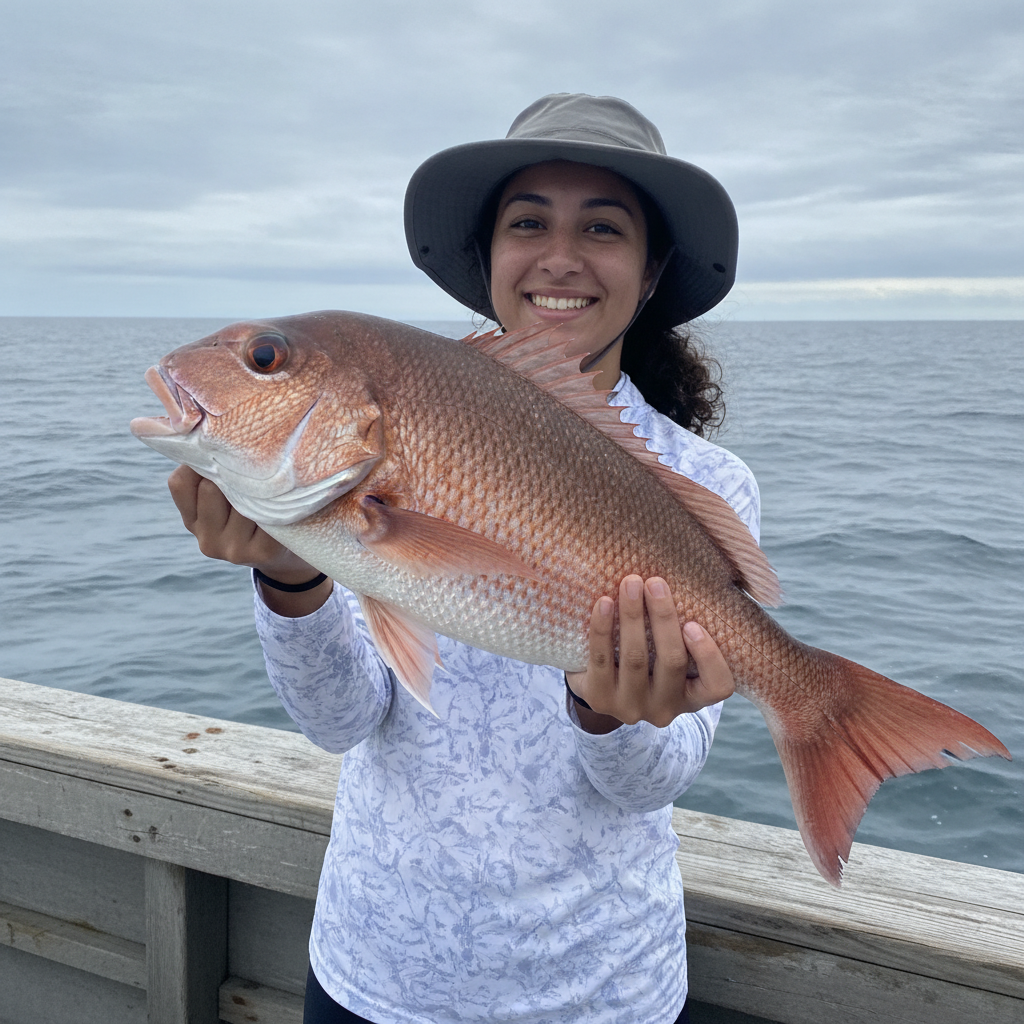
Panama City has had a genuinely good stretch of weather — flat mornings, light wind, and clean green water right up to the beach. The wreck fishing off St. Andrew Pass has been excellent, and the inshore bite in the bay system is holding up well as long as you are fishing the low-light hours. Afternoon storms remain the daily limiting factor.
What’s Hitting
Bottom fishing is carrying the week. Red snapper, vermilion, and triggerfish are stacked on the wrecks and reefs from 80 to 160 feet, and amberjack are showing on the deeper structure. Gag grouper are on hard bottom in 100-plus. King mackerel are working bait pods along the beach and on the nearshore reefs, with Spanish mackerel and bluefish tight to the sand at first light. Inshore, speckled trout are eating well on the grass flats in St. Andrew Bay and North Bay at dawn, redfish are on the oyster bars and dock lines, and flounder are stacking on the pass structure. Tarpon are showing along the beach on calm mornings.
Where to Find Them
The artificial reef zones and the many wrecks south of St. Andrew Pass are the primary offshore water. Nearshore, the reefs in 50 to 80 feet are holding kings. Along the beach, look for bait pods with bird activity within a half mile of the sand. Inshore, the grass edges in West Bay and North Bay produce trout early, and the jetties at St. Andrew Pass are holding flounder, reds, and the occasional tarpon on the moving tide. Dock lines through Grand Lagoon are good after dark.
Tides & Conditions
Surface temperatures are 85 to 88 offshore and near 88 in the bay shallows. Seas have been running one foot or less in the mornings. Tides are moderate with a workable early outgoing at the pass. Expect afternoon thunderstorm development inland pushing toward the coast after two most days. The morning window has been consistently clean and fishable — plan around it.
Tackle & Tactics
For bottom fish, run a knocker rig with 60- to 80-pound fluorocarbon and a circle hook baited with cut bonito, squid, or a live pinfish. Amberjack want a big live bait or a heavy vertical jig. Kings along the beach respond to slow-trolled live cigar minnows on a stinger rig with light wire — keep the spread just outside the bait pod. Inshore trout eat a popping cork with a shrimp imitation over the deeper grass, and topwater works the first hour. Flounder on the jetty rocks want a live bull minnow or a soft plastic on a light jighead bounced slowly along the bottom.
Local Intel This Week
Carl Gray Park, the Under the Bridge ramp at Hathaway, and the St. Andrews State Park ramp are the workhorse launches. Shore anglers are doing well on the St. Andrew Pass jetties, which hold flounder, reds, and Spanish all summer. Fish are concentrating on structure — wrecks offshore, jetty rocks and dock lines inshore — rather than open water. Red snapper, amberjack, and grouper are all under federal and state seasons that change year to year — check current FWC and NOAA Fisheries regulations and seasons before keeping any fish.
This Week’s Tip
Fishing the jetty rocks for flounder, work the up-current side rather than the back eddy. Flounder bury in the sand where the current sweeps food past the rock face, not in the calm water behind it. Cast up-tide, let the jig settle, and drag it in short hops so it stays in contact with the bottom the whole way back.
Planning a trip to Panama City?
This report tells you what happened. ReelAI tells you what to do about it — a briefing for your date, your target species and how you're fishing, built from our reports plus live NOAA and USGS data.
Powered by ReelAI — fishing.digital's intelligence layer. Answers are generated from fishing.digital reports and public NOAA, NWS and USGS data, and may be incomplete or out of date. Regulations and marine safety information are summaries only; always confirm with the responsible authority before you fish.