
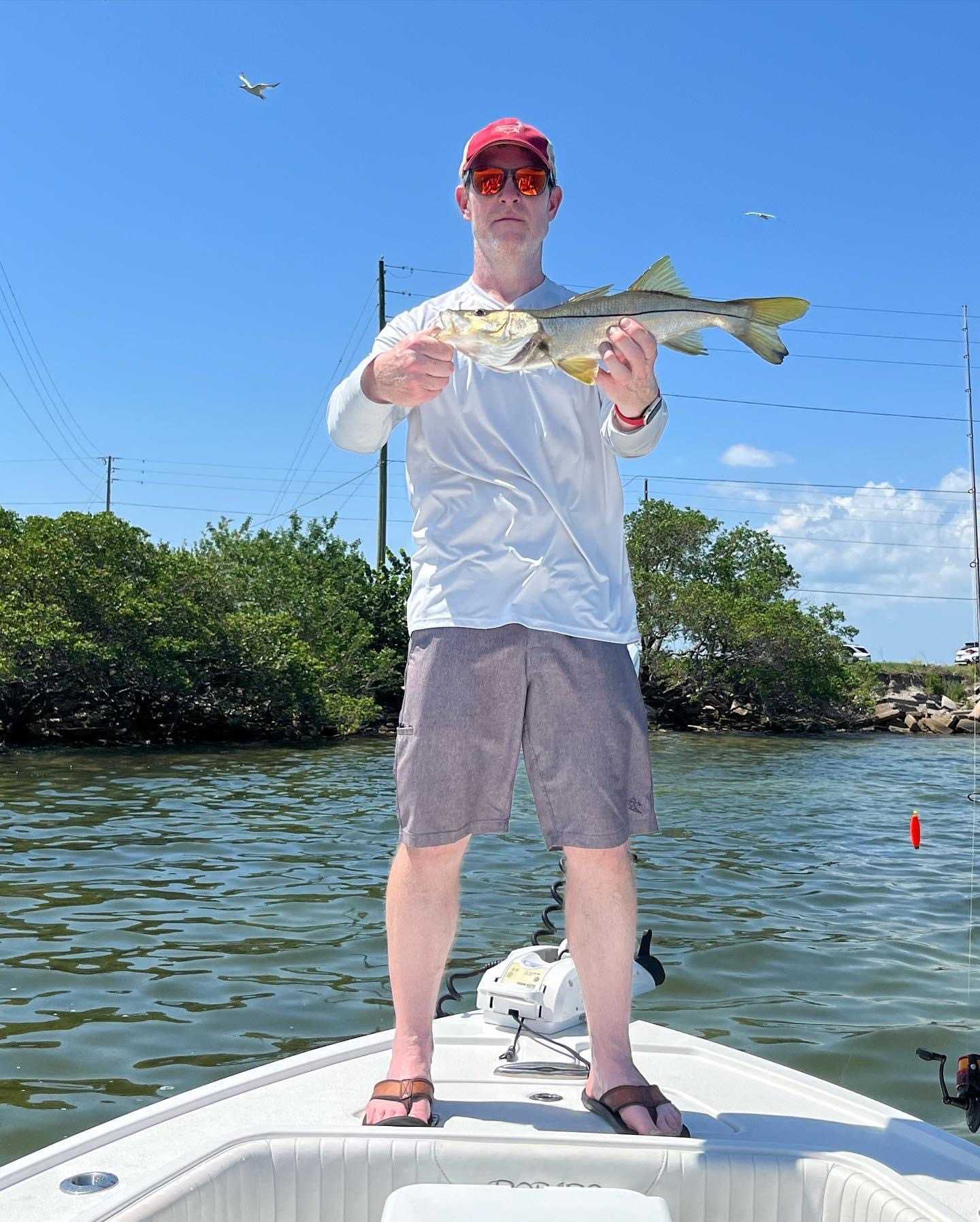
June is the month Treasure Coast anglers circle on the calendar, and the first week is delivering. The tarpon migration is at full strength along the beaches and through the St. Lucie Inlet, the offshore weed lines are holding mahi, and the inshore bite has settled into its reliable summer pattern. Here is what to expect on the water this week around Stuart.
What’s Hitting
Tarpon are the headline. Schools are pushing north along the beaches and stacking up around the inlet on the moving tides, with fish ranging from 40-pound juveniles to genuine 150-pound migrators. Mahi are showing offshore anywhere you can find a weed line or color change, and a few early sailfish are still in the mix. Inshore, snook are thick around the inlet and along the beaches — though remember that snook season is closed June 1 through August 31 on the Atlantic coast, so all snook are catch-and-release this month. Mangrove snapper fishing around structure has been steady and only improves as we move toward the summer spawn.
Where to Find Them
For tarpon, work the beach troughs from the House of Refuge down toward the inlet early, then shift to the inlet itself as the tide starts to move. The St. Lucie Inlet and the surrounding flats are the classic ambush points. Offshore, run to the 120–180 foot range and look for weed lines, frigate birds, and any debris — that is where the mahi are holding. Inshore anglers should focus on the inlet rocks, the Crossroads, and the deeper docks of the river for snook and snapper.
Tides & Conditions
The strongest bites this week are lining up with the outgoing tide, especially the first two hours of the fall when bait flushes out of the river and through the inlet. Early morning and the last hour of light remain the most productive windows before the summer sun and boat traffic push fish down. Watch the afternoon thunderstorm pattern that is now setting up daily — plan to be off the water by early afternoon.
Tackle & Tactics
For tarpon, a live crab or a threadfin on a 5/0–7/0 circle hook under a float is hard to beat around the inlet; on the beach, a swimming mullet or a soft-plastic on a heavy jighead covers water. Use 50–60 pound fluorocarbon leader and check your knots — a big fish will find any weakness. Offshore, pitch live pilchards or troll small ballyhoo along the weed line for mahi. For snook and snapper, scale down to 20–30 pound leader and live shrimp or finger mullet.
This Week’s Tip
If the inlet is crowded with boats — and in June it will be — back off and fish the beach troughs instead. The same migrating tarpon move just outside the first bar, and a quiet approach with a single well-placed bait will out-fish a pack of boats jockeying in the inlet. Respect the fish: keep big tarpon in the water for photos and revive them fully before release.
More Stuart Resources
Stuart Fishing Guide · Stuart Seasonal Calendar · All Stuart reports →
Also read: Stuart Fishing Report — Week of July 30, 2026: Snook Spawn, Snapper Nights
Reports updated every Thursday on fishing.digital.
Planning a trip to Stuart?
This report tells you what happened. ReelAI tells you what to do about it — a briefing for your date, your target species and how you're fishing, built from our reports plus live NOAA and USGS data.
Powered by ReelAI — fishing.digital's intelligence layer. Answers are generated from fishing.digital reports and public NOAA, NWS and USGS data, and may be incomplete or out of date. Regulations and marine safety information are summaries only; always confirm with the responsible authority before you fish.