
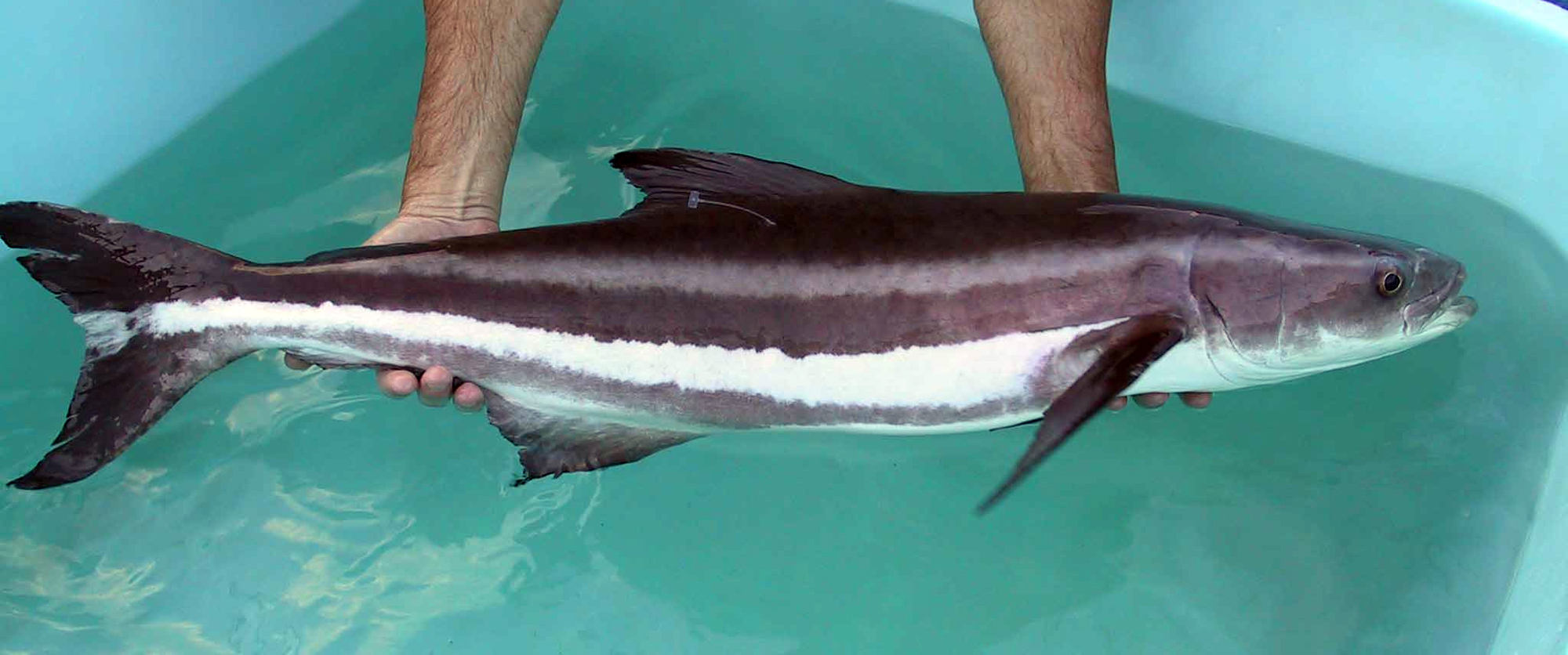
Cobia (Rachycentron canadum) are one of the most prized inshore/nearshore gamefish in the US — powerful, aggressive, and notorious for fighting harder than almost any fish their size. They’re also excellent table fare. The spring migration, when cobia follow manta rays and sharks along the US coastline, is one of the most exciting sight-fishing opportunities available and draws dedicated followers from Virginia to Texas.
Range & Habitat
Cobia range from the Mid-Atlantic south through Florida and across the Gulf of Mexico to Texas. They’re highly migratory, moving north in spring and south in fall. During the spring migration they’re found along beaches, around nearshore structure, buoys, wrecks, and following large rays and sharks. Summer they scatter to offshore structure, wrecks, and reefs. Cobia are solitary or found in small groups — unlike schooling species.
Best Tackle
Heavy spinning or conventional: 7–7’6″ heavy rod, 5000–6000 reel, 30–50 lb braid, 60–80 lb fluorocarbon leader 4–6 feet. Cobia are brutally strong — light tackle is a liability near structure. Use the heaviest practical gear.
Top Techniques
Sight-Casting: The most exciting cobia technique. Pole or idle along the beaches and nearshore waters looking for cobia following rays, sharks, or cruising near the surface. Make a precise cast 5–10 feet ahead of the fish and work the bait enticingly past its nose.
Live Bait Fishing (Structure): Anchor or drift near nearshore wrecks, buoys, and reefs and present large live baits on the bottom or mid-water. Cobia will investigate any large live offering near structure.
Chum and Wait: At nearshore buoys and platforms, chumming with cut bait and then presenting large live or dead baits is effective.
Best Baits & Lures
- Live Eel: Possibly the top cobia bait overall — they can’t seem to resist a wriggling eel. Used for both sight-casting and structure fishing.
- Live Crab (blue, peeler): Excellent cobia bait, particularly for sight-fishing along beaches. Free-line near the ray or shark the cobia is following.
- Live Pinfish/Croakers: Reliable structure bait. Hardy enough to survive long presentations near the bottom.
- Bucktail Jig (1–3 oz): The top cobia artificial. White or chartreuse bucktail with a soft plastic trailer worked near structure or pitched to visible fish.
- Large Swimbaits (5–8″): Paddle tail swimbaits in white or natural colors are excellent cobia lures for sight-fishing.
- Soft Plastic Eel Imitations: Rigged weedless or on a jighead, soft plastic eels are deadly for cobia sight-fishing.
Seasonal Patterns
Spring (March–May): The migration is THE cobia event of the year. Chesapeake Bay anglers fish from towers watching for fish following rays. The beach run from Florida to Virginia produces exceptional sight-fishing. Summer: Cobia scatter to offshore structure — wrecks, rigs, and reefs. Still excellent on the Gulf Coast and in the Chesapeake. Fall: Fish move south — good action at inlet mouths and nearshore structure.
Pro Tips
- Wear polarized glasses: Sight-fishing cobia without polarized glasses is nearly impossible. Quality lenses make the difference between seeing fish and missing them.
- Present to the head: Cast past the fish and work the bait back to its nose. Cobia are very deliberate — they want to examine the bait before committing.
- Never give them their head near structure: Cobia make violent runs toward anchor chains, buoy cables, and wreck structure. Keep maximum pressure on and turn the fish immediately.
- Watch the leader: Cobia will roll repeatedly during the fight, wrapping the leader. Keep the rod tip up and maintain pressure throughout.
Regulations
Cobia: 33 inch fork length minimum in most Atlantic states, 2 fish per person per day. Gulf regulations differ by state. Always verify current regulations.
Want current cobia conditions? Browse our weekly fishing reports — updated every Thursday.
Planning a trip to Cobia?
This report tells you what happened. ReelAI tells you what to do about it — a briefing for your date, your target species and how you're fishing, built from our reports plus live NOAA and USGS data.
Powered by ReelAI — fishing.digital's intelligence layer. Answers are generated from fishing.digital reports and public NOAA, NWS and USGS data, and may be incomplete or out of date. Regulations and marine safety information are summaries only; always confirm with the responsible authority before you fish.