
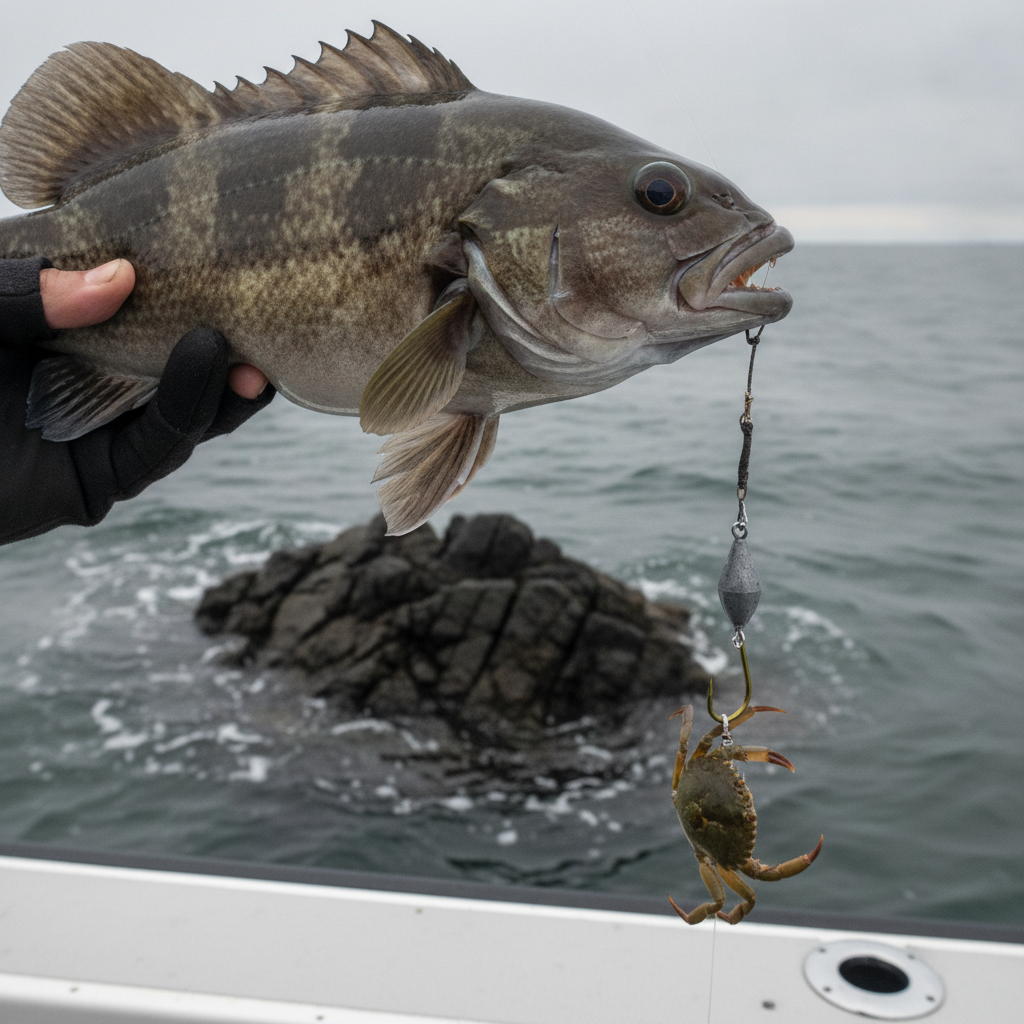
Tautog (Tautoga onitis) — also called tog, blackfish, or chub — are the Northeast’s premier structure fish and table fare. Powerful, tackle-testing bottom fish that inhabit rocky structure, jetties, wrecks, and mussel beds from Maine to Georgia, tautog are a cult favorite among Northeast anglers who appreciate their strength, cunning, and exceptional flavor.
Range & Habitat
Tautog range from Nova Scotia to South Carolina but are most abundant from southern New England to New Jersey. They’re permanent residents of rocky structure — jetty rocks, boulder fields, mussel beds, artificial reefs, and wrecks. They don’t migrate far, making them reliable targets year-round where regulations allow — and they return to the same rock pile season after season, so a spot that produced last November will produce again. Depths run from jetty rocks you can reach from shore out to offshore wrecks in 120+ feet.
Best Tackle
Rod: 6’6″–7′ medium-heavy or heavy action rod with a fast tip for detecting bites. Reel: 3000–5000 spinning or conventional. Line: 20–30 lb braid. Leader: 30–50 lb fluorocarbon 18–24″. Hooks: Size 1/0–3/0 wide-gap or Virginia-style hooks — tautog have powerful crushing teeth and require stout hardware.
Top Techniques
Bottom Fishing on Structure: Drop your bait directly onto the structure — the rockier the better. Tautog hold tight to the rocks. Use a 3-way swivel rig, a hi-lo rig, or a short dropper-loop rig to keep bait near the bottom while reducing snags — the shorter the dropper, the tighter the bait sits to the rock. Slack Tide Only: Tautog are most catchable on slack high and slack low water. The current in most tog spots runs too hard to present baits effectively except at tide changes. Patience: Tog bites are subtle — a gentle tap rather than a savage strike. Those first taps are the fish crushing the bait with its throat teeth. Set when the rod tip loads and the weight comes on, not on the first tick — and not so late that the bait is already gone. Tog are expert bait thieves and the timing is the whole skill.
Canal and Jetty Fishing: The Cape Cod Canal is famous for shore-caught tog on the rip-rap. The current there is far too strong to fish except at the tide change, which makes the slack-water rule absolute rather than merely advisable.
Wreck Fishing: Anchor uptide of an offshore wreck and drop baits back into the structure. This is where the biggest tog live — double-digit fish are a realistic target on offshore wrecks in a way they are not on inshore rocks.
Best Baits & Lures
- Green Crab (peeler or soft): The definitive tautog bait. Peel the hard shell partially, expose the meat, and hook through the body. The scent and texture are irresistible.
- Asian Shore Crab: Invasive but excellent tog bait. Crush the claws and thread onto the hook.
- Fiddler Crab: Excellent winter tog bait when green crabs are scarce.
- Sand Fleas (mole crabs): Effective when crabs aren’t available, particularly in the surf zone.
- Clams: Reliable fall and winter bait when crabs are unavailable.
- Bloodworms: They will catch tog in a pinch, but expect to feed every bergall and sea bass on the piece first. Crustaceans are always the better choice.
Seasonal Patterns
Spring (March-May): Tog move into shallower water as it warms — jetties and nearshore reefs produce best. Plenty of regulars rate spring above fall: the fish are moving in from deeper wintering grounds and they are hungry. Fall (September–November): The peak season. Fish are fat, aggressive, and feeding heavily before winter. Some of the largest tog of the year are caught in October–November. Winter: Tog are catchable year-round but move somewhat deeper in the coldest months.
Pro Tips
- Fish the tides precisely: Slack water is the only productive window in most tog spots. Arrive 30 minutes before slack and fish through the tide change.
- Get the bait in the rocks: Fish the bait directly in the crevices and under ledges. Open sandy bottom near the rocks rarely produces tog.
- Sensitive rod tip: A rod with a very sensitive tip is essential for detecting the subtle, mouthing bites that characterize tautog.
- Pinch the barb: This makes removing tog from rock crevices dramatically easier while barely affecting hookup rates.
Regulations
Tautog are managed coastwide by the ASMFC and implemented state by state, with different minimum sizes, bag limits, and open seasons in each — and in several states the bag limit changes two or three times within the same calendar year. New Jersey has run a 15-inch minimum with a larger fall bag; New York, Connecticut, Rhode Island, and Massachusetts have generally run 16 inches. Verify your state’s current rules and the season you are fishing before you keep anything.
Want current tautog conditions? Browse our weekly fishing reports — updated every Thursday.
Best Tautog Tackle
Affiliate disclosure: fishing.digital earns a small commission on qualifying purchases at no extra cost to you.
1. 2/0 Long-Shank Hook
A 2/0-3/0 long-shank or Virginia-style hook comes out of a tog’s hard mouth far more easily than a short shank, which matters when most of what you catch goes back. Check price on Amazon
2. Dropper-Loop Bottom Rig
Short dropper loops above a bank sinker keep the bait pinned against the rock. Buy them pre-tied or tie your own — either way, bring plenty, because you will leave some in the structure. Check price on Amazon
3. Sensitive Tog Rod, 6’6″
A fast, sensitive tip to read the tap and a heavy butt section to lift a fish out of a crevice before it wedges in. Check price on Amazon
4. Green Crabs
The definitive tautog bait, and the one thing on this list you buy at a bait shop rather than order. Cut larger crabs in half, hook through the leg socket, and expect to go through more than you think.
Planning a trip to Tautog?
This report tells you what happened. ReelAI tells you what to do about it — a briefing for your date, your target species and how you're fishing, built from our reports plus live NOAA and USGS data.
Powered by ReelAI — fishing.digital's intelligence layer. Answers are generated from fishing.digital reports and public NOAA, NWS and USGS data, and may be incomplete or out of date. Regulations and marine safety information are summaries only; always confirm with the responsible authority before you fish.