
Updated: Thursday, November 5, 2026 · Next update: Thursday, November 12, 2026
This Pacific Northwest fishing report is a seasonal outlook for the week of November 5, based on how early November typically plays out from the Olympic Peninsula to the lower Columbia. Autumn rains usually lift the rivers, late chum and coho wind down, and winter steelhead begin arriving. The Monday, November 9 new moon matters most for the estuaries and Puget Sound.
What’s Hitting
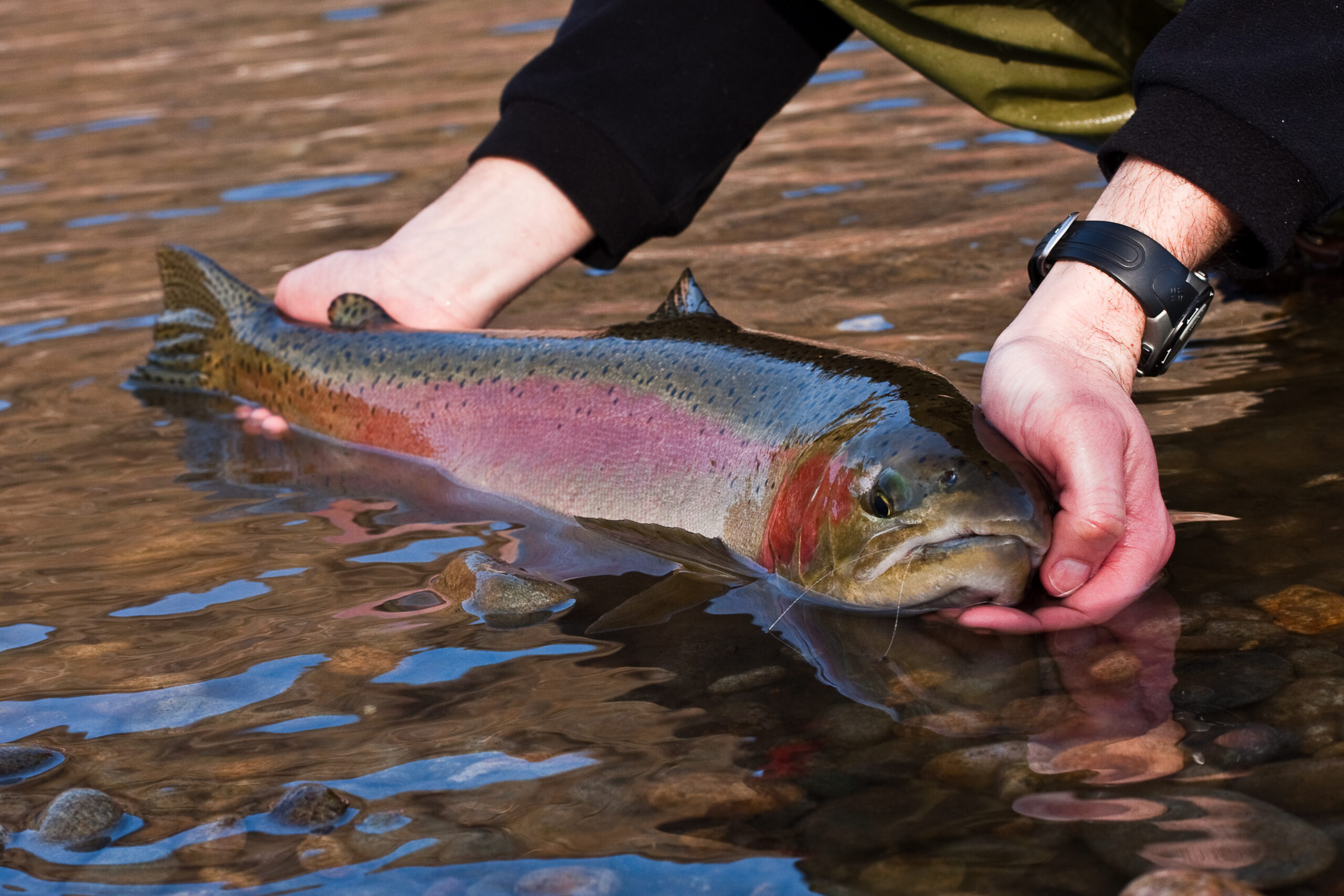
Early November in the Northwest is a transition month. Late coho typically linger in the lower rivers, while chum salmon should be pushing into Puget Sound and Hood Canal streams and the Willapa and Grays Harbor systems. Winter steelhead usually begin showing on Olympic Peninsula rivers such as the Hoh, Quillayute and Sol Duc, though the real run builds later. Cutthroat trout often chase salmon eggs behind spawning fish. Saltwater anglers may find resident coho and blackmouth chinook, subject to local seasons and openings. Crabbers set pots for Dungeness where open. Rain is the main variable: a sharp rise can blow rivers out, while a slow drop often brings the best, clearest conditions for floats and jigs.
Where to Find Them
On the Olympic Peninsula, the Sol Duc, Bogachiel and Hoh rivers are classic winter steelhead water, though river levels dictate access. In Puget Sound, Hood Canal and the Skokomish River draw chum and coho seekers, while the Nisqually and Puyallup rivers have long records for fall salmon. Along the coast, Westport and Grays Harbor give access to bays, jetties and charter boats when ocean conditions allow. The lower Columbia and its tributaries, including the Cowlitz and Kalama, hold late coho and early steelhead. Pier anglers can try the Edmonds Fishing Pier or Les Davis Pier in Tacoma for squid and bottomfish when salmon seasons are closed.
Tides & Conditions
Tides in Puget Sound and along the coast can exceed ten feet, so timing matters. The new moon on Monday, November 9 should bring larger exchanges, with fast current around points and narrows. In estuaries, fish often hold in slower eddies and push upstream on the incoming. River anglers should watch gauge readings more than the tide table, since runoff controls clarity and flow. Daylight saving ended Sunday, so afternoons grow dark earlier, and a headlamp is wise. Crab pots should be set to account for strong current and soak time, and boaters need to cross bars only with an updated forecast.
Tackle & Tactics
River anglers typically use a nine-foot medium-heavy rod with a spinning or float reel, ten to fifteen pound mainline and a fluorocarbon leader. Jigs, beads, yarn and small spoons suit chum, while plugs, spinners and egg clusters are mainstays for steelhead and coho. In saltwater, mooching rods, herring and coho flashers are traditional. Cutthroat respond to small spinners and flies that mimic salmon eggs. Rain gear, felt or studded wading boots and a wading staff matter in slick rivers. Pack a net sized for salmon, and bring a gaff only if the regulations allow.
Local Intel This Week
Access varies with the water. Washington Department of Fish and Wildlife maintains public boat launches on many rivers, and the Hoh River area includes access points near the Olympic National Park boundary. In Puget Sound, the Edmonds Fishing Pier and Les Davis Pier in Tacoma are well-known spots for shore anglers, and Westport’s marina serves charter and private boats. Many rivers carry emergency closures and special rules that change by week, so check the latest rules for each stretch. Check current state and federal regulations and seasons before keeping fish. Local shops in Forks, Olympia and Westport usually offer the best read on river conditions. Carry a printed copy of the current emergency rule list, because cell service is spotty on many river roads, and always tell someone your planned stretch.
This Week’s Tip
Check the river gauge the night before and again at dawn, then choose the stretch that is dropping and clearing rather than rising. Fish a chartreuse jig under a float along the slower inside seams, and move quietly. Pack a thermos for the cold, wet wait.
Planning a trip to Pacific Northwest?
This report tells you what happened. ReelAI tells you what to do about it — a briefing for your date, your target species and how you're fishing, built from our reports plus live NOAA and USGS data.
Powered by ReelAI — fishing.digital's intelligence layer. Answers are generated from fishing.digital reports and public NOAA, NWS and USGS data, and may be incomplete or out of date. Regulations and marine safety information are summaries only; always confirm with the responsible authority before you fish.