
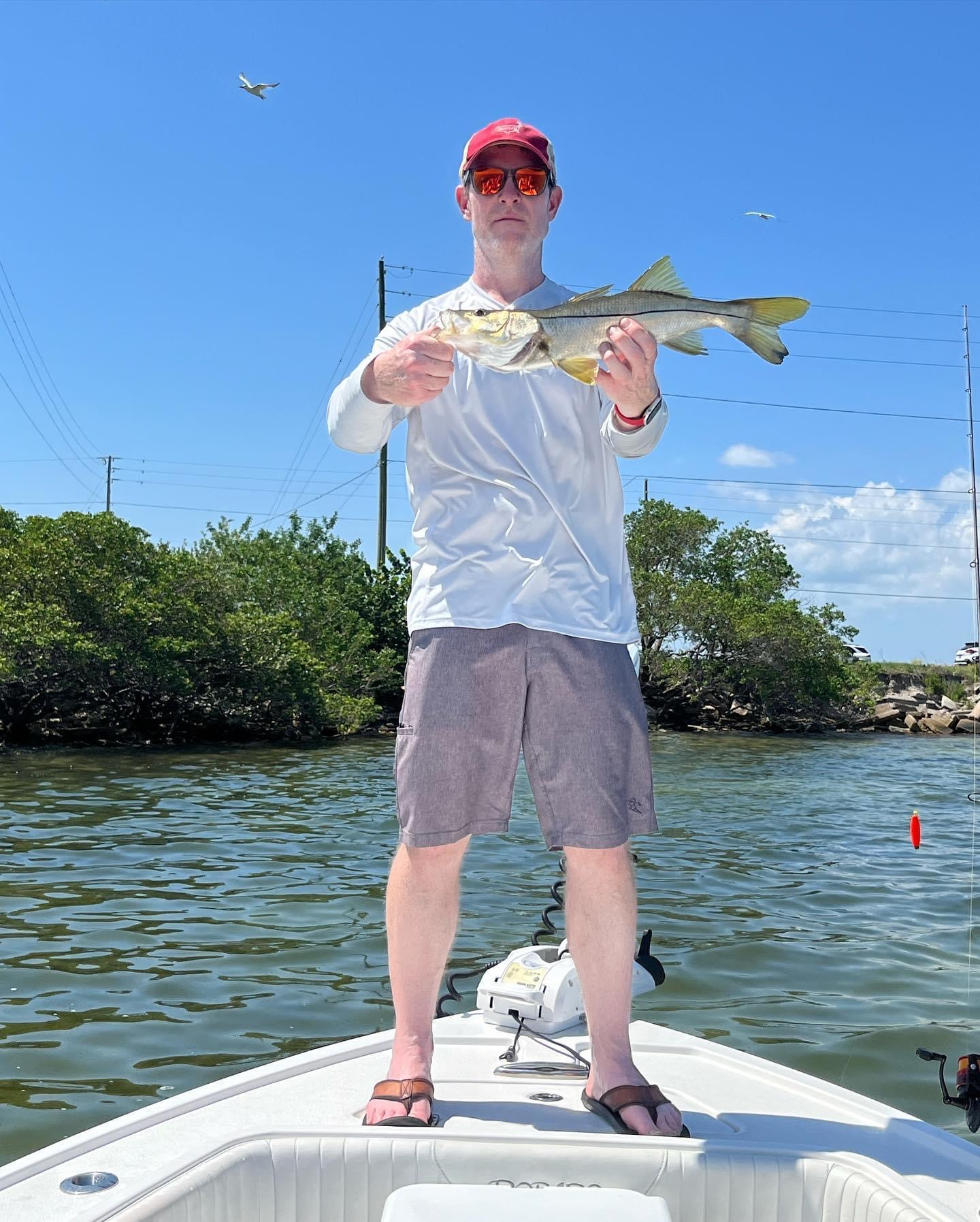
Updated: Thursday, November 5, 2026 · Next update: Thursday, November 12, 2026
This Stuart fishing report is a seasonal outlook for the first full week after daylight saving ended, built on early-November patterns rather than a dock-side count. Cooler mornings should push bait toward the Treasure Coast beaches and the St. Lucie Inlet, and the approaching new moon on Monday, November 9 sets the rhythm of the tides. Treat it as a planning guide and confirm conditions with a local tackle shop before launching.
What’s Hitting
Early November around Stuart typically belongs to the surf and the inlet. Pompano should work the troughs just beyond the breakers along Hutchinson Island, especially on a falling tide with a little color in the water. Jack crevalle and bluefish often follow the last of the mullet schools past the inlet mouth, and they tend to crash bait near the jetty walls at first light. Inside the Indian River Lagoon, trout and redfish usually settle onto grass flats and mangrove edges as water cools, though they can be fussy after a strong front. Sheepshead start gathering around bridge pilings and docks as the month goes on. Expect fish to feed in short windows, so be set up before the sun clears the horizon.
Where to Find Them
Start at the St. Lucie Inlet, where the north and south jetties concentrate bait and predators on moving water. Fish the outgoing tide from the rocks or by boat at the inlet mouth, and work the beach side for pompano once the surf lays down. Along the Indian River side, the grass flats near Sewall’s Point and the edges around the Roosevelt Bridge pilings should hold trout, redfish, and early sheepshead. Farther up the St. Lucie River, the South Fork’s creek mouths and docks often hold fish when wind makes the open lagoon uncomfortable. Pick the lee shore on blustery days and let the wind guide the day.
Tides & Conditions
The new moon on Monday, November 9 should bring larger tidal swings through the middle of next week, with stronger flow through the St. Lucie Inlet. Moving water usually helps the jetties and bridge pilings, while slack stages suit the flats. With daylight saving over, sunrise comes about an hour earlier on the clock, so the dawn bite window starts sooner than many anglers remember. A north or northeast wind against an outgoing tide can stack up the inlet, so watch the forecast and timing of any front before heading out.
Tackle & Tactics
For surf pompano, a seven-foot spinning rod, ten-pound braid, a fluorocarbon leader, and small pompano jigs or sand fleas on a double-drop rig are the classic choices. Jacks and bluefish call for casting spoons, metal lures, and a short wire or heavy fluorocarbon bite leader. On the lagoon flats, soft plastic paddle tails on a quarter-ounce jig head, a topwater plug at dawn, and live shrimp under a popping cork all cover the options. For sheepshead, use small hooks, fiddler crabs or shrimp, and a short leader near pilings. Carry a landing net and long-nosed pliers. A spare spool of lighter line helps when the water turns clear.
Local Intel This Week
Stuart offers plenty of public access. Bathtub Reef Beach and Stuart Beach on Hutchinson Island give easy surf entry, and the sand troughs there are worth reading at low tide. The Stuart Causeway area and Sandsprit Park are handy for launching small boats and fishing from the bank, while the MacArthur Boulevard side near the St. Lucie Inlet jetties draws anglers looking for current. Parking fills early on weekends, so arrive ahead of dawn. Boaters should watch shoals near the inlet, which shift after strong tides and wind. Pack water and sun protection, since open beach stretches offer little shade. Check current state and federal regulations and seasons before keeping fish. Weekday mornings are usually quieter than weekends.
This Week’s Tip
Walk Bathtub Reef Beach at low tide a few mornings before you fish and note where the sand troughs deepen beyond the reef. Then return on the incoming tide and cast a small pompano jig into those slots, working it just off the bottom.
Planning a trip to Stuart?
This report tells you what happened. ReelAI tells you what to do about it — a briefing for your date, your target species and how you're fishing, built from our reports plus live NOAA and USGS data.
Powered by ReelAI — fishing.digital's intelligence layer. Answers are generated from fishing.digital reports and public NOAA, NWS and USGS data, and may be incomplete or out of date. Regulations and marine safety information are summaries only; always confirm with the responsible authority before you fish.