
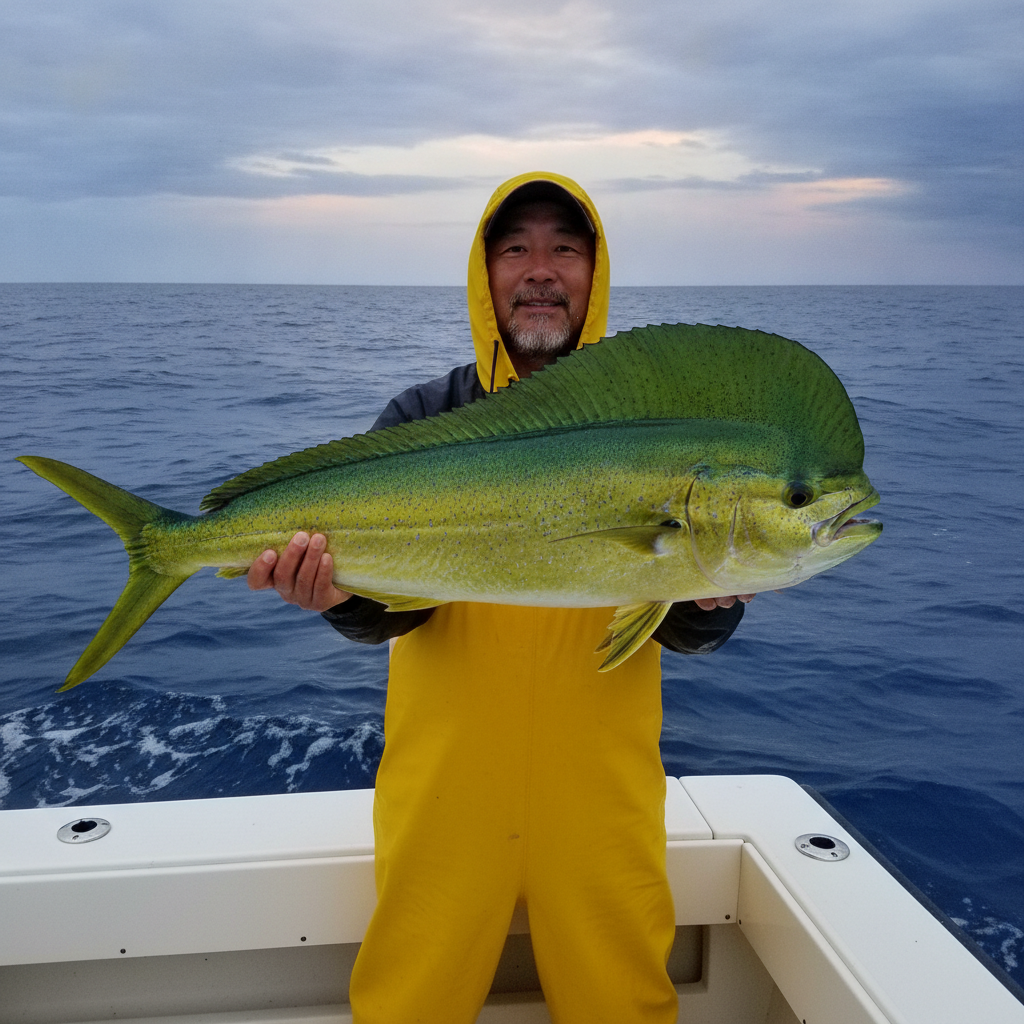
This week off Broward County the Gulf Stream has pushed in close and the current is ripping north — good news for anyone who likes to drift, harder work for anyone anchored. The offshore water is that deep summer blue and the weedlines have set up in long, workable strings. Inshore, the Intracoastal is warm and the fishing has moved almost entirely to dark.
What’s Hitting
Mahi are scattered but findable on the offshore weedlines and debris in 300 to 900 feet — mostly schoolies with an occasional gaffer under a good patch of grass. Mutton snapper and mangrove snapper are strong on the third reef and the deeper edges at night. Kingfish are on the bait pods along the reef line. Blackfin tuna are showing early and late on the deep drop. Tarpon are in the inlet and along the beach on night tides, and snook are on the inlet rock and the bridge shadows after dark.
Where to Find Them
Run east until you find grass — the productive weedlines have been in 400 to 800 feet, and the ones with a hard color change and some debris are worth working repeatedly. For bottom fish, the third reef edge in 100 to 160 feet from Port Everglades north toward Hillsboro has been the most consistent. Port Everglades inlet and the Hillsboro Inlet mouth hold tarpon and snook on the outgoing after dark. The 17th Street and Las Olas bridge lights hold snook and small tarpon.
Tides & Conditions
Moderate tides this week off the waxing moon. The north-setting Gulf Stream current is strong, so plan drifts to end where you want to be rather than where you started. Ocean temps mid 80s, inshore high 80s. Morning seas two to three feet with a light easterly, building through the afternoon as the sea breeze fills. Storms build over the Everglades and push east in the late afternoon most days.
Tackle & Tactics
For mahi, keep two spinning rods rigged and ready with a live pilchard or a chunk of ballyhoo — approach the weedline quietly, throw baits, and hold a fish in the water to keep the school up. A 4000-size spinner, 30-pound braid and 40-pound fluoro is right. For muttons, long 30-pound fluorocarbon leader, a whole ballyhoo or live pilchard, and the least weight you can get away with. Kings want light wire and a stinger hook. Inshore at night, a live mullet or a big flair hawk jig on 50-pound leader is the tarpon and snook program.
Local Intel This Week
The Dania Beach ramp at Harbour Towne and the 15th Street Boat Ramp are the standard Port Everglades access. The Sands Harbor and Pompano Beach ramps put you closest to Hillsboro Inlet. Shore anglers are catching snapper and macks from the Anglin’s Pier area in Lauderdale-by-the-Sea and the Pompano Pier. Fish are concentrating on structure and color changes — reef edges, weedlines, bridge shadow. Several reef species have federal closures and permit requirements that change through the year; check current FWC and federal South Atlantic regulations before keeping any fish.
This Week’s Tip
Do not run past a weedline because it looks small. The productive ones this month have been thin, broken strings rather than big mats. If you find even fifty yards of grass with a piece of board or a bucket in it, stop and throw a bait. Debris holds fish that open grass does not.
Planning a trip to Fort Lauderdale?
This report tells you what happened. ReelAI tells you what to do about it — a briefing for your date, your target species and how you're fishing, built from our reports plus live NOAA and USGS data.
Powered by ReelAI — fishing.digital's intelligence layer. Answers are generated from fishing.digital reports and public NOAA, NWS and USGS data, and may be incomplete or out of date. Regulations and marine safety information are summaries only; always confirm with the responsible authority before you fish.