
Broward County is in its calm-summer offshore window. Seas have been running one to two feet most mornings, the Gulf Stream edge is sitting comfortably close, and boats are making long runs without punishment. The tradeoff is bathwater surface temperatures and a bite that rewards early departures and night trips over midday grinding.
What’s Hitting
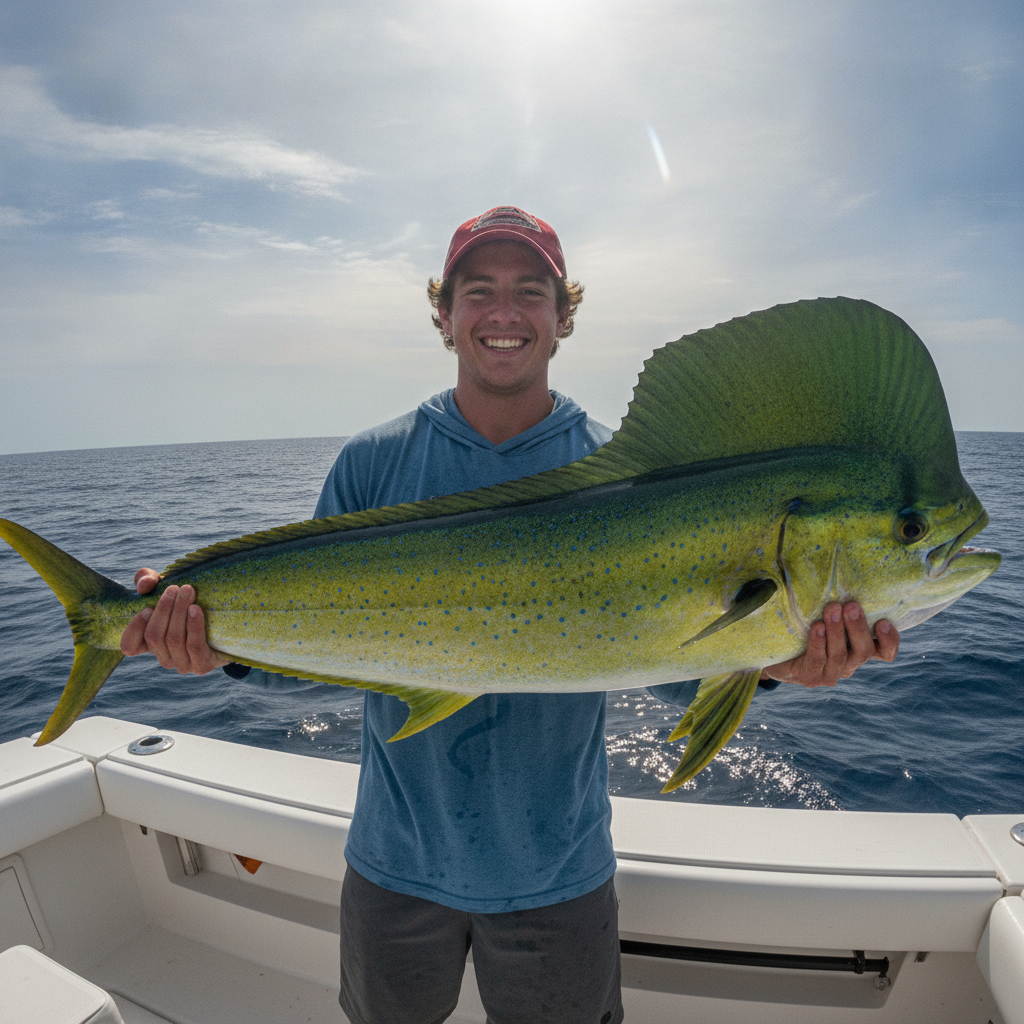
Mahi are scattered but findable along the weedlines and current rips out past 400 feet, with the better fish holding to bigger, older debris rather than fresh grass. Blackfin tuna are on the humps and along the ledges at first light. The reef is producing well after dark — mutton snapper, mangrove snapper, and yellowtail are all feeding on the 60- to 120-foot edges once the sun goes down. Swordfish continue to be a reliable daytime deep-drop target for boats set up for it. Inshore, snook and tarpon are working the Port Everglades inlet and the bridge shadow lines at night, and the Intracoastal dock lines are holding snapper and small jacks.
Where to Find Them
Run east to the color change and look for a defined weed edge or a rip line with bird activity. The humps and the deep ledges off Port Everglades are holding blackfin. For night reef fishing, anchor on the 70- to 100-foot edge and set a chum slick. Inshore, the inlet mouth, the 17th Street bridge, and the New River dock lights are the after-dark program. Tarpon are also rolling in the port basin on the moving tide.
Tides & Conditions
Surface temperatures offshore are 86 to 88 degrees. The Gulf Stream edge has been sitting relatively tight to the beach, which shortens the run to blue water. Inlet tides run hard, and the evening outgoing is the best window for snook and tarpon at the shadow lines. Afternoon storms build over the Everglades and push east most days after three. Winds are light early and onshore by noon.
Tackle & Tactics
For mahi, keep a pitch rod rigged with a small ballyhoo or a bucktail ready and run the weedline slowly rather than trolling through it at speed. Blackfin want small live baits or a vertical jig worked on the ledge at first light. Night reef fishing calls for long fluorocarbon leaders — 30-pound for muttons, 20 for mangroves, and as light as you can stand for yellowtail — with a knocker rig and fresh cut bait. Inlet snook eat a flair hawk jig swung through the shadow line or a live mullet on 50-pound leader.
Local Intel This Week
The 15th Street Boat Ramp and the Cove ramp in Deerfield Beach are the workhorse public launches; both fill early on weekends. Shore anglers are catching snapper and snook off the Anglin’s Pier area and the Port Everglades jetty when access allows. Fish are concentrating on defined edges — weedlines offshore, reef drop-offs at night, and bridge shadow lines inshore. Snook is closed on the Atlantic coast right now and several reef species carry seasonal restrictions — check current FWC and federal regulations and seasons before keeping any fish.
This Week’s Tip
When a weedline looks empty, check the underside. Idle up and look for bait flickering in the shade beneath the mat rather than fish on top. If there is no bait under it, the line is dead and you should leave immediately. If there is, slow down and work it thoroughly — the mahi are there, they are just holding deep in the shade rather than showing on the surface.
Planning a trip to Fort Lauderdale?
This report tells you what happened. ReelAI tells you what to do about it — a briefing for your date, your target species and how you're fishing, built from our reports plus live NOAA and USGS data.
Powered by ReelAI — fishing.digital's intelligence layer. Answers are generated from fishing.digital reports and public NOAA, NWS and USGS data, and may be incomplete or out of date. Regulations and marine safety information are summaries only; always confirm with the responsible authority before you fish.