
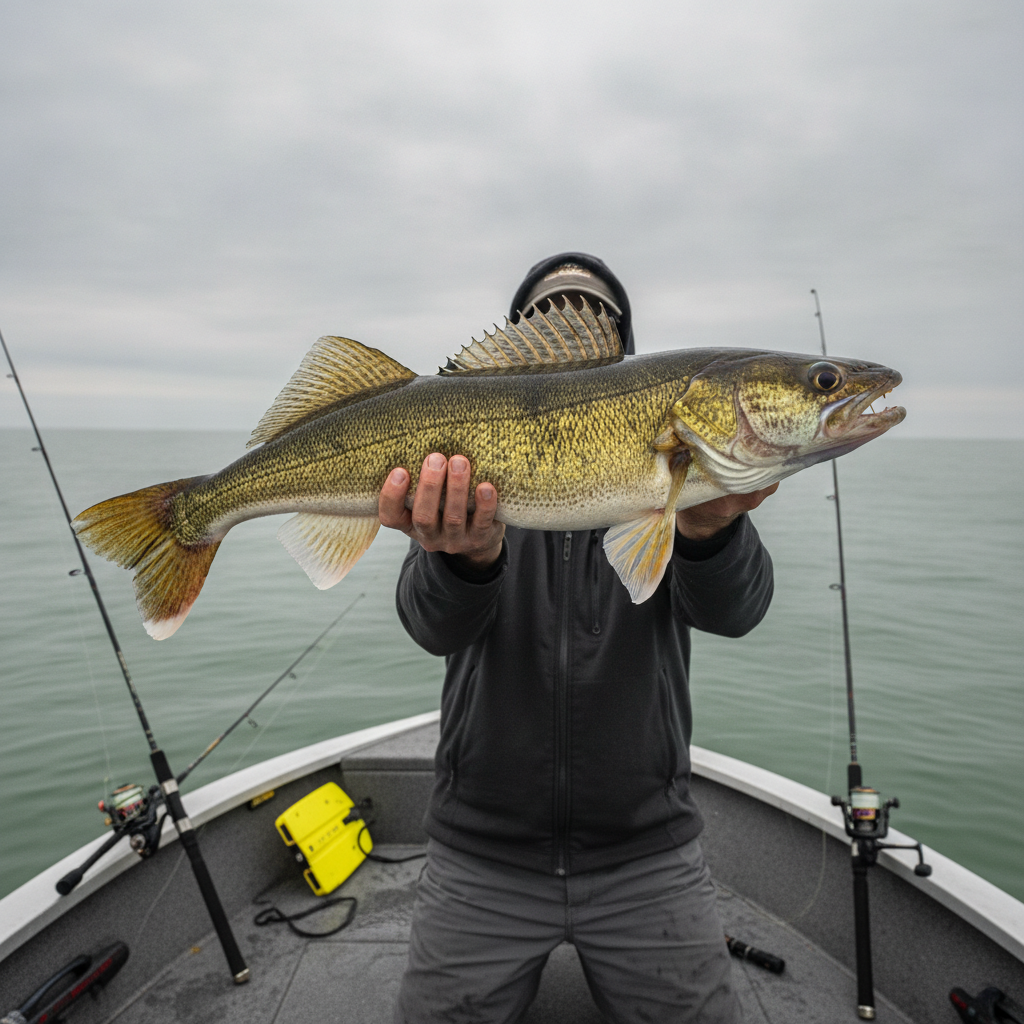
Late August is the turn of the Great Lakes year. King salmon are gathering off the river mouths and harbors as they stage for the fall run, Lake Erie is producing walleye in the central basin, and the smallmouth fishing across the system has been excellent on the rocky structure. Mornings have been calm and cool enough to make the early run comfortable again.
What’s Hitting
King salmon are the headline on Lake Michigan and Lake Ontario. Fish are staging off the harbor mouths and river outlets in 60 to 120 feet, and the numbers are building week over week. Coho, steelhead and lake trout are mixed in.
On Lake Erie, walleye are in the central basin with good numbers of quality fish, and the yellow perch schools are stacking up. Smallmouth bass are on the rocky reefs and drop-offs across Erie, Huron and the St. Clair system. In the connecting waters, muskie are becoming more active as the water starts to lose its peak heat.
Where to Find Them
For staging kings, work the water off Manistee, Ludington and Frankfort on Michigan, and off the Salmon River area and the Niagara Bar on Ontario, in 60 to 120 feet with the thermocline as your guide.
Erie walleye are in the central basin off Fairport, Ashtabula and Conneaut, suspended over deeper water. Perch are on the mid-depth bottom near the reefs. Smallmouth are on rocky reefs, humps and drop-offs in 12 to 30 feet across the western basin and Lake St. Clair. Muskie hold on weed edges and structure in St. Clair and the Detroit River.
Tides & Conditions
Surface temperatures are near their annual peak, with a well-defined thermocline offshore. Finding the thermocline and the temperature break is the single most important piece of information for salmon anglers right now — fish the transition, not the surface.
Erie is prone to fast weather changes and it stacks up a nasty chop with very little warning; check the marine forecast and mean it. Mornings have been calm with afternoon winds building. Cooler nights are starting to pull the surface temperature down, which is exactly what accelerates the salmon staging.
Tackle & Tactics
For staging kings, run downriggers and dipsy divers to hold spoons and flasher-fly combos right at the thermocline. Meat rigs and magnum spoons in the low-light hours have been strong. Watch your temperature probe more closely than your lure choice.
Erie walleye come on trolled worm harnesses and crankbaits behind boards or divers, run at the depth you are marking fish. Smallmouth eat a drop-shot with a soft plastic minnow, a tube jig on the rocks, or a swimbait worked over the reefs. Muskie anglers should be throwing large glide baits and bucktails and figure-eighting every single cast.
Local Intel This Week
Access varies by lake but public ramps are plentiful: the Manistee and Ludington municipal ramps on Lake Michigan, the Fairport Harbor and Conneaut ramps on Lake Erie, the Selfridge and Lake St. Clair Metropark ramps on St. Clair, and the Oswego and Wilson Harbor ramps on Lake Ontario. Pier and breakwall access at most of these harbors gets shore anglers into staging salmon.
Fish are concentrating off the harbor mouths as the salmon stage and on the rocky structure for smallmouth. Regulations differ substantially by state, by province and by individual lake, and some waters carry consumption advisories — check current state, Ontario and lake-specific regulations before keeping fish.
This Week’s Tip
Do not fish the surface temperature for staging kings — fish the thermocline. Drop a temperature probe and find the depth where the water goes from the low 60s to the mid 50s, then put your entire spread within ten feet of that line. Salmon holding off a harbor mouth in late August live on that band, and a spread set twenty feet too shallow will run all morning without a bite.
Planning a trip to Great Lakes?
This report tells you what happened. ReelAI tells you what to do about it — a briefing for your date, your target species and how you're fishing, built from our reports plus live NOAA and USGS data.
Powered by ReelAI — fishing.digital's intelligence layer. Answers are generated from fishing.digital reports and public NOAA, NWS and USGS data, and may be incomplete or out of date. Regulations and marine safety information are summaries only; always confirm with the responsible authority before you fish.