
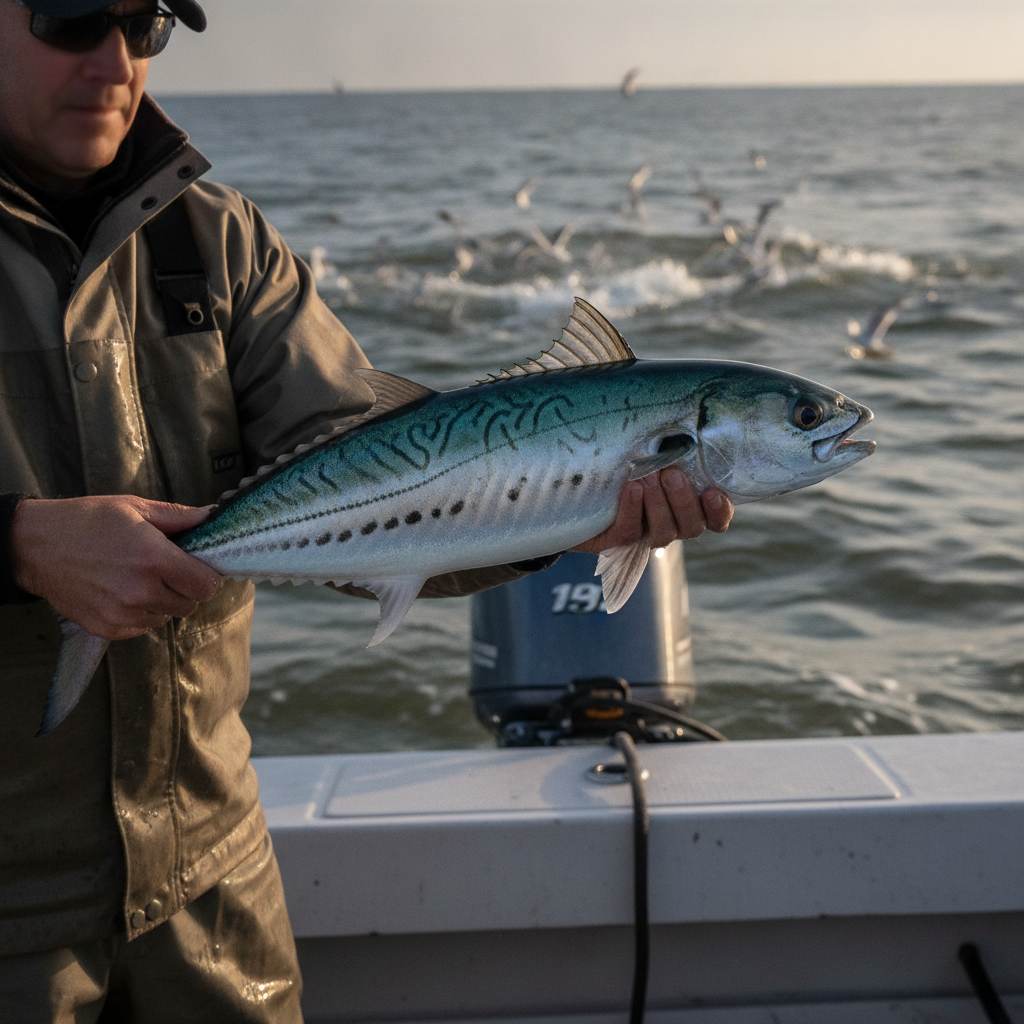
False albacore (Euthynnus alletteratus) — also called little tunny, fat Alberts, or simply albies — are pound for pound the fastest, hardest-fighting fish in the nearshore ocean. A 10 lb albie will peel 100 yards of line off a reel in seconds and keep working for ten minutes before you see color. They don’t tire easily and they are absolutely relentless, and while they are poor table fare, they have converted more anglers to light-tackle and fly fishing than any other fish on the Northeast coast.
Range & Habitat
False albacore range throughout the Atlantic from New England to Brazil. They arrive on the US East Coast in late summer and fall, blitzing nearshore, at inlet mouths, and in the surf from Cape Hatteras to New England. Cape Cod, Nantucket Sound, Montauk, Barnegat Light, and the Outer Banks are the premier albie destinations. They travel in fast-moving pods of dozens to hundreds and are almost always tied to bait — glass minnows, bay anchovies, sand eels, silversides, and peanut bunker are the key forage. Feeding schools blitz on the surface and are highly visible.
Best Tackle
Light spinning: 7′–7′6″ medium-light or medium fast-action rod, 2500–3500 reel, 10–15 lb braid, 24″ of 15–20 lb fluorocarbon. Fly fishing: 9–11 weight, large-arbor reel with 300+ yards of backing, intermediate or fast-sinking line — albies are a premier fly target. Lighter is better: Albies are notoriously leader-shy and will refuse lures and lines that are too heavy for the bait they’re on.
Top Techniques
Casting to Breaking Fish: Position ahead of the moving school and cast small lures into the blitz — 20–30 feet ahead of the school’s direction of travel, not at the fish. Let the lure sink slightly, then retrieve immediately and as fast as you can. Albies will easily outswim a slow retrieve.
Match the Hatch Precisely: Albies key on tiny baitfish. A large lure thrown into feeding fish gets ignored — you have to match the size and profile of what they’re eating.
Trolling: Small spoons and cedar plugs trolled at 8–10 knots are an efficient way to locate schools on a slow day.
Fly Fishing: Casting small Clouser Minnows, Surf Candies, and craft fur streamers to busting albies is one of the most challenging and rewarding experiences in nearshore fly fishing.
Best Baits & Lures
- Small Metal Jigs (1/2–1 oz): The most effective albie lures. Cast well past the school and retrieve as fast as possible.
- Epoxy Jigs: A dense, compact glass-minnow profile that casts a mile — the dedicated albie lure category, and the answer when fish are being picky.
- Deadly Dicks and Small Chrome Metals: Silver or chrome, retrieved at maximum speed.
- Small Gotcha Plugs: A classic albie lure — all-silver and silver/chartreuse are the top colors.
- Clouser Minnow (fly): The definitive false albacore fly. Size 2–1/0 in chartreuse/white or olive/white.
- Craft Fur Streamers (fly): Small white, grey, or olive craft fur flies on a 1/0 hook. Match the baitfish they’re chasing.
- Small Swim Shads (2–3″): Soft plastics in natural colors on a 1/4 oz jighead sometimes outfish hard lures outright.
Seasonal Patterns
Late Summer–Fall (August–November): The false albacore run is the defining event of fall on the Northeast coast, and the entire East Coast season. First fish show off the Outer Banks in August; the run peaks at Cape Cod in September, at Montauk and the Jersey Shore in October, and in the Carolinas in November. They follow the bait south like clockwork.
Pro Tips
- Speed matters above all: If your retrieve isn’t as fast as you can physically manage, it is probably not fast enough.
- Go light on the leader: Albies routinely ignore lures on 30+ lb leader. Drop to 15–20 lb fluorocarbon and watch your hookup rate change.
- Small presentation: Match the bait precisely in size and color. Being 20% too big is enough to get refused.
- Lead the school: Cast to where the fish will be in five seconds, not where they are now.
- Don’t run the school over: Driving the boat through breaking fish puts them down and ruins it for everyone. Cut the engine, get ahead, and let them come to you.
- Be patient: Schools vanish and reappear constantly. Stay in the area and stay ready.
- They’re not good eating: Albies have dark, oily, strongly flavored meat that suits very few palates. Release them — these fish deserve it.
Regulations
False albacore (little tunny) cannot be sold commercially in the US, and several states restrict or prohibit keeping them. Verify current rules with your state fisheries agency — in practice, nearly all false albacore are released.
Best False Albacore Tackle
Affiliate disclosure: fishing.digital earns a small commission on qualifying purchases at no extra cost to you.
1. Epoxy Jig, 7/8 oz
When albies are locked on glass minnows, a dense 7/8 oz epoxy jig gives you the casting distance and the exact small profile you need. Buy it in a real size — 5/8, 7/8, or 1-1/4 oz — and match it to the bait in the water.
2. 20 lb Fluorocarbon Leader
False albacore are notoriously leader-shy. Dropping to 20 lb fluorocarbon is the single easiest way to improve your hookup rate. Check price on Amazon
3. Shimano Stradic FL C3000
A fast, smooth reel that handles the blistering first run. Albies will empty a slow reel. Check price on Amazon
4. Clouser Minnow, Size 2 Chartreuse/White
The definitive false albacore fly on the East Coast. Check price on Amazon
Browse all species guides: How To Catch Fish — Complete Species Guides | Weekly Fishing Reports — updated every Thursday.
Planning a trip to False Albacore?
This report tells you what happened. ReelAI tells you what to do about it — a briefing for your date, your target species and how you're fishing, built from our reports plus live NOAA and USGS data.
Powered by ReelAI — fishing.digital's intelligence layer. Answers are generated from fishing.digital reports and public NOAA, NWS and USGS data, and may be incomplete or out of date. Regulations and marine safety information are summaries only; always confirm with the responsible authority before you fish.