
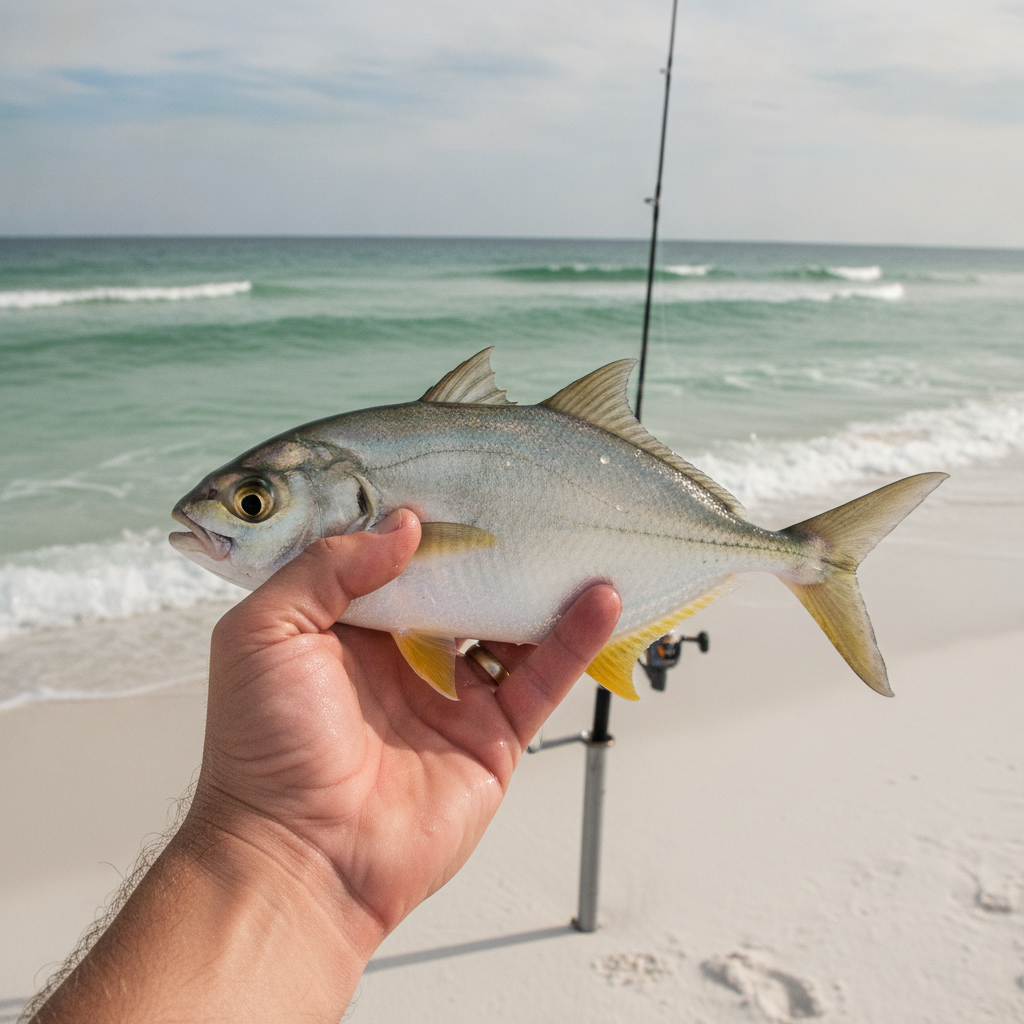
Florida pompano (Trachinotus carolinus) are one of the most prized nearshore fish in the South — fast, hard-fighting, and considered by many chefs the finest-tasting fish that swims in Florida waters. They are also notoriously hard to find consistently, which is what makes them the prestige target of serious surf and inshore anglers: catching them reliably takes an understanding of tides, seasonal movement, and exactly how they feed. They fight well beyond their size, and a 2 lb pompano on light spinning tackle is genuinely exciting.
Range & Habitat
Pompano range from Massachusetts to Brazil but are most abundant from the Carolinas through Florida and across the Gulf Coast. They are migratory, running north in spring and back south in fall, and they prefer sandy-bottom habitat — beaches, sandbars, inlet mouths, passes, and shallow nearshore flats. They are present in Florida’s surf, bays, and estuaries year-round. Pompano feed almost exclusively on sand fleas, small crabs, and shrimp rooted out of the surf wash and the bottom of coastal flats.
Best Tackle
Light spinning: 6′6″–7′ medium-light spinning rod, 2500–3000 reel, 10–15 lb braid, 18″ of 15–20 lb fluorocarbon leader. Surf rod: 9–11′ medium-action surf spinning for beach fishing and pier work. Pompano are not large — most run 1–3 lbs with exceptional fish over 5 — but they pull far harder than the numbers suggest.
Top Techniques
Surf Fishing: The classic. Fish a two-hook pompano rig baited with sand fleas on a fish-finder setup in the trough behind the first bar, or cast pompano jigs into the same water. The foam on the edge of the wash is where sand fleas tumble — put your rig in that zone. Wade casting in the wash is highly productive.
Jetty and Bridge Fishing: Work pompano jigs along the bottom at the base of inlet jetties and causeway bridges, and in the passes.
Jig Fishing: A 1/4–3/4 oz pompano jig with a small teaser above it, bounced along the bottom. The specific pompano retrieve — bounce, bounce, pause — triggers bites from fish that will not touch a bait.
Flats Fishing: Small jigs and live shrimp worked over shallow sandy flats and grass edges.
Best Baits & Lures
- Sand Fleas (Mole Crabs): The definitive pompano bait. Harvest them from the wash zone at the surf line — they tumble in the wash and pompano follow. Hook through the underside.
- Pompano Jigs (1/4–3/4 oz): Chartreuse/orange or chartreuse/pink heads with a bright teaser fly 12–18″ above. Fish them bouncing along the bottom in the surf, in passes, and at inlets.
- Fishbites (sand flea or shrimp): An excellent sand flea substitute that stays on the hook far better than the real thing.
- Live Shrimp: Excellent in the bays, passes, and on the flats — under a cork or on a light jighead.
- Fiddler Crabs: A strong bait, especially in the Carolinas and Mid-Atlantic.
- Clam Necks: Cut clam on a pompano rig is a reliable North Carolina and Mid-Atlantic surf bait.
Seasonal Patterns
Fall–Winter–Spring (October–April): Prime pompano season on Florida’s east and west coasts and across the Gulf. Cold fronts push fish close to the beach and into the surf. Spring (April–June): The northern migration — excellent surf fishing from Florida up through the Carolinas and beyond. Summer: Fish are present in Florida year-round and in the Gulf passes, but they get scarcer as you move north.
Pro Tips
- Read the beach: Pompano travel in pods along the troughs between sandbars. Find the first trough behind the first breaking wave — that’s the pompano highway. Cast to it, not past it into the calm water behind the bar.
- Fish after cold fronts: The two to three days following a cold front push pompano into the surf in numbers. It is the most reliable pompano trigger in Florida.
- Bounce jigs on the bottom: Pompano nose along the sand for crabs and crustaceans. If your jig isn’t on or very near the bottom, it isn’t in the strike zone.
- Run a teaser: A small fly or teaser 12–18″ above the main jig dramatically improves jig catch rates.
- Upgrade your sand fleas: Fresh, lively fleas dramatically outfish dead or sluggish ones. Bring a rake and catch them as you fish.
- Change jig colors: Keep switching until you find the one — pompano can be surprisingly color-selective on a given day.
Regulations
Florida pompano: 11-inch fork length minimum, 6 fish per person per day, with a 24-inch maximum. Other Gulf and Atlantic states set their own size and bag limits. Check current FWC or state regulations before you fish.
Best Pompano Tackle
Affiliate disclosure: fishing.digital earns a small commission on qualifying purchases at no extra cost to you.
1. Pompano Jig, Chartreuse/Orange 1/4 oz
The most effective pompano lure — fish it with a teaser fly 12–18 inches above. Check price on Amazon
2. Fishbites E-Z Flea (Sand Flea)
Stays on the hook far longer than a live sand flea, and keeps working when the fleas stop digging. Check price on Amazon
3. Two-Hook Pompano Surf Rig
A pre-tied two-hook dropper rig with floats and teasers is the standard surf setup — quicker than tying your own on the beach. Check price on Amazon
4. 9′ Medium-Light Surf Spinning Rod
A light surf rod for pompano — sensitive enough to read the bite, long enough to reach the trough. Check price on Amazon
Browse all species guides: How To Catch Fish — Complete Species Guides | Weekly Fishing Reports — updated every Thursday.
Planning a trip to Pompano?
This report tells you what happened. ReelAI tells you what to do about it — a briefing for your date, your target species and how you're fishing, built from our reports plus live NOAA and USGS data.
Powered by ReelAI — fishing.digital's intelligence layer. Answers are generated from fishing.digital reports and public NOAA, NWS and USGS data, and may be incomplete or out of date. Regulations and marine safety information are summaries only; always confirm with the responsible authority before you fish.