
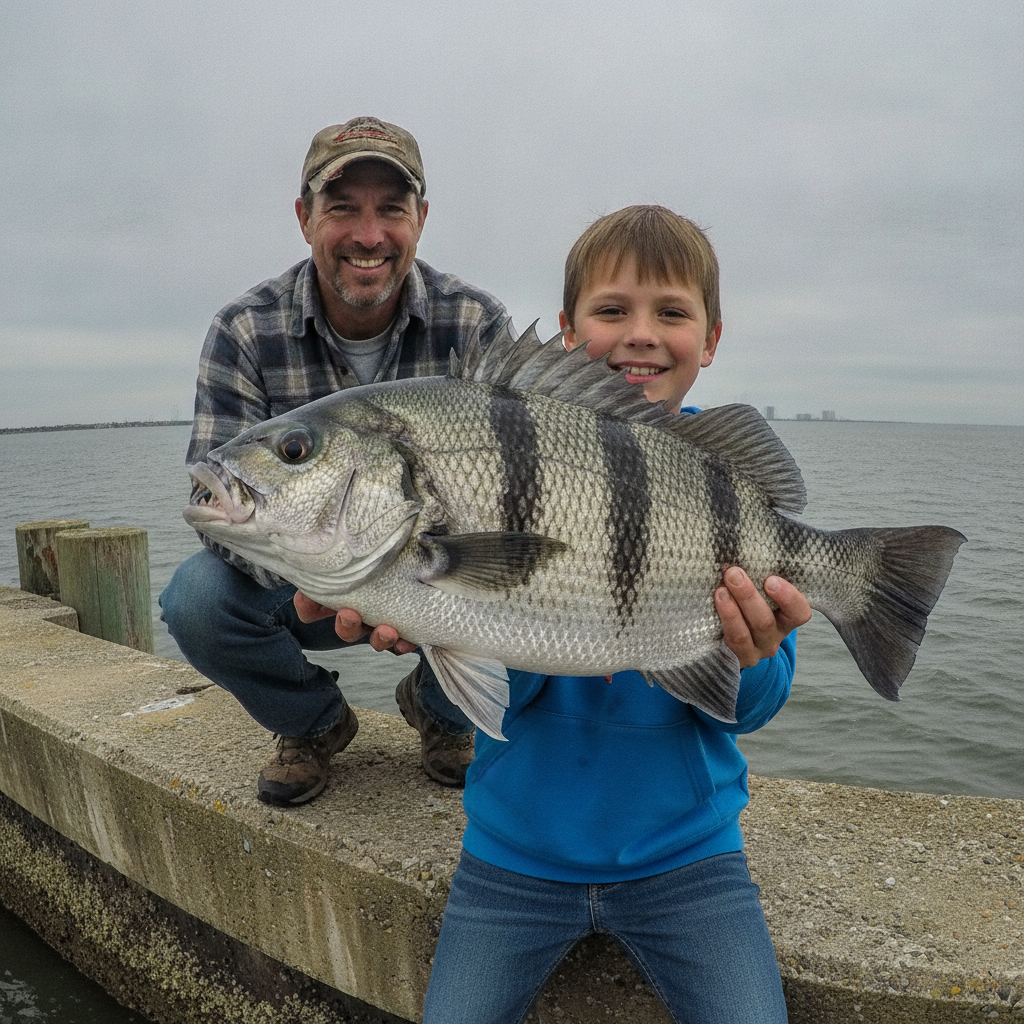
Sheepshead (Archosargus probatocephalus) — nicknamed “convict fish” for their black-and-white striped pattern — are one of the most popular inshore targets in the southern U.S. They’re strong fighters, abundant around structure, excellent on the table, and famous for being deceptively hard to hook. The fish that “steal your bait without ever moving the rod tip” has frustrated anglers for generations. This guide covers everything you need to land them.
Where to Find Sheepshead: Range & Habitat
Sheepshead are found along the U.S. Atlantic coast from Cape Cod (rare) down to Florida, throughout the Gulf of Mexico, and as far west as Texas. They’re structure-oriented year-round — bridge pilings, dock pilings, jetties, oyster bars, artificial reefs, and submerged wrecks. In winter, sheepshead concentrate near hard structure for the spawn. They’re most abundant in Florida’s Gulf Coast, the Florida Panhandle, the Mississippi Sound, and the Texas coast.
Tackle for Sheepshead
Rod: 7′ medium-light to medium spinning rod with a sensitive tip — feel matters more than power. Reel: 2500-3000 size spinning reel. Main line: 10-15 lb braid for sensitivity. Leader: 15-20 lb fluorocarbon, 18-24 inches. Hooks: #1 or #1/0 octopus hook — sharp, small, and turns into the corner of the mouth on tension.
Top Techniques
The Vertical Drop: Position right alongside a piling or piece of structure. Drop your baited hook straight down, just enough weight to maintain contact with the bottom or the structure. Watch the rod tip and the line — bites are subtle, sometimes just a tick. The “Pre-Bite” Set: Sheepshead often bite by sucking in bait without moving the rod. Pros watch for the slightest “lean” in the line or weight, then set immediately. Scrape & Drop: Use a scraper or screwdriver to scrape barnacles off a piling — sheepshead come investigate. Drop bait into the resulting chum cloud.
Best Baits
Live fiddler crabs are the #1 sheepshead bait — they’re what sheepshead naturally eat. Hook through the back, leg-side down. Live shrimp hooked through the tail is excellent. Sand fleas (mole crabs) excel at surf-zone jetties. Oysters on the half-shell wired to a hook produce in some waters. Barnacles can be cracked and used on small hooks. Sheepshead don’t hit lures consistently — bait fishing is the rule.
Rigging
Knocker rig: Egg sinker (1/4 to 3/8 oz) sliding directly to the hook eye — bait pinned to the bottom right where sheepshead feed. Carolina rig: Same setup but with a swivel and 12-18″ leader. Split-shot rig: A single split-shot above a fluorocarbon leader for shallow piling work. Use only as much weight as needed — heavy lead masks bites.
Reading the Bite
Sheepshead bites are notoriously subtle. The most reliable tells: the line goes slack (a fish picked up the bait and is moving up); the rod tip “loads” without tapping; the line “ticks” without obvious shake. When in doubt — SET. Bait theft is constant; a missed hook-set means a stolen bait, not a missed fish.
Best Times to Fish
Peak Season: January through April — the spawning period when fish stack on bridges and structure in big numbers. Spring: Fish spread out post-spawn. Summer: Present but harder to target as they spread among many structures. Fall: Begin returning to structure as water cools. Tide: Moving water of any direction; slack tide is often dead. The first hour of incoming or outgoing usually produces best.
Hot Spots
Florida Gulf: Skyway Bridge, Sunshine Skyway approach piers, Naples Pier, Sanibel Causeway, Bokeelia Pier. Florida Atlantic: Sebastian Inlet, Mayport jetties, Jupiter Inlet. Northern Gulf: Three Mile Bridge (Pensacola), Hathaway Bridge (Panama City), Dauphin Island Bridge. Texas: Galveston jetties, Port Aransas jetties.
Cleaning & Eating
Sheepshead are tough to clean — heavy scales and a thick rib cage. Use a stiff fillet knife and consider a fillet glove for grip. The flesh is white, firm, and flaky with a mild flavor — excellent grilled, blackened, or fried. Yield is moderate (about 30% of whole weight).
Regulations
Florida: 12″ minimum, 8 per angler per day. Alabama: 12″ min, 10 per day. Mississippi: 14″ min, 5 per day. Texas: 15″ min, 5 per day. Louisiana: 12″ min, 5 per day in some zones (verify). Always verify current state rules — sheepshead bag and slot rules change.
More Resources
Browse all How-To Guides · Location Guides
Planning a trip to Saltwater Fishing?
This report tells you what happened. ReelAI tells you what to do about it — a briefing for your date, your target species and how you're fishing, built from our reports plus live NOAA and USGS data.
Powered by ReelAI — fishing.digital's intelligence layer. Answers are generated from fishing.digital reports and public NOAA, NWS and USGS data, and may be incomplete or out of date. Regulations and marine safety information are summaries only; always confirm with the responsible authority before you fish.