
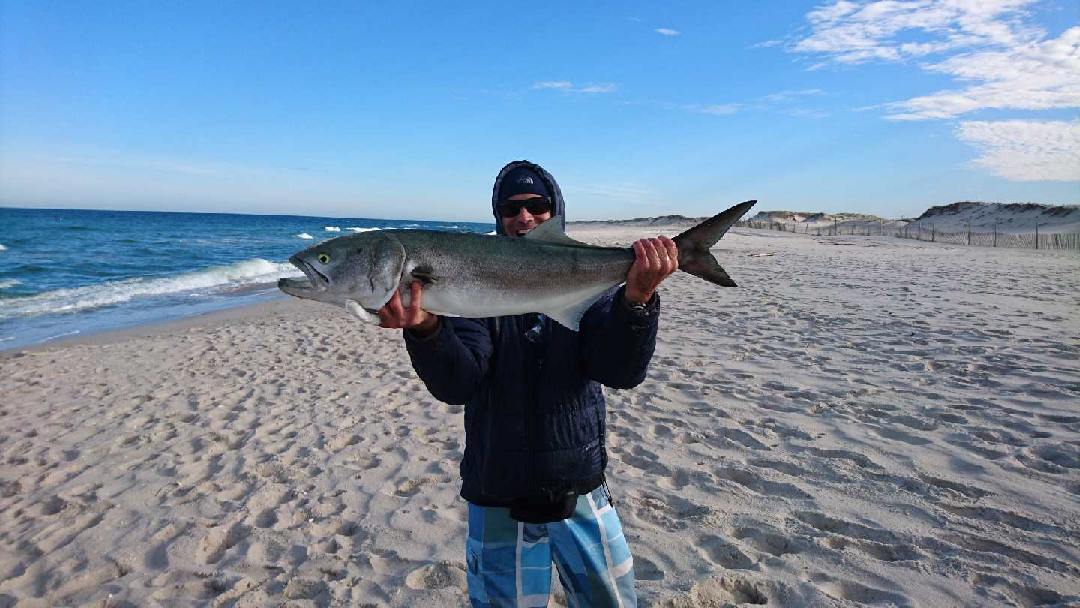
The Jersey Shore is in early-summer form, with striped bass still around, fluke season open and producing, and sea bass stacked on the wrecks. The first week of June gives surf, bay, and boat anglers plenty to chase. Here is the rundown.
What’s Hitting
Striped bass are still in the game, working the surf, the back bays, and around Raritan Bay and the rivers. Fluke (summer flounder) season is open and the bite is building in the bays, inlets, and on the nearshore lumps. Black sea bass are open and stacking on the wrecks and reefs. Bluefish are along the beaches, and the first weakfish are showing in the back bays.
Where to Find Them
Work the surf and the inlets for stripers, and the back bays of Barnegat and Raritan for both bass and early fluke. Drift the bay channels, the inlets, and the nearshore lumps for keeper fluke. Sea bass are on the wrecks and reef sites in 60–100 feet. Bluefish are blitzing along the open beaches on the bait pods.
Tides & Conditions
Fluke fishing is best on the moving tide in the bays and inlets. Stripers feed hard at first and last light in the surf. Water is warming through the 60s. Keep an eye on the wind for the open-water sea bass and fluke runs. Mornings remain the most consistent window.
Tackle & Tactics
For fluke, drift bucktails tipped with Gulp or a squid-and-spearing combo along the bottom. Stripers eat bunker chunks and clams in the surf, and plugs and soft plastics in the bays and rivers. Sea bass take clams and jigs on the wrecks. Toss metal for the blitzing blues.
Spots & Access This Week
New Jersey access is excellent up and down the coast. The Manasquan River ramps in Brielle, the Barnegat Light and Waretown ramps on Barnegat Bay, the Leonardo State Marina ramp on Raritan Bay and the Frank S. Farley ramp in Atlantic City cover most of the productive water.
Shore anglers have the Manasquan and Barnegat inlet jetties, Island Beach State Park and the Sandy Hook beaches, all of which put you on moving water without a boat and all of which fish well in early summer at first and last light.
Fish have been concentrating around the inlets and the back-bay channel edges on moving water, with the inshore reefs holding fluke. Summer flounder, black sea bass and striped bass in New Jersey all carry seasons, size limits and gear rules — including circle-hook requirements when bait fishing for stripers — and these are revised most years. Check current New Jersey Division of Fish and Wildlife regulations before keeping fish.
Tactics That Are Working
For bay and inlet stripers, a small swimming plug or a soft plastic on a light jighead worked along the channel edges at dawn has been the most consistent approach, with live bait on a circle hook the choice when fish are holding deep on the tide.
Fluke anglers doing best have moved off the flat sand and onto the rougher bottom — bucktail with a Gulp or squid strip trailer, worked vertically on short, controlled drifts. Add a teaser above the bucktail. Set up so you cross the piece of structure in about a minute and then reset, rather than making one long drift that spends most of its time over barren sand.
This Week’s Tip
For bay fluke, target the edges where the channel drops into the flat. Keepers sit on the deeper side of the drop and ambush bait sliding off the shallows on the moving tide. Drift the edge, not the middle of the channel, and you’ll trade short fish for keepers.
More New Jersey Resources
New Jersey Fishing Guide · New Jersey Seasonal Calendar · All New Jersey reports →
Also read: New Jersey Fishing Report — Week of July 30, 2026: Fluke on the Reefs, Canyon Tuna
Reports updated every Thursday on fishing.digital.
Planning a trip to New Jersey?
This report tells you what happened. ReelAI tells you what to do about it — a briefing for your date, your target species and how you're fishing, built from our reports plus live NOAA and USGS data.
Powered by ReelAI — fishing.digital's intelligence layer. Answers are generated from fishing.digital reports and public NOAA, NWS and USGS data, and may be incomplete or out of date. Regulations and marine safety information are summaries only; always confirm with the responsible authority before you fish.