Updated: Thursday, August 27, 2026 · Next update: Thursday, September 3, 2026
This Palm Beach fishing report covers late August, when Palm Beach County’s short run to the Gulf Stream pays off. The Stream sits close and enough sargassum drifts north to make a dawn weedline run worthwhile. Mahi on the weedlines are the lead offshore target, with mutton snapper on the reef and tarpon stacked at the inlets. Plan around a strong north-setting current offshore and the night outgoing tide inshore.
What’s Hitting
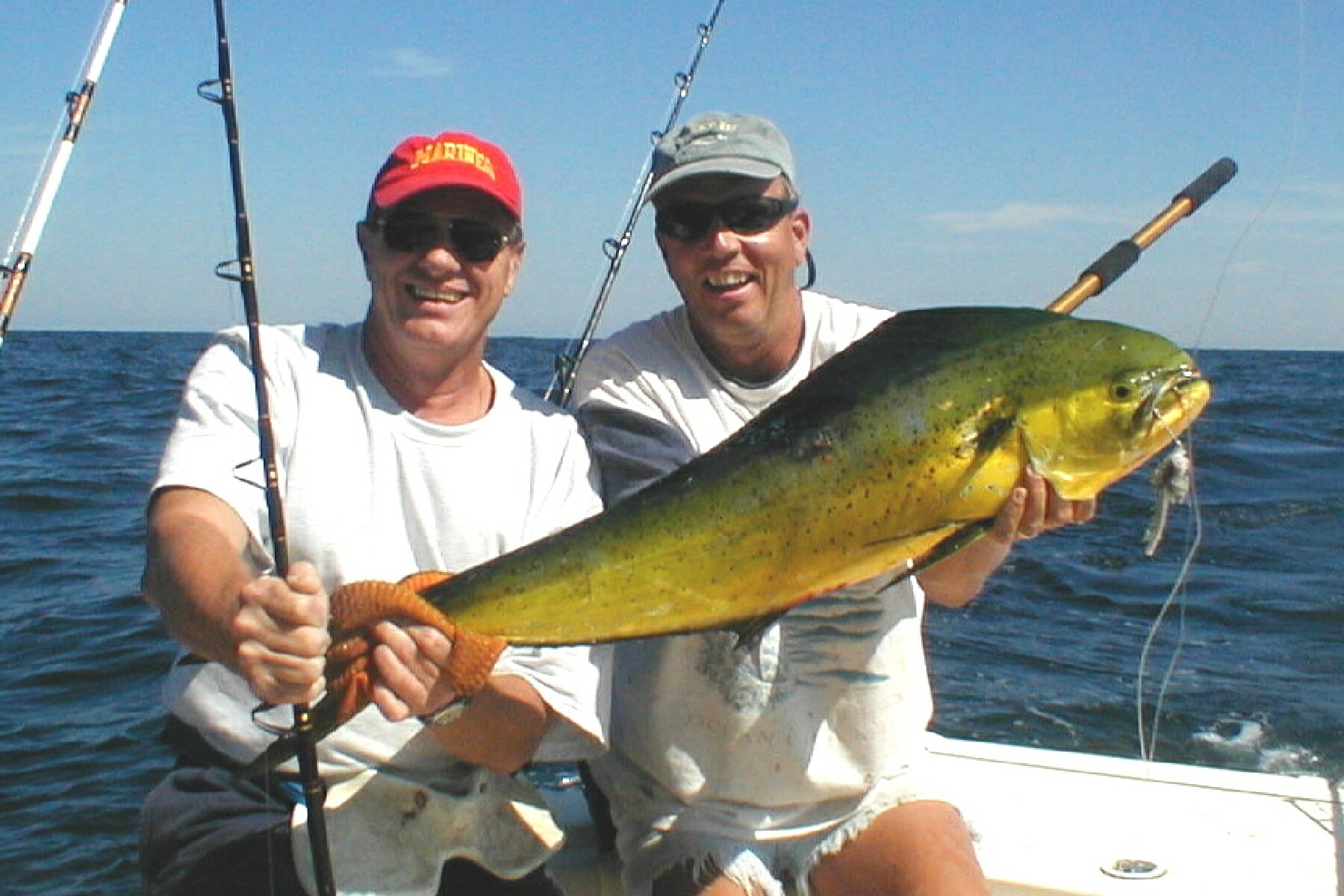
Mahi are the main offshore target on the weedlines and debris from 250 feet out. School fish dominate, with occasional gaffers under the birds.
On the reef, mutton snapper and mangrove snapper produce at dawn and after dark in 60 to 120 feet, with kingfish and bonito working the same water. Inshore, tarpon are the highlight, stacked around the Palm Beach and Boynton inlets on the moving tide, with snook on the same structure after dark. Snapper sit on the bridge pilings and ICW dock lines.
Where to Find Them
Head east for the color change, the rip line and any sargassum with current under it. The 250- to 700-foot range is mahi water, and frigate birds working high are worth a long detour.
The reef edges in 60 to 120 feet hold the snapper; fish the up-current side and use a long leader. Inshore, the Palm Beach Inlet, the Boynton Inlet and the Jupiter Inlet all hold tarpon and snook on the tide, best after dark. The Blue Heron Bridge area and the ICW dock lines give up snapper, jacks and the occasional big snook.
Tides & Conditions
The north-setting Gulf Stream current runs strong, so expect to reset drifts frequently. Expect water in the mid 80s inshore and low to mid 80s offshore.
Light, glassy mornings give way to a sea breeze by mid-morning and storms building over the Everglades in the afternoon. The inlets fish best on the outgoing tide at night, when bait flushes through. Tides are moderate; target the two hours either side of the change.
Tackle & Tactics
- Mahi: a 20-pound spinner with a bare 4/0 circle and a livewell of pilchards. Keep a hooked fish in the water to hold the school, and pitch to visible fish rather than blind casting.
- Mutton snapper: a whole ballyhoo or live pinfish on a long 40- to 50-pound fluorocarbon leader on the bottom. In this clear water, leader length matters more than hook size.
- Inlet tarpon: an 8000-class spinner, 50-pound braid and an 80-pound fluoro shock leader, with a live mullet or crab drifted down the shadow line.
- Inlet snook: a big paddletail worked slowly on the dark side of the light.
Local Intel This Week
Launch at the Riviera Beach Municipal Marina ramp or the Phil Foster Park ramp at the Blue Heron Bridge for the Palm Beach Inlet, the Boynton Harbor Marina ramp for the Boynton Inlet, and the Burt Reynolds Park ramp for Jupiter. Shore anglers have excellent options at the Juno Beach Pier, the Lake Worth Pier and the Boynton Inlet catwalks.
Rules for mutton snapper, mahi and snook differ between state and federal waters, and tarpon are effectively a catch-and-release fishery. Check current FWC and federal regulations and seasons before keeping fish.
This Week’s Tip
At the inlets after dark, never run your boat through the shadow line to get into position. Idle in from up-current, set up well above the bridge, and let the tide carry your baits down into the seam. Tarpon in an inlet hear a hull long before they see a bait, and one careless pass shuts down the spot.
Planning a trip to Palm Beach?
This report tells you what happened. ReelAI tells you what to do about it — a briefing for your date, your target species and how you're fishing, built from our reports plus live NOAA and USGS data.
Powered by ReelAI — fishing.digital's intelligence layer. Answers are generated from fishing.digital reports and public NOAA, NWS and USGS data, and may be incomplete or out of date. Regulations and marine safety information are summaries only; always confirm with the responsible authority before you fish.