Updated: Thursday, September 10, 2026 · Next update: Thursday, September 17, 2026
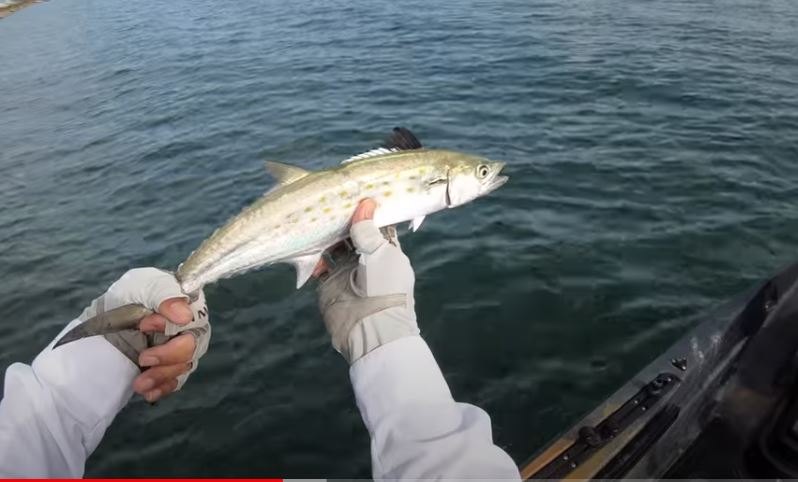
This Panama City fishing report covers mid-September, when bait packs the beaches and Spanish mackerel blitz it every morning, with birds working from St. Andrews State Park down past the county pier. Spanish are the lead target, bull reds move into the pass, and flounder begin the fall migration that peaks in October. The main condition to plan around is the strong new-moon tide over the weekend, which drives the bull red bite on the hard outgoing. It is a good time to be on the water in Bay County.
What’s Hitting
Spanish mackerel are the easy fish. Schools blitz bait along the beach and around the pass, and the St. Andrews jetties produce steady action on both tides. Bull redfish from 30 to 45 inches cruise the pass and the jetties. Flounder start showing along the jetties and the docks near the pass. In the bays, trout feed on the grass at dawn and smaller reds work the shorelines of West Bay and North Bay. Kingfish sit on the nearshore wrecks in 50 to 90 feet.
Offshore, the deeper wrecks and reefs hold amberjack and vermilion snapper, and wahoo turn up on the edge.
Where to Find Them
Spanish are anywhere birds work along the beach, and the stretch from the pass west to the Russell-Fields Pier is the most consistent. For bull reds, fish the jetties at St. Andrews Pass on the tide changes and the deeper holes just inside the pass. Flounder lie on the jetty rocks and the sandy edges near the pass.
In the bays, the grass flats in West Bay and along the north shore of St. Andrews Bay hold trout, and the docks in Grand Lagoon hold reds and snapper.
Tides & Conditions
The new moon over the weekend brings strong tides through the pass, and bull reds feed best on the hard outgoing. Expect east to northeast winds at 10 to 15 with a moderate chop, and watch for afternoon storms that build inland and drift toward the coast. Gulf water sits in the mid-80s and clear along the beach, and nearshore seas run 2 to 3 feet.
Tackle & Tactics
- Spanish: a Gotcha plug or a small silver spoon cast at the schools and retrieved fast, with a short wire or heavy fluorocarbon leader.
- Bull reds: cut mullet or live pinfish on a 7/0 circle hook with enough weight to hold in the pass, or a 2-ounce bucktail.
- Flounder: a live mud minnow or finger mullet on a 1/2-ounce jig head, worked slowly along the bottom.
- Bay trout and reds: topwaters at dawn, then soft plastics or live shrimp under a cork.
Local Intel This Week
The St. Andrews State Park ramp is the closest launch to the pass, the Carl Gray Park ramp on the Panama City side covers St. Andrews Bay, and the ramp at the Hathaway Bridge serves the west side. Without a boat, fish the Russell-Fields Pier for Spanish under the birds or the St. Andrews jetties for bull reds and flounder on the tide changes.
Florida flounder have a fall closed season to confirm before targeting them to keep. Check current FWC and federal regulations and seasons before keeping fish.
This Week’s Tip
Spanish mackerel move fast, and the schools are here and gone. When you see birds, get ahead of the school rather than chasing it from behind, shut down and let the fish come to you. Keep the retrieve fast; these fish will not eat a lure that stops moving.
Planning a trip to Panama City?
This report tells you what happened. ReelAI tells you what to do about it — a briefing for your date, your target species and how you're fishing, built from our reports plus live NOAA and USGS data.
Powered by ReelAI — fishing.digital's intelligence layer. Answers are generated from fishing.digital reports and public NOAA, NWS and USGS data, and may be incomplete or out of date. Regulations and marine safety information are summaries only; always confirm with the responsible authority before you fish.