
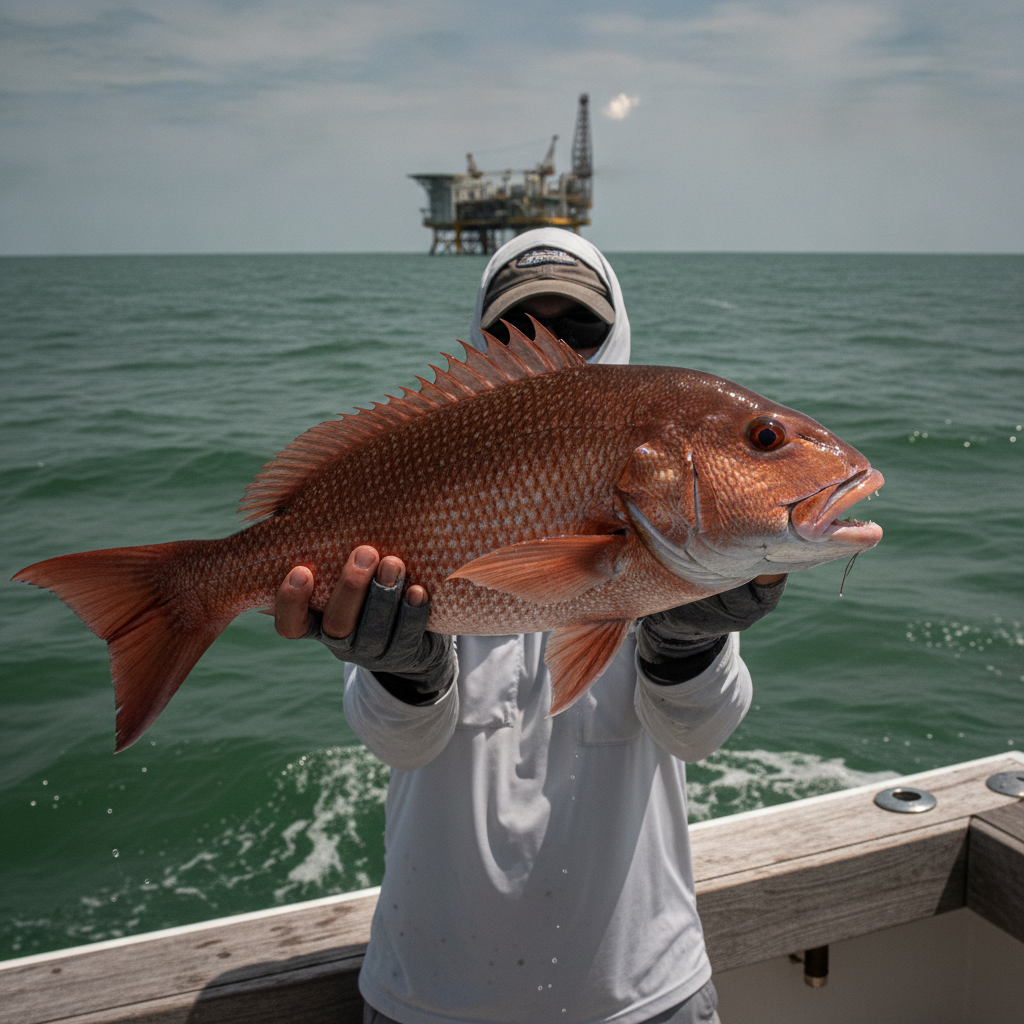
The western Panhandle is in its late-summer groove. The Gulf has been laying down most mornings, the wrecks and reefs are loaded, and the beach has enough tarpon rolling through to keep sight anglers driving up and down Santa Rosa Island at daybreak. Afternoon storms are the only thing dictating the schedule.
What’s Hitting
Bottom fishing is the most dependable game. Vermilion snapper, mingo, triggerfish, scamp and gag grouper are stacked on the wrecks, reefs and natural bottom from 60 to 200 feet.
Tarpon are the glamour target, cruising the beach in singles and small strings at first light. King mackerel and Spanish mackerel are on the nearshore bait pods and around the pass. Inshore, speckled trout and slot redfish are working the pass, the bayou mouths and the grass flats of Santa Rosa Sound early, and flounder are staging along the pass rocks.
Where to Find Them
The public reefs and wrecks off Pensacola in 60 to 200 feet are the bottom-fishing engine — the Escambia and Santa Rosa county artificial reef zones hold plenty of structure. Nearshore, the 20- to 40-foot bottom and the bait pods off the beach carry the kings.
Tarpon show along the first bar from Fort Pickens east past Pensacola Beach. Inshore, work Pensacola Pass on the moving tide, the grass edges in Santa Rosa Sound, and the mouths of Bayou Chico, Bayou Texar and Big Lagoon for trout and reds.
Tides & Conditions
Gulf water temps are in the mid 80s with inshore bays running warmer. Mornings have been light with a sea breeze building from the south by mid-morning — offshore trips need an early start and an early finish.
Tides in this part of the Gulf are small and often diurnal, so the wind frequently moves more water than the tide does. A steady southerly pushes clean Gulf water into the pass and turns on the trout and Spanish bite; a hard north wind flattens it out and slows things down. Storms have been building daily over the interior.
Tackle & Tactics
For bottom fish, a conventional outfit with 50- to 65-pound braid, an 60- to 80-pound leader and a knocker or chicken rig with 5/0 to 7/0 circle hooks. Live pinfish, cigar minnows and cut squid all work; drop directly on the numbers and be ready to crank hard.
Beach tarpon call for an 8000-class spinner, 50-pound braid and 60- to 80-pound fluorocarbon, with a live crab or a large swimbait cast well ahead of a moving fish. Inshore, a quarter-ounce jig with a soft plastic, or a live shrimp under a popping cork, covers trout and reds. For kings, slow-troll live cigar minnows on a light wire stinger.
Local Intel This Week
Ramps and access: the Sherman Cove and Bayou Chico ramps, the Galvez Landing ramp on Pensacola Beach, the Navy Point ramp, and Big Lagoon State Park. Shore anglers have excellent access at the Pensacola Beach Gulf Pier and along the Fort Pickens seawall and jetty.
Fish are concentrating on the deeper structure offshore and along the pass and bar edges inshore. Gulf reef fish — red snapper, gag grouper, triggerfish and amberjack in particular — are managed with tightly defined federal and state seasons that open and close on short notice. Check current FWC and Gulf federal regulations and season status before keeping any bottom fish.
This Week’s Tip
When you mark fish on a wreck but cannot get a bite, move off the structure by fifty yards and drop on the sand nearby. Pressured snapper and grouper on well-known public numbers often push out and hold on the adjacent bottom where nobody drops a bait. That empty-looking sand next to the rubble is frequently where the biggest fish on the spot is sitting.
Planning a trip to Pensacola?
This report tells you what happened. ReelAI tells you what to do about it — a briefing for your date, your target species and how you're fishing, built from our reports plus live NOAA and USGS data.
Powered by ReelAI — fishing.digital's intelligence layer. Answers are generated from fishing.digital reports and public NOAA, NWS and USGS data, and may be incomplete or out of date. Regulations and marine safety information are summaries only; always confirm with the responsible authority before you fish.