
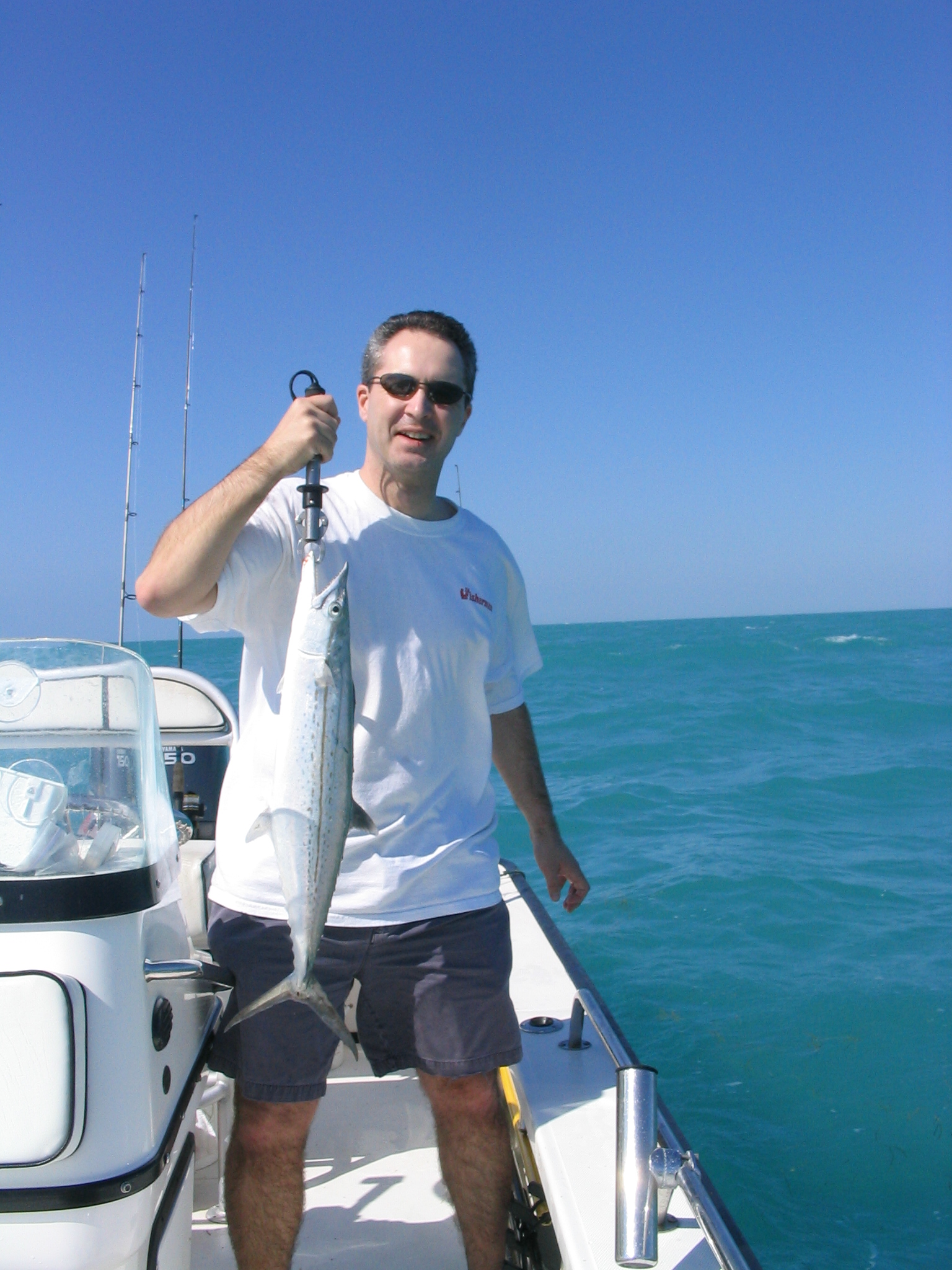
Panama City is fishing the way it usually does at the end of August — hot, clear on the Gulf side, and best in the first three hours of daylight. St. Andrews Pass is moving a lot of bait, the nearshore reefs are holding fish, and the bay has cooled just enough overnight to make the early flats worth a look.
What’s Hitting
Spanish mackerel are the easiest fun on the coast right now, blitzing bait in and around St. Andrews Pass and along the beaches. King mackerel are on the same bait just a bit further out.
Bottom fishing on the nearshore and mid-shelf reefs is producing vermilion snapper, mingo, triggerfish and gag grouper. Flounder are staging along the pass rocks and the bay channel edges as they begin thinking about the fall move. Speckled trout and slot redfish are on the grass flats and oyster bars in North Bay and West Bay early, and there are a few tarpon still working the beach.
Where to Find Them
St. Andrews Pass — the jetties, the channel and the immediate beachfront on either side — is the single most productive piece of water in the area right now. Fish the moving tide for Spanish, kings, flounder and reds.
The artificial reefs and the natural bottom from 60 to 150 feet hold the snapper and grouper. Inshore, work the grass edges and oyster bars of North Bay, West Bay and the back of Grand Lagoon for trout and redfish. The bridge pilings on the Hathaway Bridge hold snapper and the occasional flounder.
Tides & Conditions
Gulf temps are in the mid 80s and the bays are warmer still. Tides here are small — often a single daily rise and fall — so wind direction matters as much as the tide table.
Mornings have been calm with a southerly sea breeze filling in by ten and afternoon thunderstorms developing over the mainland. Clean green water has been pushing into the pass on the incoming, which is when the Spanish and king bite has been best. When the wind swings north and the pass goes slack and murky, shift your effort into the bay.
Tackle & Tactics
For Spanish, a light 15- to 20-pound spinning outfit and a small silver spoon or a bare 1/2-ounce jig retrieved fast. Add a short section of light fluorocarbon rather than wire and you will get considerably more strikes, at the cost of an occasional cutoff.
Bottom fish take a knocker rig with a 4/0 to 6/0 circle, 50-pound braid and cut squid or a live cigar minnow. Flounder along the pass rocks want a live bull minnow or a small finger mullet dragged slowly on a Carolina rig — slow is the entire technique. Trout and reds in the bay eat a popping cork with a shrimp imitation, or a gold spoon over the grass.
Local Intel This Week
Access: the St. Andrews State Park ramp and jetty, the Carl Gray Park ramp, the Earl Gilbert Park ramp on the bay, and the Panama City Marina. St. Andrews State Park gives shore anglers direct access to the jetty and one of the best land-based spots on the Panhandle.
Fish are concentrating in the pass on moving water and out on the reef structure through the heat of the day. Gulf reef species carry federal and state seasons that open and close on short notice, and flounder has its own state closure period — check current FWC and Gulf federal regulations before keeping fish.
This Week’s Tip
If the Spanish are showering bait but refusing your spoon, go smaller and faster before you go bigger. Late-summer Spanish are keying on tiny glass minnows, and a half-ounce spoon that looks reasonable to you looks enormous to them. A quarter-ounce spoon burned as fast as you can turn the handle will get bit when nothing else does.
Planning a trip to Panama City?
This report tells you what happened. ReelAI tells you what to do about it — a briefing for your date, your target species and how you're fishing, built from our reports plus live NOAA and USGS data.
Powered by ReelAI — fishing.digital's intelligence layer. Answers are generated from fishing.digital reports and public NOAA, NWS and USGS data, and may be incomplete or out of date. Regulations and marine safety information are summaries only; always confirm with the responsible authority before you fish.