
Updated: Historical report for the week of May 14, 2026 (original publication date preserved; reorganized October 29, 2026) · Next update: None. This archived week will not be updated again; for current conditions, read the latest Great Lakes fishing report.
This Great Lakes fishing report covers the week of May 14, 2026, when the system was at the heart of its spring run. The dominant pattern was a full-peak walleye bite in Lake Erie’s western basin, where trolled stickbaits and minnow-tipped jigs around the island reefs produced limits daily. Lake Michigan salmon trolling was building and smallmouth bass were beginning to spawn.
What’s Hitting
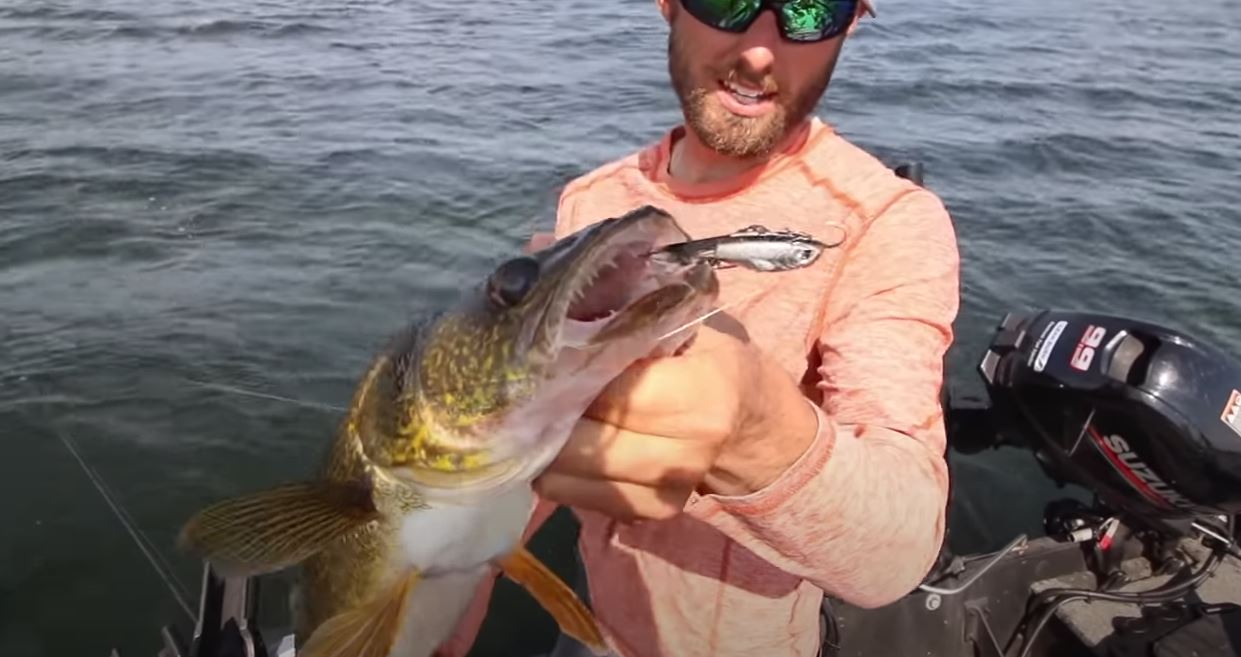
Walleye were at full peak in western Lake Erie, with some monsters over 10 lbs coming on the jig bite. The fish were expected to start migrating east as the water warmed past 60°F.
King salmon and coho were spreading out on Lake Michigan as the trolling fleet dialed in, producing solid limits, and lake trout were stacked on the deep humps for jiggers.
The smallmouth bass spawn was beginning across the system, with pre-spawn and spawning fish on the shallows. Steelhead were winding down in the Lake Erie tributaries, though a few were still being caught in Ohio and Pennsylvania streams, and northern pike were post-spawn and active in the marshes and weedy bays.
Where to Find Them
On Erie, the Bass Islands, Pelee Island and Kelleys Island areas were all stacked with walleye. The reef complex at Niagara, Crib and Toussaint produced limits to anglers casting jigs, with jig fish hooking up fast on reef edges in 12–20 feet.
On Lake Michigan, the Wisconsin side (Milwaukee, Sheboygan) and the Indiana shore at Michigan City were both producing, with the best trolling from Algoma south through Milwaukee. Saugatuck and Sheboygan boats were also into kings and coho. Lake trout were on the deep humps off Frankfort and Manistee in 100–200 feet.
Smallmouth were loaded in Sturgeon Bay, Lake St. Clair and around the Lake Erie islands, along rocky shorelines and hard bottom.
Tides & Conditions
The Great Lakes have no meaningful tides, so wind and water temperature set the pattern. Water ran 50–58°F across the system. The new moon fell on Saturday. Winds blew south Wednesday and Thursday, then switched west Friday, and the Erie walleye bite stayed the headline.
Tackle & Tactics
Walleye trolling: Renosky stickbaits and Husky Jerks at 1.5–2.0 mph in 18–28 feet around the islands; around Kelleys and Pelee, deep-diving stickbaits at 2.0–2.5 mph in 18–25 feet produced limits in about two hours. Bottom-bouncers with worm harnesses worked the reefs and shoals. Casting jigs tipped with minnows to the reef edges accounted for the biggest fish.
Salmon: J-Plugs, spoons and meat rigs run 40–80 feet down over 80–150 feet of water, with 50–80 feet down the zone out of Saugatuck and Sheboygan.
Smallmouth: tubes and jerkbaits over hard bottom in 4–10 feet, 6–12 feet along the rocky pre-spawn shorelines and 4–8 feet on the Sturgeon Bay beds. Pike: large jerkbaits and spinnerbaits.
Local Intel This Week
Western Lake Erie around Kelleys Island and Pelee was the walleye story, Lake Michigan out of Saugatuck and Sheboygan the salmon story, and Sturgeon Bay the smallmouth spawn. Spawning-bed smallmouth were catch-and-release only, since the fish are at their most vulnerable on the beds.
For western Erie, Sterling State Park offers a public launch on the Michigan shore, and Oswego Harbor is a public access point on the Lake Ontario end of the system. Multi-state licenses were required. Check current state and federal regulations and seasons before keeping fish.
This Week’s Tip
Speed mattered on Erie that week: start at 1.5–2.0 mph and push toward 2.5 mph if marks are not committing, and when trolling slows, cast a minnow-tipped jig to a reef edge, where the biggest walleye came from.
Planning a trip to Great Lakes?
This report tells you what happened. ReelAI tells you what to do about it — a briefing for your date, your target species and how you're fishing, built from our reports plus live NOAA and USGS data.
Powered by ReelAI — fishing.digital's intelligence layer. Answers are generated from fishing.digital reports and public NOAA, NWS and USGS data, and may be incomplete or out of date. Regulations and marine safety information are summaries only; always confirm with the responsible authority before you fish.