
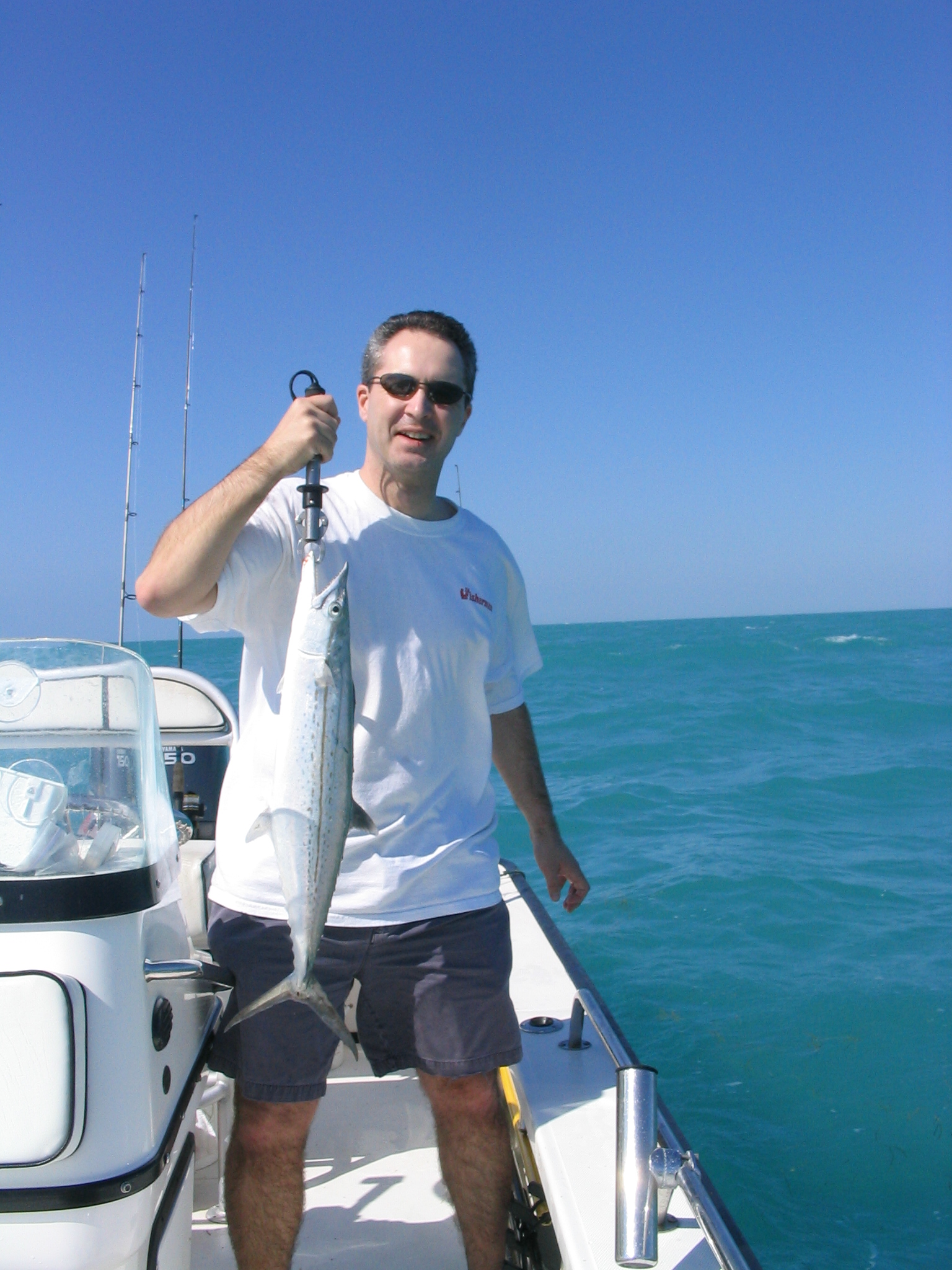
This week around Panama City the bait situation is the whole story. Glass minnows and small threadfin have piled into St. Andrews Pass and along the beaches, and everything with teeth has followed them in. The Gulf has been laying down flat in the mornings, which makes the nearshore work easy, and the pass has been producing from the jetty rocks all the way out to the bar.
What’s Hitting
Spanish mackerel are the most consistent fish in the area right now, working the pass and the beach troughs in good numbers with a few kingfish mixed in. Mangrove snapper are excellent on the jetty rock and the nearshore hard bottom. Flounder are beginning to show on the sandy edges adjacent to structure, which is the early signal of the fall pattern. Redfish are on the grass flats in St. Andrews Bay and around the bridge pilings, and trout are on the deeper grass at first light. Offshore bottom fishing has been steady in 100 to 150 feet.
Where to Find Them
St. Andrews Pass and the jetties are the highest-percentage water — macks and snapper on the rock, flounder on the sand transitions on either side. Work the beach troughs from the pass east toward the state park for mackerel and pompano. Inshore, the grass flats in North Bay and West Bay hold trout and reds at dawn, and the Hathaway Bridge pilings hold snapper and reds through the tide. Nearshore reefs in 50 to 90 feet are worth a look for kings.
Tides & Conditions
The Panhandle tide is small and largely a single daily exchange — this week the useful movement is the morning fall through the pass, which is also when the water is cleanest. Gulf water mid 80s, bay water upper 80s. Mornings glass calm with a light breeze, sea breeze filling by late morning. Afternoon thunderstorms build inland daily and drift toward the coast after two, so plan an early finish.
Tackle & Tactics
For Spanish, a 2500- to 3000-size spinner with 15-pound braid and a two-foot 30-pound fluorocarbon leader and a small silver spoon retrieved fast is the whole program — go to light wire only if you are losing too many to kings. Snapper on the rock want 15-pound fluoro, a small hook and a live shrimp, fished on the up-current side. Flounder: a quarter-ounce jighead with a paddletail or a live bull minnow dragged slowly across the sand next to structure. Inshore, a soft plastic on a light head along the deep grass edge covers trout and reds.
Local Intel This Week
The Carl Gray Park ramp and the Earl Gilbert ramp serve St. Andrews Bay well, and the Sun Harbour ramp is the practical launch for the pass. Shore anglers are doing well from the St. Andrews State Park jetty walkway and the Russell-Fields Pier on the beach. Fish are concentrating on the bait — find the glass minnows and you have found the macks. Snapper, grouper and flounder seasons in the Gulf change between state and federal waters and through the year; check current FWC and Gulf federal regulations before keeping any fish.
This Week’s Tip
When Spanish are blitzing glass minnows and refusing your spoon, downsize hard. A quarter-ounce spoon that actually matches a two-inch minnow will get eaten when a three-quarter-ounce one gets ignored. Add a longer, lighter leader and speed the retrieve up rather than slowing it down.
Planning a trip to Panama City?
This report tells you what happened. ReelAI tells you what to do about it — a briefing for your date, your target species and how you're fishing, built from our reports plus live NOAA and USGS data.
Powered by ReelAI — fishing.digital's intelligence layer. Answers are generated from fishing.digital reports and public NOAA, NWS and USGS data, and may be incomplete or out of date. Regulations and marine safety information are summaries only; always confirm with the responsible authority before you fish.