
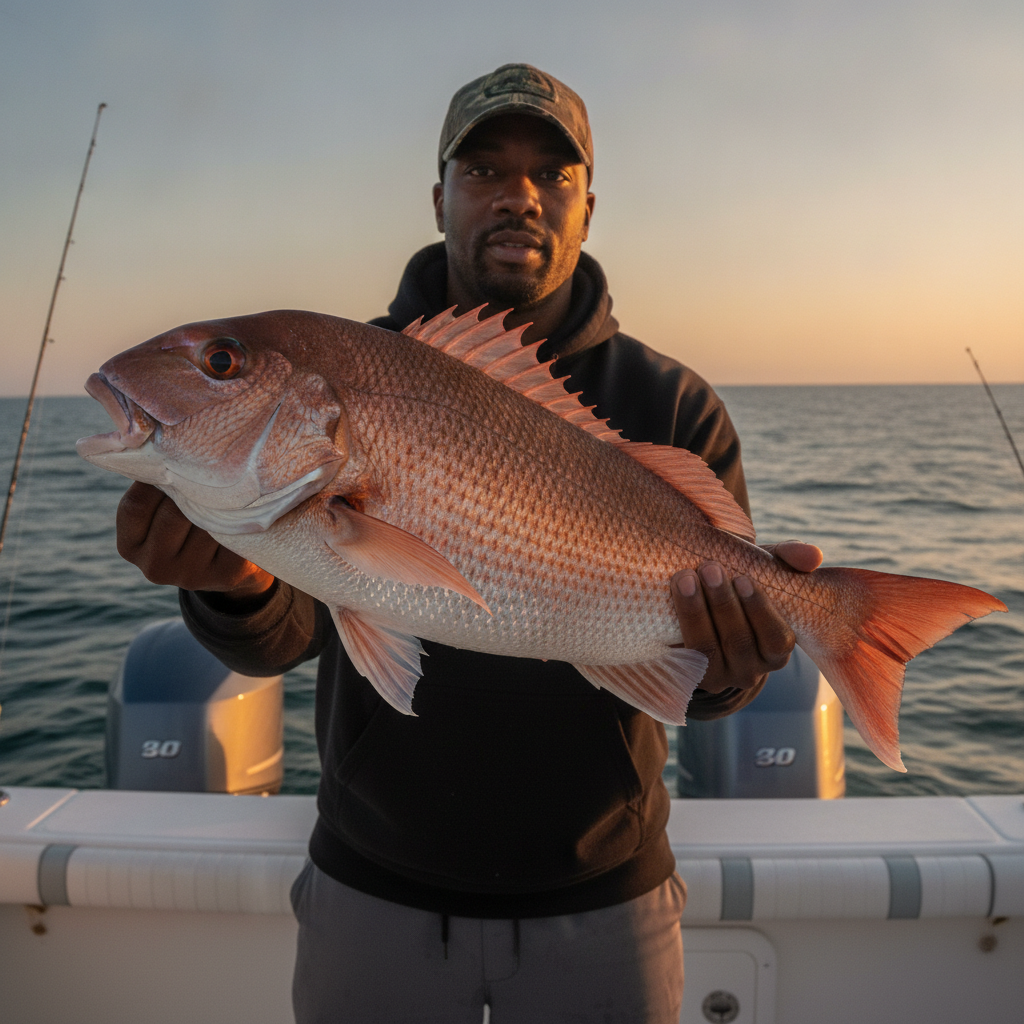
The Florida Panhandle is in the middle of its calm-water stretch. Gulf seas have been running a foot or less on most mornings, which is opening up the full range of wrecks and reefs to anglers in modest boats. Water temperatures are in the mid-to-upper 80s at the surface, and the fishing has been genuinely good for anyone willing to leave the dock at daylight.
What’s Hitting
Bottom fishing is the centerpiece. Red snapper, vermilion snapper, and triggerfish are stacked on the wrecks and artificial reefs from 80 feet out past 150, and the fish have been quality-sized. Gag grouper are on the deeper hard bottom. King mackerel are working bait pods on the nearshore reefs and along the beach on the calmer mornings, with Spanish mixed in tight to the sand. Tripletail are showing on the pass markers and floating debris — a genuinely fun sight-fishing target this time of year. Inshore, speckled trout are on the deeper grass at dawn and redfish are working the Pensacola Bay shorelines and the Three Mile Bridge pilings.
Where to Find Them
The artificial reef complexes south of Pensacola Pass are the bottom-fishing engine — the public numbers are well known and productive, but the less-pressured private and smaller structures are producing better fish. Kings are on the nearshore reefs in 50 to 80 feet and following bait pods along Pensacola Beach. Work the pass markers and channel buoys for tripletail. Inshore, the Three Mile Bridge, the Bob Sikes Bridge pilings, and the Big Lagoon grass edges are holding trout, reds, and flounder.
Tides & Conditions
Surface temperatures are 85 to 88 degrees. Seas have been one foot or less in the mornings, building slightly by afternoon. Tides in the pass are moderate with a workable morning outgoing. Storms build inland and drift south in the afternoons most days. The calm-morning, rough-afternoon pattern is consistent enough to plan around — leave at first light and be headed in by noon.
Tackle & Tactics
Bottom fishing calls for a knocker or Carolina rig with 60- to 80-pound fluorocarbon and a circle hook, baited with cut bonito, squid, or a live pinfish. Bring enough lead to hold in the current. Triggerfish demand a smaller hook and a piece of squid worked just off the structure. Kings want slow-trolled live cigar minnows on a stinger rig with light wire. Tripletail are a sight-cast game — approach a marker quietly and pitch a live shrimp on a light jighead just past the fish. Inshore trout eat a popping cork at first light.
Local Intel This Week
Plaza de Luna, the Sherman Cove ramp, and the Galvez Landing ramp in Perdido Key are the practical launches. Shore anglers are catching from the Pensacola Beach Gulf Pier and the Bob Sikes fishing bridge. Fish are concentrating on hard structure — wrecks, bridge pilings, and markers — rather than open bottom. Red snapper and several other Gulf reef species are under federal and state season and bag restrictions that shift year to year — check current FWC and NOAA Fisheries regulations and seasons before keeping any fish.
This Week’s Tip
On a heavily fished public reef, drop 50 to 100 yards off the marked numbers and look for the smaller scattered pieces of structure your bottom machine picks up on the way in. The main pile holds the crowd and the small fish. The unmarked rubble nearby often holds the bigger snapper that have been pushed off by pressure.
Planning a trip to Pensacola?
This report tells you what happened. ReelAI tells you what to do about it — a briefing for your date, your target species and how you're fishing, built from our reports plus live NOAA and USGS data.
Powered by ReelAI — fishing.digital's intelligence layer. Answers are generated from fishing.digital reports and public NOAA, NWS and USGS data, and may be incomplete or out of date. Regulations and marine safety information are summaries only; always confirm with the responsible authority before you fish.